
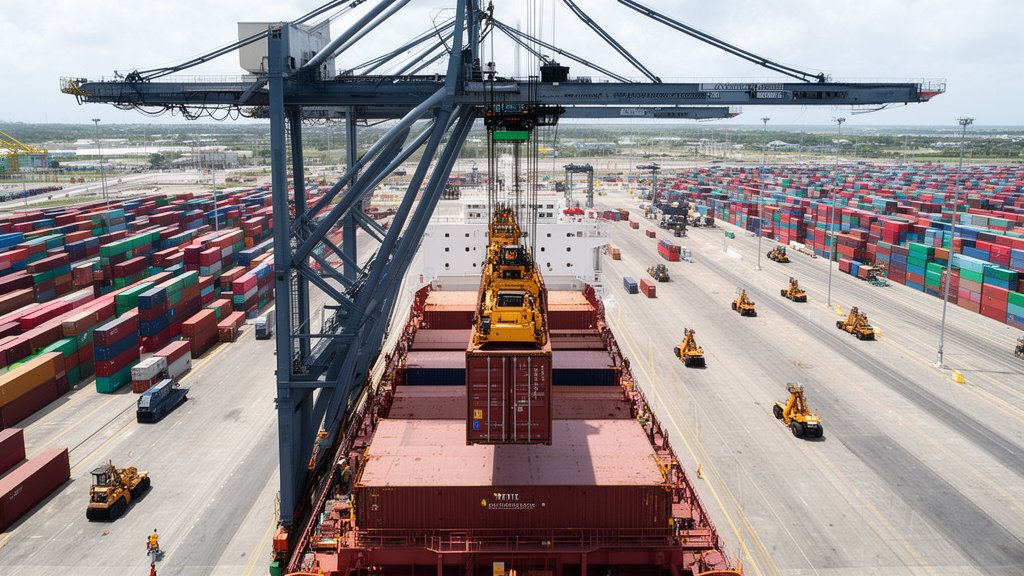
The maritime sector in Jamaica is mourning the loss of a pivotal figure, Warren St. Aubyn Sweeney, a professional whose career served as a bridge between the arduous, manual methods of the past and the sophisticated, technology-driven logistics landscape of today. His tenure, often described as a ‘steady hand’ in a rapidly changing industry, left an indelible mark on the efficiency and global competitiveness of the Port of Kingston, fundamentally altering how cargo moves through the Caribbean.
Key Highlights
- Pioneering Containerization: Sweeney was instrumental in overseeing the logistical transition of Kingston’s port operations from traditional, labor-intensive loose cargo handling to modernized containerized systems.
- Operational Efficiency: His leadership focused on streamlining throughput, significantly reducing turnaround times for vessels docked at the Kingston terminal.
- Economic Catalyst: By modernizing port infrastructure, Sweeney’s efforts helped cement Kingston as a crucial transshipment hub for global trade routes in the Western Hemisphere.
- Mentorship and Stability: Renowned for his calm demeanor, he was widely regarded as a stabilizing force for staff and stakeholders during periods of significant industrial change.
Shaping the Backbone of Jamaican Trade
The story of Warren St. Aubyn Sweeney is inseparable from the evolution of the Jamaican shipping industry. For decades, port operations were characterized by ‘break-bulk’ shipping—a fragmented, slow, and expensive process where individual items were loaded, stowed, and unloaded by hand. Sweeney stepped into this environment at a critical juncture, recognizing that for Jamaica to compete in the burgeoning global economy, the island needed to embrace the container revolution.
The Shift to Containerization
In the mid-to-late 20th century, the shipping world was undergoing a sea change. The introduction of the intermodal container, pioneered by Malcom McLean in the United States, was beginning to reshape global supply chains. However, implementation was not merely a matter of acquiring new equipment; it was a total overhaul of labor practices, storage methodologies, and terminal design.
Warren Sweeney served as a vital operative in this transition. He did not simply push for new machinery; he managed the cultural and structural integration of these systems. Moving from loose cargo to containers required a precise, scientific approach to ‘stowage factors’—the space occupied by a unit of cargo—and a mastery of the crane and yard logistics that defined the modern terminal. His ability to oversee this transition without causing disruption to the local economy was, according to industry peers, his greatest professional contribution. By standardizing the handling process, he reduced cargo damage, theft, and operational downtime, effectively modernizing the artery through which much of Jamaica’s commercial lifeblood flows.
Leadership in High-Stakes Logistics
Shipping is a notoriously high-pressure sector. The ‘steady hand’ moniker attributed to Sweeney was not given lightly. Maritime logistics operates on razor-thin margins and requires extreme reliability. When a port terminal falters, the ripple effects are immediate: supply chain bottlenecks, rising costs for imported goods, and delayed export shipments.
Sweeney functioned as a crisis manager and a long-term strategist simultaneously. Colleagues recall his ability to navigate the complex industrial relations environment typical of the maritime sector. He balanced the needs of terminal operators, shipping lines, and the port workforce with a degree of diplomatic skill that kept operations moving even during tumultuous periods of change. His philosophy was rooted in the understanding that, while technology like gantry cranes and terminal operating systems (TOS) are essential, they are only as effective as the management systems designed to guide them.
The Future of the Kingston Hub
Today, as we look at the Kingston Freeport Terminal’s current capabilities—boasting the ability to handle Post-Panamax vessels and integrate seamlessly into major international shipping lanes—we are seeing the fruit of seeds sown by leaders like Warren Sweeney. His foresight regarding the scalability of containerized systems ensured that Jamaica did not fall behind in the global competition for transshipment business.
While the industry now faces new challenges—such as the digital transformation of supply chains, the push for green shipping, and the integration of AI-driven logistics—the bedrock principles Sweeney established remain relevant. He demonstrated that resilience in the shipping industry is built upon a foundation of standardized processes, clear operational planning, and the cultivation of human talent. As global trade becomes increasingly volatile, the ‘steady hand’ approach advocated by figures like Sweeney is perhaps more necessary now than ever before. His legacy is not just in the ports he managed, but in the professional standards he set for the generations of maritime professionals who followed him.
FAQ: People Also Ask
What was the specific impact of Warren Sweeney on Kingston’s port?
Warren Sweeney was instrumental in the logistical transition from break-bulk cargo handling to containerized shipping at the Port of Kingston. This allowed for greater efficiency, faster vessel turnaround, and increased capacity to handle modern, larger shipping vessels, securing Kingston’s status as a premier regional transshipment hub.
Why was containerization so difficult for ports to adopt?
Containerization required a complete reconfiguration of terminal infrastructure, including the installation of high-capacity gantry cranes, paved yard space for stacking, and the implementation of complex tracking and inventory software. It also required a major shift in labor management and training, which Sweeney was known for navigating effectively.
How does a ‘steady hand’ leadership style affect the shipping industry?
The shipping industry is subject to rapid fluctuations in volume, global economic shifts, and local labor tensions. A leader with a ‘steady hand’ provides consistency in operations, prevents costly disruptions, and maintains high morale among the workforce, ensuring that the supply chain remains uninterrupted during transitions and crises.