
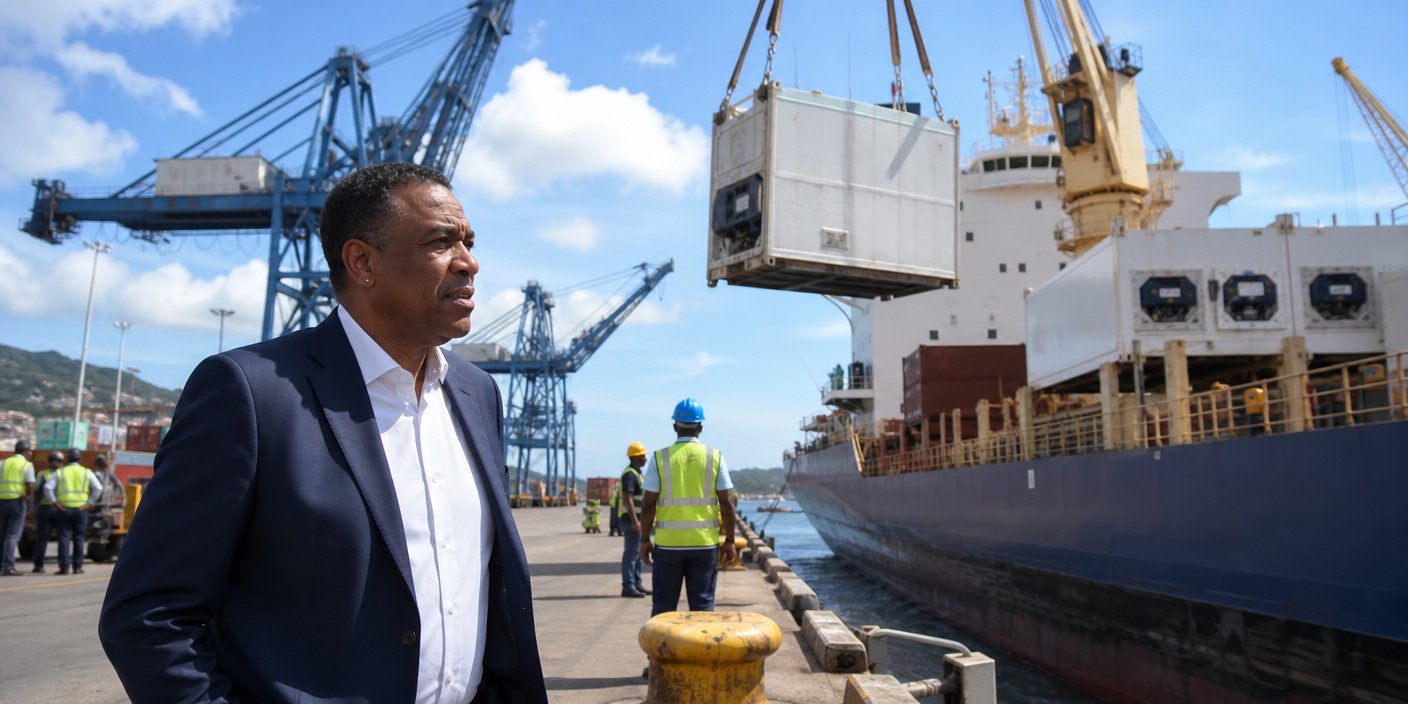
Agriculture, Fisheries and Mining Minister Floyd Green has formally requested urgent improvements to maritime links within the Caribbean to resolve logistical hurdles facing regional food trade. The request comes at a pivotal moment, as regional leaders grapple with the persistent challenges of the ’25 by 25′ initiative—a CARICOM-led ambition to reduce the region’s massive food import bill by 25% by the year 2025. While local production capacity is growing, the physical reality of moving goods between island nations remains a significant, systemic failure.
The Logistics Chokepoint
The central issue identified by Minister Green is the ‘last mile’ of regional trade. Currently, it is often faster, cheaper, and more reliable to ship agricultural produce from the United States or Europe to a Caribbean port than it is to transport the same goods between neighboring islands. This logistical paradox has stifled intra-regional commerce for decades. The infrastructure—ranging from cold storage facilities at ports to the frequency of shipping vessels—is ill-equipped for the perishable nature of agricultural goods. Green’s call for intervention targets these specific, crumbling maritime links, which act as a choke point preventing farmers from accessing lucrative regional markets.
Bridging the ’25 by 25′ Gap
To achieve the ’25 by 25′ goal, the Caribbean must act as a unified trading bloc. However, regional integration is currently hindered by disjointed maritime policies. Minister Green argues that without dedicated, streamlined logistics, the targets set by regional heads of government are mathematically improbable. The initiative requires a seamless flow of goods, yet producers frequently cite the unpredictability of shipping schedules as the primary reason they focus on domestic markets rather than regional export. Addressing this requires a systemic upgrade of port facilities, investment in faster, refrigerated cargo vessels, and the harmonization of customs procedures that often delay produce, causing unnecessary spoilage.
Why Maritime Connectivity Matters
The economic implications of this initiative are profound. The Caribbean spends billions of dollars annually importing food, often purchasing items from international markets that could be produced within the region. By fixing maritime links, the region can effectively substitute expensive imports with locally grown food, keeping capital within the Caribbean economies. This shift is not just about convenience; it is about resilience. Global supply chain shocks, such as those experienced during the pandemic, exposed the vulnerability of small island developing states (SIDS) that rely heavily on distant international sources for basic sustenance. Strengthening regional maritime connectivity is effectively an act of national and regional security.
The Economic Ripple Effect
Beyond immediate food security, the improvement of maritime links would serve as a catalyst for broader economic growth. Efficient shipping creates a multiplier effect: lower shipping costs encourage increased production, which creates jobs in agriculture, logistics, and processing. Furthermore, reliable supply chains attract more investment into the agricultural sector. Currently, investors are wary of the sector’s profitability due to the high risk of inventory loss during transit. By stabilizing the movement of goods, Minister Green aims to de-risk the agricultural sector, making it an attractive destination for capital investment.
Future-Proofing Caribbean Agriculture
Moving forward, the strategy must incorporate climate-resilient infrastructure. As the Caribbean faces increasing threats from extreme weather events, the maritime links must be robust enough to recover quickly from disruptions. Minister Green’s proposal suggests a shift toward a ‘regional hub-and-spoke’ model, where primary distribution centers can serve smaller islands, ensuring that food supply remains constant even during periods of regional instability. This long-term vision requires political willpower and a cohesive approach among CARICOM member states, prioritizing infrastructure spending over administrative inertia.
FAQ: People Also Ask
What is the ’25 by 25′ initiative?
The ’25 by 25′ initiative is a regional target set by CARICOM to reduce the Caribbean’s food import bill by 25% by the year 2025. It focuses on boosting local production of key commodities.
Why are shipping costs so high within the Caribbean?
Shipping costs are high due to a lack of dedicated, efficient maritime routes, aging port infrastructure, insufficient refrigerated cargo (cold chain) capacity, and administrative delays at customs, which increase the time and cost of transport.
How does fixing maritime links help food prices?
By streamlining transport, farmers can move goods more efficiently and cheaply between islands. This lowers the landed cost of food, potentially reducing prices for consumers and making locally grown produce more competitive against expensive imports.
Is this initiative only about food?
While the current focus is on food security, upgrading maritime logistics will have a positive impact on all intra-regional trade, allowing for the faster movement of manufactured goods and raw materials across the Caribbean.