
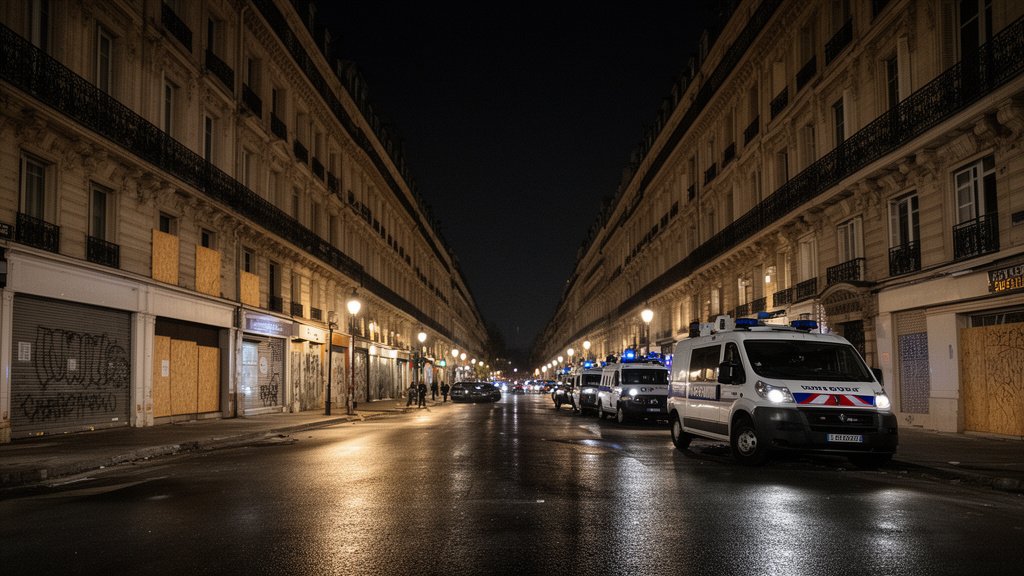
France is grappling with a severe domestic crisis following a weekend of nationwide protests that rapidly spiraled into widespread civil unrest. In response to the escalating violence, French authorities have implemented immediate overnight curfews in Paris and several other affected urban centers. The situation remains volatile, with government officials scrambling to contain the turmoil that has resulted in the tragic death of two individuals and left over 1,000 police officers injured across the country. The breadth of the unrest marks one of the most challenging periods of civil disobedience for the French administration in recent years, signaling a deep-seated frustration with the current state of public affairs.
Key Highlights
- Emergency Curfews: Strict overnight curfews are now in effect for Paris and other major cities to stem the tide of nationwide rioting.
- Grim Statistics: Official reports confirm at least two deaths and over 1,000 police officers injured during the confrontations.
- Root Causes: The unrest is primarily driven by long-standing grievances regarding school conditions, the rising cost of living, and the perceived decline in quality of public services.
- Security Deployment: A massive mobilization of security forces, including the Gendarmerie Nationale, has been deployed to restore order in the most volatile areas.
The Breaking Point: Analyzing France’s Nationwide Civil Unrest
The implementation of curfews represents a critical escalation in the government’s response to what began as localized demonstrations. What started as expressions of discontent over socioeconomic policy has morphed into a complex security challenge that has forced the hand of the French administration. The severity of the unrest has placed the Ministry of the Interior under intense pressure to maintain order while preventing further casualties. This crisis is not merely a reaction to a single event, but rather the culmination of accumulated pressures affecting the French populace.
The Catalyst for Conflict: Socioeconomic Grievances
At the heart of these riots lies a profound sense of disillusionment among significant segments of the population. While protesters have been vocal about various issues, three primary pillars have consistently emerged as the driving force: the state of educational infrastructure, the crushing impact of the cost of living crisis, and the degradation of public services.
Schools in many districts have been reported to be in states of disrepair, leading to concerns about the future of the next generation. Simultaneously, inflation—driven by global energy costs and supply chain constraints—has eroded the purchasing power of the average household, making daily necessities increasingly difficult to afford. When these factors are combined with a perceived withdrawal of public services in suburban and rural areas, the resulting societal friction creates a tinderbox environment. The riots serve as a violent manifestation of the belief that the social contract is failing to protect the most vulnerable citizens.
Security Challenges and the Policing Dilemma
The sheer scale of the riots has overwhelmed standard policing operations. With over 1,000 police officers injured, the toll on law enforcement is unprecedented. The security forces, including units from the Compagnies Républicaines de Sécurité (CRS), have faced intense, often coordinated resistance. This has forced the authorities to balance the use of force with the need to de-escalate a situation that is being viewed globally with concern. The government’s decision to impose curfews is a tactical measure intended to reclaim the streets at night, when the majority of property damage and violent confrontations have occurred. However, critics argue that such measures, while necessary for immediate public safety, do not address the underlying societal anger and could potentially act as a further irritant to protesters.
Economic and Social Implications
The economic fallout of these riots is expected to be significant. Beyond the immediate destruction of infrastructure and private property, the unrest has impacted the retail and tourism sectors, which are vital to the French economy. Business owners in central Paris and other major cities have boarded up storefronts, fearing looting and vandalism. Furthermore, the international perception of France as a stable tourist destination is being tested. If the unrest persists, the economic contraction in the affected zones could exacerbate the very cost-of-living issues that helped ignite the protests in the first place.
There is also the historical dimension. France has a long tradition of civil protest, and the current wave of unrest is being scrutinized by sociologists and political analysts for its parallels to historical movements. The speed with which the protests spread across the country suggests a high level of digital organization and a shared sense of grievance that transcends regional boundaries. The Élysée Palace faces a difficult path ahead: it must restore order to satisfy a public demanding safety, while simultaneously initiating a genuine dialogue with protesters to address the systemic issues that have brought the country to this point. The next few days will be decisive in determining whether the curfews succeed in cooling the tempers of the nation, or if the unrest will continue to destabilize the social fabric of the Republic.
FAQ: People Also Ask
How long are the curfews expected to last?
While the government has not provided a fixed end date, the curfews are being reviewed on a 24-hour basis. They will remain in effect until the Ministry of the Interior deems that the immediate threat of further large-scale riots has subsided.
What are the specific demands of the protesters?
Protesters are demanding immediate government intervention to address the rising cost of living, significant reinvestment into the public school system, and a halt to the perceived cutbacks in essential public services within their neighborhoods.
Are tourists advised to avoid visiting French cities?
Travel advisories are currently in flux. While most major tourist attractions are operational, local authorities recommend that visitors remain vigilant, avoid demonstrations, and stay updated via official government travel alerts and local news outlets.