The National Water Commission (NWC) has formally petitioned the Office of Utilities Regulation (OUR) for a 51% tariff increase, a move that signals an escalating operational funding crisis within Jamaica’s primary water utility provider. This request, which comes after intense scrutiny regarding the organization’s financial health, highlights a precarious situation where operational costs—driven by energy requirements and aging infrastructure—are increasingly outpacing current revenue streams. The announcement has sparked immediate concern among consumers and regulators alike, as the commission admits it has been forced to rely on outstanding tax funds to maintain critical service levels.
Key Highlights
- 51% Hike Request: The NWC has officially submitted an application to the OUR seeking a 51% increase in water tariffs to bridge the gap in operational funding.
- Funding Crisis Revealed: Testimony before the Public Accounts Committee (PAC) exposed that the NWC has been struggling with liquidity, necessitating a reliance on tax funds to keep operations running.
- Operational Strain: Rising energy costs and significant infrastructure maintenance requirements are being cited as the primary drivers behind the requested adjustment.
- Regulatory Scrutiny: The OUR is now tasked with reviewing the petition, weighing the financial viability of the utility against the economic burden it would place on Jamaican households.
The Anatomy of a Utility Crisis: Why the NWC Needs More
The National Water Commission does not operate in a vacuum; it is the backbone of Jamaica’s water and wastewater infrastructure. However, the organization has found itself trapped in a cycle of mounting costs and stagnant revenue. The 51% tariff increase is not merely a request for more profit; it is a desperate attempt to stabilize an operation that has been described as being in a state of financial distress.
The Infrastructure Maintenance Debt
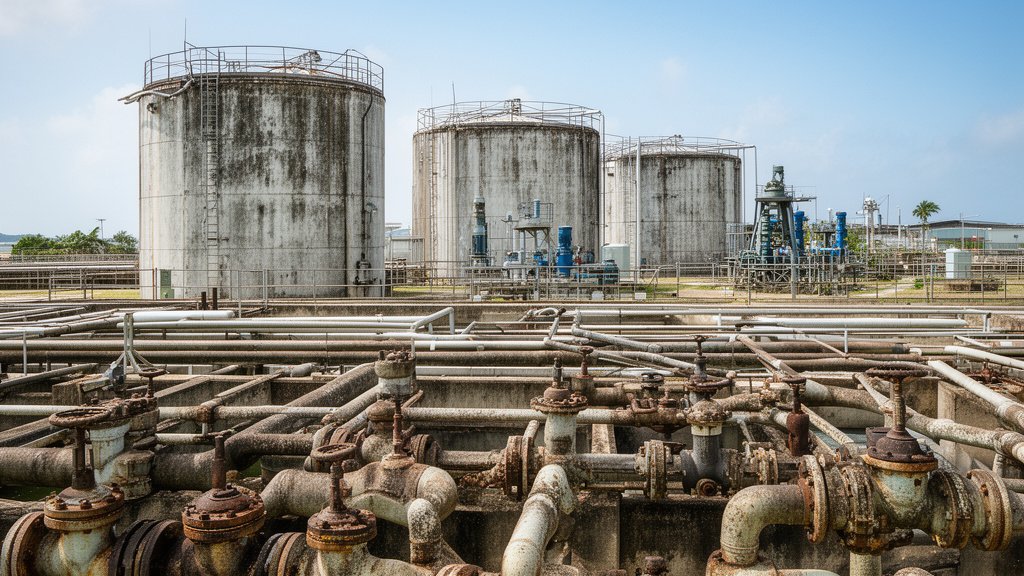
At the heart of the NWC’s argument is the staggering cost of maintaining an aging network. Much of Jamaica’s water infrastructure was laid decades ago, and the natural attrition of pipes, treatment plants, and pumping stations requires constant, capital-intensive intervention. When maintenance is deferred due to funding gaps, the result is a massive increase in non-revenue water—water that is produced and treated but never billed, often due to leaks or illegal connections. This lost revenue creates a vicious cycle: the utility loses money on water it can’t bill for, leading to less capital for fixing the leaks that caused the loss in the first place.
The Energy Burden
Water production is energy-intensive. From deep-well pumping to high-pressure distribution systems, the NWC is one of the largest consumers of electricity in the country. Fluctuations in global energy prices, combined with local rate adjustments, have placed a heavy burden on the commission’s operational budget. When the cost of electricity rises, the NWC’s margins vanish instantly. The current tariff structure, which has remained largely stagnant while energy costs have climbed, has rendered the previous financial model unsustainable.
The PAC Revelations
The recent revelation at the Public Accounts Committee (PAC) provided the most alarming insight into the commission’s health. Officials disclosed that the utility had been leaning on outstanding tax funds—monies not typically meant for day-to-day operational expenses—to keep the lights on and the pumps running. This admission has drawn sharp criticism from stakeholders, who argue that such reliance suggests a failure in long-term fiscal planning and management. For the average citizen, this raises a fundamental question: Is the utility in this position due to external factors, or has there been internal mismanagement?
The Regulatory Hurdle: The OUR’s Balancing Act
The Office of Utilities Regulation (OUR) now sits at the center of this controversy. Their mandate is not to simply grant or deny requests based on sentiment, but to ensure that utility services remain sustainable, efficient, and affordable. The OUR’s review process is rigorous and transparent, involving public consultations, independent audits of the NWC’s finances, and a thorough assessment of the proposed 51% hike.
The Consumer Impact Perspective
For the average Jamaican household, a 51% increase in water rates is not a negligible adjustment; it is a significant shock to the cost of living. In an environment already characterized by inflationary pressure on food and fuel, water is an essential service with little room for substitution. Critics of the proposed hike argue that if approved, it could push many low-income families into arrears, ironically causing further revenue loss for the NWC. The OUR must carefully weigh whether the utility’s operational necessity outweighs the potential for widespread social and economic hardship.
Efficiency vs. Revenue
One of the critical secondary angles to this story is the debate over efficiency. Before granting a rate increase, the OUR typically demands that the utility demonstrate that it has maximized its internal efficiencies. This includes reducing the aforementioned non-revenue water, streamlining administrative staff, and modernizing billing systems. The public sentiment, often voiced through consumer advocacy groups, is that the NWC should prove it has ‘tightened its own belt’ before asking the public to pay more.
The Future of Jamaica’s Water Security
If the 51% increase is denied or significantly reduced, what happens to the NWC? The risk is a continued deterioration of infrastructure, more frequent service disruptions, and a deeper reliance on emergency government funding. Conversely, if the full amount is granted, the NWC must be held accountable to a strict set of performance targets. The public will demand transparency on exactly how these funds are utilized. Will the money go toward upgrading the pipe network, or will it simply cover rising energy bills? The transparency of the NWC’s expenditure will be as critical as the tariff hike itself in maintaining public trust.
FAQ: People Also Ask
1. Why does the NWC need a 51% increase specifically?
The NWC cites a combination of surging operational costs, particularly electricity for pumping, and the urgent need to address an aging infrastructure that requires massive capital investment for maintenance and repairs.
2. What happens if the OUR denies the request?
If the request is denied or only partially approved, the NWC may face severe budget shortfalls. This could potentially lead to reduced service hours, delays in emergency repairs, and an increased reliance on government subsidies to cover operational deficits.
3. How does the Public Accounts Committee (PAC) factor into this?
The PAC provides legislative oversight. Their recent hearings exposed the depth of the NWC’s financial strain, specifically the reliance on tax funds, which provided the catalyst for the public discourse currently surrounding the tariff application.
4. How long does the OUR review process take?
The OUR’s review process involves public consultations and detailed financial analysis, which usually spans several months. They must evaluate the NWC’s business plan, efficiency audits, and impact assessments before issuing a final determination.