
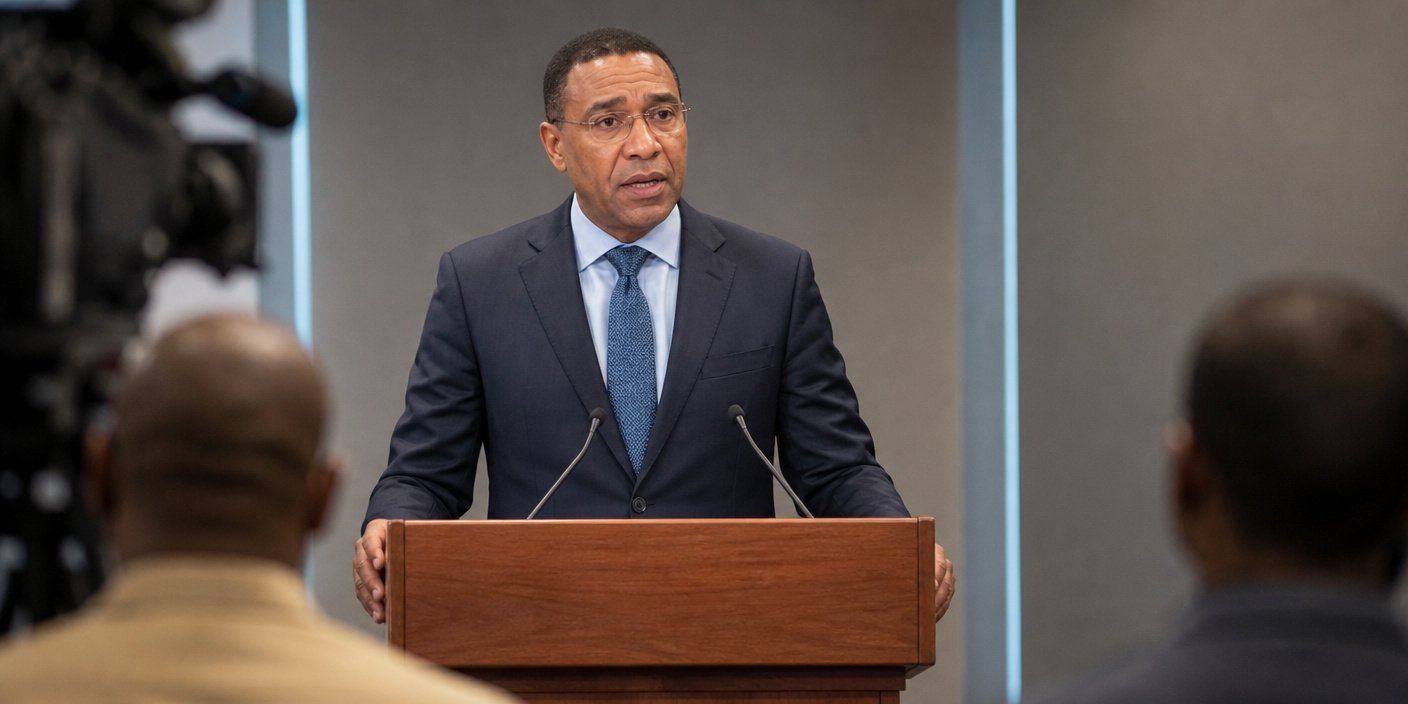
The quiet community of Sligoville, St. Catherine, became the site of a profound tragedy that has sent shockwaves through the Jamaican security apparatus. Corporal Trevoy Shaw and Constable Devoney Rose, two dedicated members of the Jamaica Constabulary Force (JCF), were killed in what Prime Minister Andrew Holness described as a ‘devious trap.’ The incident, which occurred while the officers were responding to a call for assistance, has not only sparked a national outcry but has also forced a renewed, aggressive re-evaluation of the state’s anti-crime strategies. The Prime Minister’s immediate pledge to intensify operations against the perpetrators underscores the severity of the threat posed by criminal elements in the region.
Key Highlights
- The Tragedy: Corporal Trevoy Shaw and Constable Devoney Rose were killed in Sligoville, St. Catherine, after being lured into a calculated ambush.
- Official Response: Prime Minister Andrew Holness publicly honored the officers, labeling them ‘heroes’ and committing the full weight of the state to identifying and capturing those responsible.
- Strategic Shift: The JCF is expected to increase operational intensity, with government officials signaling a zero-tolerance approach to direct attacks on law enforcement personnel.
- Systemic Context: The incident highlights the ongoing danger of the ‘decoy’ tactic used by organized criminal networks to isolate and eliminate police officers in volatile parishes.
The Sligoville Ambush: Analyzing a Targeted Strike on Law Enforcement
The ambush in Sligoville represents an escalation in the confrontation between the Jamaican state and criminal gangs. By utilizing a false distress call—a ‘devious trap’—the assailants bypassed standard police response protocols, effectively turning a routine service call into an execution. This methodology is not entirely new to the criminal underground, but the successful execution of such a plan against two serving officers marks a disturbing evolution in tactical violence. Prime Minister Andrew Holness, in his address, emphasized that the state would not yield to such intimidation tactics. The emotional gravity of his statement, referring to Shaw and Rose as ‘heroes,’ served as a rallying cry for the JCF, which is currently grappling with the loss of two of its own in the line of duty.
Tactical Implications of the Decoy Strategy
The use of decoys to lure police into dangerous territory creates a fundamental shift in how the JCF must assess threat levels in rural and semi-rural parishes like St. Catherine. When the primary line of communication—the distress call—is weaponized, the trust that allows officers to effectively serve their communities is compromised. Future policing strategies will likely require a robust overhaul of dispatch and response protocols. This may involve enhanced drone surveillance, mandatory multi-unit backup for calls originating in identified ‘red zones,’ and more rigorous intelligence gathering regarding gang movements in Sligoville and surrounding districts. The cost of this shift will be felt in resources and time, but it has become a necessary evolution to ensure officer safety.
The Socio-Economic Ripple Effect
St. Catherine, a parish central to Jamaica’s economic activity, has long struggled with the paradox of growth and crime. The presence of sophisticated criminal organizations often acts as a deterrent to foreign direct investment and local business expansion. The Sligoville incident serves as a grim reminder that until the state can firmly exert control over these hotspots, development remains fragile. Businesses operating in the region are watching closely, as the stability of the security environment directly correlates to the predictability of the local economy. If the government’s promised intensification of anti-crime operations leads to prolonged stability, it could restore confidence; however, if the violence persists, it risks creating a permanent ‘security discount’ on the region’s economic potential.
Resilience and the Morale of the JCF
Beyond the tactical and political ramifications, there is a human element to this story that cannot be quantified. The morale of the Jamaica Constabulary Force is tested daily, but the loss of Shaw and Rose in a deceptive ambush cuts deeper than typical field encounters. These were officers who likely believed they were heading into a situation where they could provide aid. The psychological toll on their colleagues is significant. The JCF leadership, alongside the Ministry of National Security, must now navigate the delicate balance of maintaining an aggressive operational posture while providing adequate mental health support and counseling to the surviving officers who served alongside the deceased. A force that feels targeted and vulnerable is a force that struggles to function at its highest capacity, making the government’s support for the families and the fraternity of the JCF a critical component of the upcoming security response.
FAQ: People Also Ask
1. Who were the police officers killed in Sligoville?
The officers were Corporal Trevoy Shaw and Constable Devoney Rose. They were members of the Jamaica Constabulary Force (JCF) and were killed while responding to a distress call that turned out to be a trap.
2. What has been the official government response?
Prime Minister Andrew Holness publicly honored the officers as heroes. He has vowed that the state will intensify anti-crime operations in the area to track down and prosecute those responsible for the ambush.
3. Why is the Sligoville ambush considered a ‘devious trap’?
It is classified as such because the assailants reportedly used a false distress call to lure the officers to a specific location, effectively isolating them to execute a calculated attack rather than an incidental confrontation.