
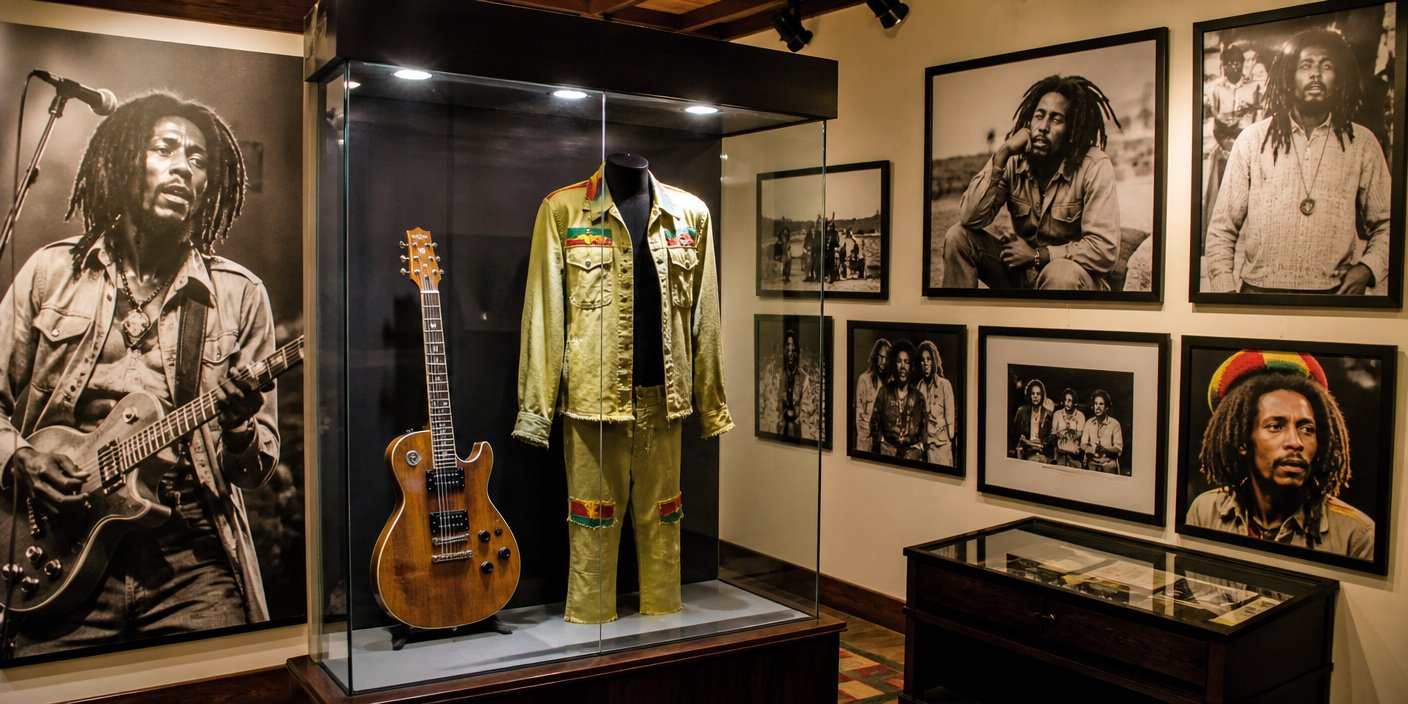
On October 19th, Jamaica observes the ‘earthstrong’—a term synonymous with the birthday of a reggae legend—of Winston Hubert McIntosh, universally known as Peter Tosh. This year’s commemoration at the Peter Tosh Museum in Kingston serves as a poignant intersection of cultural memory and musical defiance. As the island honors the life of the ‘Stepping Razor,’ the spotlight remains fixed on a milestone that has transcended time: the 50th anniversary celebration of his landmark album, ‘Legalize It.’
The Earthstrong: A Cultural Pilgrimage
Every year, the Peter Tosh Museum, located at the Pulse Centre on Trafalgar Road in Kingston, becomes the epicenter for reggae devotees and cultural historians. The site is more than a gallery; it is a repository of Tosh’s defiant spirit, housing his guitars, stage attire, and the raw archives of his political trajectory. This year, the atmosphere is charged with a renewed reverence as the global community marks the half-century mark of his debut solo venture. For fans, this is not merely a birthday; it is a pilgrimage to acknowledge the architect of some of reggae’s most uncompromising anthems.
Legalize It: Half a Century of Defiance
Released in 1976, ‘Legalize It’ was far more than an album; it was a socio-political manifesto disguised as a roots reggae collection. At the time of its release, the title track was a radical call for the decriminalization of cannabis, a stance that earned Tosh both persecution and profound respect. Fifty years later, the cultural landscape has shifted to align with his foresight, turning the album into a prophetic document of modern social justice movements.
The 50th-anniversary tributes focus on the technical brilliance of the production and the uncompromising lyrical content that distinguished Tosh from his peers in The Wailers. Critics and musicologists point to his use of ‘Legalize It’ as a vehicle for anti-establishment sentiment, noting that his ability to merge infectious, hypnotic rhythms with blunt political commentary remains unmatched in the history of Caribbean music.
The Wailer Who Walked Alone
To understand the gravity of this anniversary, one must appreciate the complex legacy of Peter Tosh. While his time as a founding member of The Wailers—alongside Bob Marley and Bunny Wailer—cemented his status in music history, his solo career was defined by a departure from the mainstream. Tosh was the grit in the oyster. Where other artists sought mass appeal, Tosh sought radical consciousness. His ‘earthstrong’ serves as an annual reminder of the necessity of the dissenter. Political figures and cultural icons gathering at the museum today acknowledge that Tosh’s influence extends far beyond the turntable; he remains a primary case study in the intersection of celebrity and political activism.
A Living Archive: The Museum’s Role
Under the curation of his estate and associated cultural partners, the Peter Tosh Museum has emerged as a vital institution for preserving Jamaica’s musical heritage. By highlighting the 50th anniversary of his debut solo work, the institution is performing a critical service: contextualizing reggae not just as a genre of entertainment, but as a discipline of historical record. The exhibition features rare audio masters, personal correspondences, and artifacts that delineate the trajectory of his career from the early 1960s to his untimely passing in 1987. This commitment to provenance is what makes the current commemorations so significant; it provides the public with a tangible link to a period of creative explosion that continues to shape current global music trends.
The Political Echo: Why Tosh Matters Today
In an era of performative activism, Peter Tosh’s legacy stands in stark contrast to the status quo. The themes explored in ‘Legalize It’—sovereignty, bodily autonomy, and institutional reform—are as relevant in 2024 as they were in 1976. As attendees at the museum reflect on his life, the discourse inevitably turns to his role as a voice for the voiceless. Whether through his sharp-witted interviews or his uncompromising stage presence, Tosh demonstrated that an artist’s power lies in their willingness to be misunderstood. Today’s commemorations serve to reinforce this lesson, inspiring a new generation of musicians to use their platforms for substantive societal shift rather than fleeting commercial gain.
Legacy and Future Directions
Looking forward, the Peter Tosh estate is focused on digitizing his extensive catalog and ensuring that his influence is recognized in academic circles. The 50th-anniversary celebrations of his breakthrough album act as a catalyst for these initiatives. By anchoring the celebration in the physical space of the museum, the organizers are effectively bridging the gap between historical reverence and future education. The ‘earthstrong’ event is thus not an end, but a beginning—an opportunity to reintroduce a complex, brilliant, and often difficult artist to a demographic that may only know him through the occasional soundbite or sampled track. As the sun sets over Kingston, the message of the ‘Stepping Razor’ remains clear: the music is the message, and the message is meant to endure.
FAQ: People Also Ask
Q: What does ‘earthstrong’ mean in the context of Peter Tosh?
A: ‘Earthstrong’ is a term commonly used in Rastafarian culture to denote a birthday. It celebrates the day an individual first set foot on earth, emphasizing the life force and spiritual journey of the person.
Q: Why is the ‘Legalize It’ album considered so influential?
A: ‘Legalize It’ is considered a seminal work because it bridged the gap between roots reggae and global protest music. Its bold lyrical stance on cannabis, coupled with Tosh’s sophisticated arrangement skills, made it a hallmark of the ‘roots’ era and a catalyst for global drug policy reform debates.
Q: Where can I visit the Peter Tosh Museum?
A: The Peter Tosh Museum is located at the Pulse Centre on Trafalgar Road, in New Kingston, Jamaica. It offers a comprehensive look at his life, music, and activism.
Q: Who were the key figures attending the commemoration?
A: The event draws a mix of cultural historians, reggae musicians, family members of the Tosh estate, and notable political figures from the Jamaican government, all united by their commitment to preserving the icon’s legacy.
Q: How long did Peter Tosh play with The Wailers?
A: Tosh was a founding member of The Wailers, working with Bob Marley and Bunny Wailer from the group’s inception in the early 1960s until he left in 1974 to pursue a solo career.