
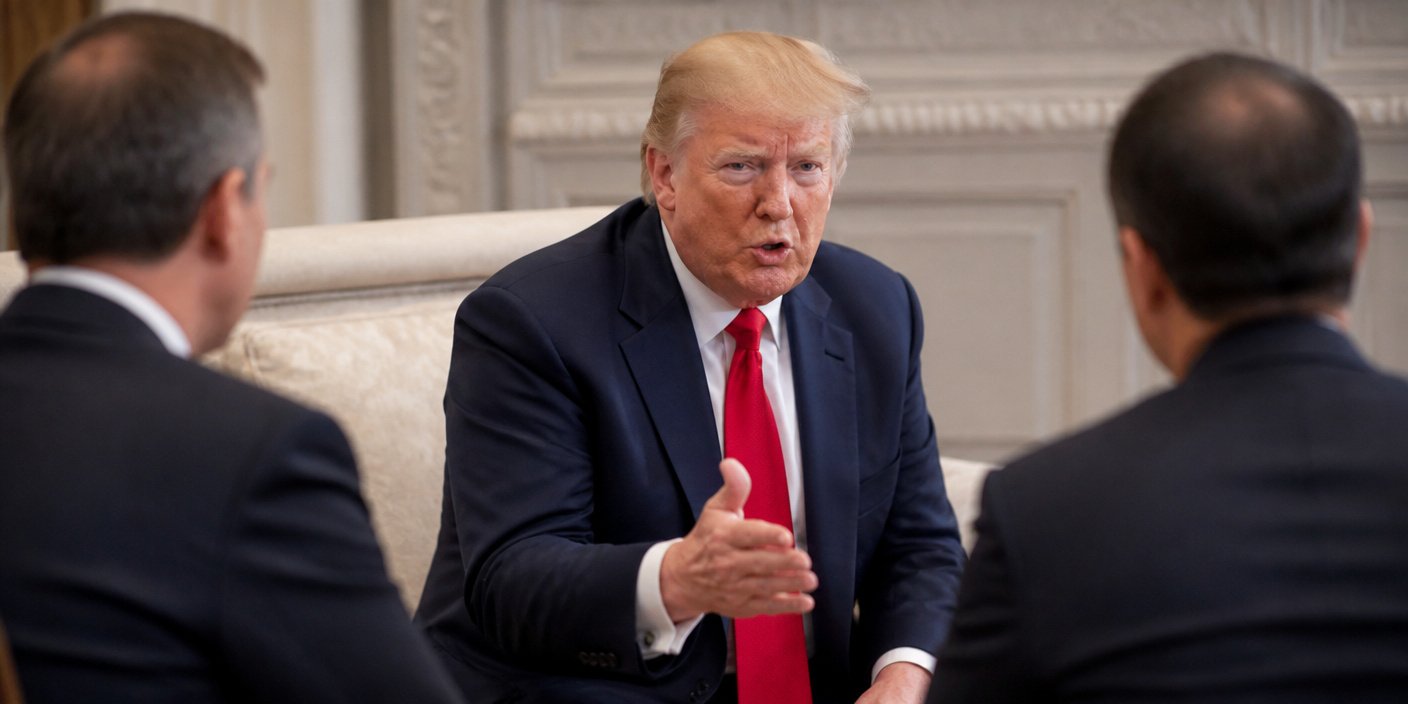
In a pointed assessment of the ongoing conflict, President Donald Trump has publicly accused Ukrainian President Volodymyr Zelensky of stalling essential peace negotiations, arguing that current diplomatic efforts are being stifled by Kyiv’s reluctance to finalize a resolution. The former President’s remarks arrive at a critical juncture in the Russia-Ukraine war, casting a spotlight on the delicate interplay between military aid, international sanctions, and the willingness of leadership to engage in ceasefire discussions.
Trump’s core assertion is that, while back-channel peace talks are reportedly showing genuine progress, the finalization of any binding agreement remains elusive. According to Trump, the primary obstacle is not the battlefield itself, but rather the diplomatic hesitation driven by substantial financial backing from European allies. This perspective frames the conflict not merely as a territorial dispute, but as a complex economic standoff where the influx of external aid may be incentivizing the continuation of hostilities rather than their cessation.
The Pressure on Peace Talks
The Trump-Zelensky peace negotiations debate has become a central theme in recent foreign policy discourse. By suggesting that peace is within reach but being actively delayed by the Ukrainian administration, Trump is putting direct pressure on the diplomatic calculus currently employed by the White House and its allies. The claim rests on the belief that the current structure of military and financial support allows for a “status quo” that discourages compromise. For proponents of this view, the path to peace requires a shift in how aid is distributed—perhaps conditioning it on concrete progress toward a settlement rather than open-ended support.
Economic Levers: Sanctions and Aid
A critical element of Trump’s critique centers on the efficacy and future of Russia sanctions relief. The suggestion is that sanctions serve as a potent bargaining chip that is currently being underutilized. If the United States were to signal a willingness to recalibrate these economic measures, Trump argues, it could provide the necessary leverage to force a resolution. However, this strategy is highly controversial. Skeptics argue that easing sanctions prematurely could reward aggression, potentially undermining the integrity of international law and emboldening other regional actors to pursue similar territorial agendas.
The European Financial Factor
Perhaps the most nuanced aspect of Trump’s critique is the role of European financial backing. The argument posits that as long as the European Union and individual European nations continue to provide robust, near-term financial stability to Kyiv, the incentive for Zelensky to navigate the politically painful concessions required for peace is diminished. This secondary angle is crucial: if European funding is, in effect, underwriting the duration of the war, then any American push for peace must necessarily contend with the competing priorities of the European bloc. This creates a tripartite dynamic where the US, the EU, and the Ukrainian government are often operating on diverging timelines and incentives.
Diplomatic Hurdles and Future Outlook
Looking toward the future, the implications of this impasse are profound. If the “peace through strength” approach advocated by Trump were to be fully implemented, it would likely necessitate a radical reorganization of US foreign aid. Such a pivot could force a confrontation not only with the Kremlin but also with traditional allies who view the current level of support as a moral and strategic imperative. The volatility of this situation underscores a deeper truth: in modern warfare, the ability to fund a conflict is often just as significant as the ability to field an army. As the war stretches on, the question of when—and under what conditions—the West should push for a negotiated settlement will continue to dominate the global political agenda.
FAQ: People Also Ask
1. What is Donald Trump’s specific claim regarding peace talks?
Trump claims that while negotiations are technically making progress, President Zelensky is actively resisting a final deal to maintain the current flow of support, particularly citing European financial backing as a reason for this holdout.
2. Why does Trump believe European financial backing affects peace negotiations?
Trump argues that consistent, high-level financial aid from European allies removes the immediate economic pressure on Ukraine to settle the conflict, effectively incentivizing the continuation of the war over reaching a diplomatic compromise.
3. What is the role of sanctions relief in these discussions?
Sanctions relief is viewed by Trump as a primary diplomatic lever. He suggests that by signaling a willingness to reduce these sanctions, the US could gain the necessary leverage to compel the parties involved—specifically the Ukrainian leadership—to finalize a peace agreement.
4. How does this conflict impact US-EU relations?
This stance highlights a growing tension between a more transactional US foreign policy approach and the more traditional alliance-based strategy favored by European partners. Differences in how to utilize aid and sanctions create friction in the unified front previously maintained by NATO and its allies.