
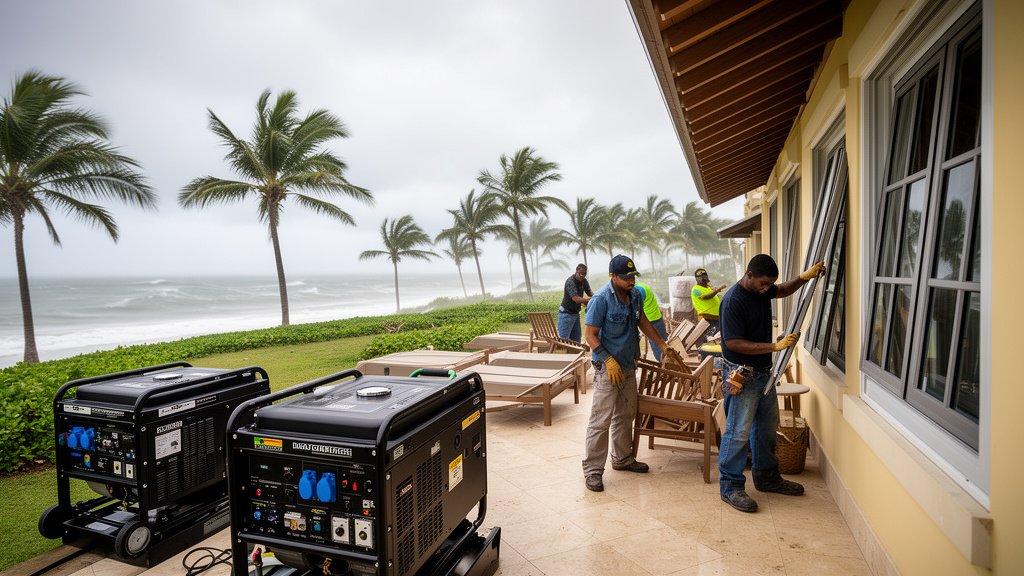
The Jamaican tourism sector is currently operating under heightened emergency protocols as authorities issue severe weather alerts and hurricane warnings for the Caribbean region. Recognizing that the industry contributes approximately 30% of the nation’s GDP, the Jamaican government, in close coordination with the Jamaica Tourist Board (JTB) and the Office of Disaster Preparedness and Emergency Management (ODPEM), has initiated comprehensive contingency plans to secure infrastructure and ensure the safety of both visitors and residents.
Key Highlights
- Activated Emergency Protocols: ODPEM has officially engaged Tier 2 response strategies, requiring all hotels and resorts to test backup power generators, secure beachfront assets, and review evacuation routes.
- Traveler Advisory: The Ministry of Tourism is working alongside international airline partners to facilitate flexible booking policies for travelers scheduled to arrive or depart during the forecasted window of impact.
- Infrastructure Focus: Engineering teams are performing final inspections of critical coastal properties to mitigate potential storm surge damage, which remains a primary concern for the Ministry of Tourism.
- Data-Driven Resilience: Stakeholders are utilizing real-time meteorological feeds from the Caribbean Disaster Emergency Management Agency (CDEMA) to make informed, minute-by-minute decisions regarding operation closures.
Safeguarding the Jewel of the Caribbean: Sector-Wide Resilience
The immediate threat posed by incoming severe weather necessitates a complex, multi-layered response. As storm systems move across the Caribbean basin, Jamaica’s tourism framework—a vital pillar of the national economy—must transition from hospitality to disaster management. This operational pivot is not merely reactive; it is a meticulously planned maneuver designed to preserve both human life and the integrity of the island’s multi-billion dollar tourism infrastructure.
The Logistics of Guest Safety and Evacuation
At the forefront of the current strategy is the absolute priority of traveler safety. Large-scale resorts, particularly those along the North Coast, have activated their internal Emergency Response Teams. These units are currently conducting audits of emergency supplies, including potable water reserves, medical kits, and satellite communication equipment, which are essential in the event of grid failure.
The Ministry of Tourism, led by Minister Edmund Bartlett, has emphasized that clear communication is the most effective tool in managing guest anxiety. Hotels are required to provide twice-daily briefings to guests, detailing the progression of the storm and outlining evacuation protocols if conditions escalate to a mandatory status. For visitors currently on-island, airlines are proactively adjusting flight schedules to clear incoming terminals, prioritizing the repatriation of guests ahead of the most intense weather windows.
Economic Continuity and Financial Mitigation
While the immediate focus is on safety, the secondary impact—economic disruption—is significant. The Jamaican tourism sector is highly sensitive to weather-related shocks. A single major hurricane event can disrupt occupancy rates for months. To mitigate this, the government is coordinating with insurance providers and industry stakeholders to streamline the claims process and ensure that local businesses, particularly small-to-medium-sized enterprises (SMEs) that form the backbone of the tourism supply chain, have access to liquidity support.
This financial shield is bolstered by the ‘Resilience Fund,’ a private-public initiative designed to help the sector weather climate-related downtime. By maintaining strong relationships with international tour operators, the JTB is actively working to minimize long-term booking cancellations, encouraging travelers to reschedule rather than cancel outright, thus preserving the flow of capital essential for post-storm recovery efforts.
The Future of Caribbean Climate Strategy
This current alert serves as a stark reminder of the increasing frequency of extreme weather events in the North Atlantic basin. Jamaica’s proactive stance reflects a shift in Caribbean tourism strategy, moving toward ‘Climate-Positive’ operations. This includes the development of more robust, wind-resistant architectural designs for new hotel projects and the integration of renewable, off-grid power sources that can function independently of the national electrical grid.
Looking ahead, the sector is investing heavily in early-warning sensor technology along the coastline. These systems provide precise data on storm surge levels and coastal erosion rates, allowing developers to build ‘living breakwaters’—natural defenses using reefs and mangroves—rather than relying solely on traditional, concrete-heavy engineering. By aligning tourism development with environmental conservation, Jamaica aims to create a sustainable model that can survive the intensifying climate reality of the 21st century.
FAQ: People Also Ask
Q: What should tourists do if they are currently in Jamaica during a hurricane warning?
A: Tourists should immediately consult their hotel’s front desk or their travel representative. Hotels in Jamaica are well-versed in hurricane protocols and will provide specific instructions regarding sheltering in place or, if necessary, relocation to designated inland safe zones.
Q: How does the Jamaican government track hurricane data?
A: The government utilizes the National Meteorological Service of Jamaica, which works in lockstep with the National Hurricane Center (NHC) in Miami and the Caribbean Disaster Emergency Management Agency (CDEMA) to provide real-time updates and localized forecasting.
Q: Will the airports be closed during the storm?
A: Airports in Jamaica (such as Sangster International in Montego Bay and Norman Manley International in Kingston) typically cease commercial operations when wind speeds exceed safety thresholds. Decisions are made by the Airports Authority of Jamaica in coordination with airline carriers; travelers are advised to check flight status apps frequently.