
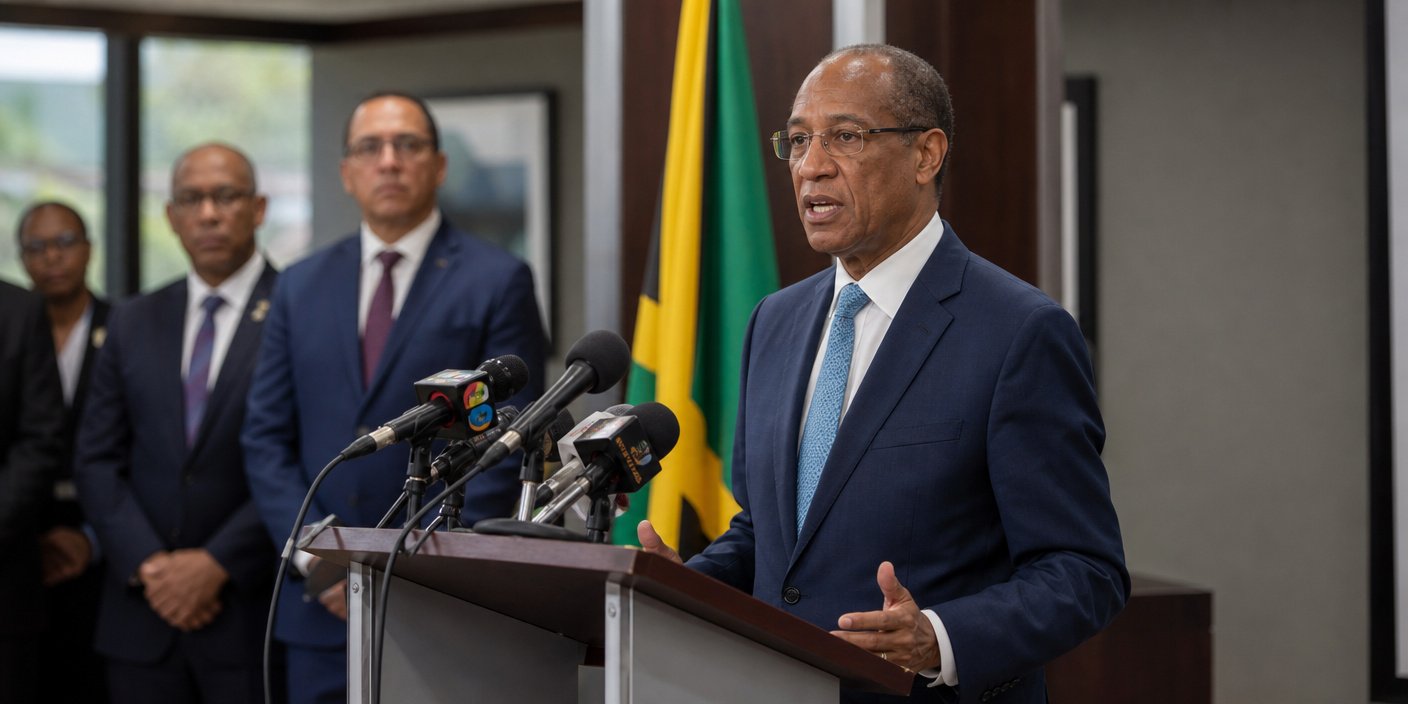
National Security Minister Dr. Horace Chang has signaled a pivotal turning point in Jamaica’s public safety landscape, explicitly linking the current 24% reduction in national murder rates to a prospective decline in fatal police shootings. As of October 6, 2026, the country has recorded 407 homicides, a statistic that, while reflective of significant loss, underscores a marked improvement compared to previous fiscal years. Minister Chang posits that as the intensity and frequency of armed criminal activity wane, the operational necessity for law enforcement to utilize lethal force during confrontations is fundamentally diminished, fostering a safer environment for both citizens and officers.
Key Highlights
- 24% Drop in Violence: The national homicide rate has seen a year-over-year decline of 24%, signaling a broader shift in the country’s security environment.
- Statistical Milestone: As of October 6, 2026, the Ministry of National Security has confirmed 407 homicides, a figure that continues to track below the comparative benchmarks of previous years.
- Direct Correlation: Minister Chang argues that the intensity of police-citizen encounters is inextricably linked to the level of threat posed by criminal elements.
- Policy Implications: The government is focusing on de-escalation strategies, banking on the premise that a reduction in violent crime allows for more controlled and less volatile police engagement protocols.
The Changing Landscape of National Security
The declaration by Dr. Horace Chang brings into focus the complex nexus between violent crime rates and the operational conduct of the Jamaica Constabulary Force (JCF). For years, the high homicide rate has been a defining characteristic of national discourse, often forcing police units into high-stakes, reactive postures. The current data, revealing 407 homicides as of October 6, 2026, provides a granular look at a system in transition.
The Mechanics of De-escalation
Minister Chang’s assertion is rooted in the operational reality of modern policing: lethal force is often a function of the threat environment. When police officers encounter highly coordinated and aggressive armed criminal groups, the likelihood of a fatal engagement increases exponentially. Conversely, by reducing the baseline of criminal violence through improved intelligence, targeted disruption of illicit gangs, and increased community presence, the ‘temperature’ of daily police interactions can be lowered.
This shift is not merely coincidental but is part of a broader, sustained strategy aimed at professionalizing the police response. The Ministry is prioritizing intelligence-led policing, which aims to neutralize threats before they escalate into open confrontations in public spaces. By disrupting the supply chains of illegal firearms and dismantling criminal networks, the security apparatus aims to create a scenario where police officers are rarely forced into ‘shoot-on-sight’ decision-making processes.
Historical Context and Security Trends
To understand the significance of this 24% reduction, one must look at the historical patterns of the last decade. Jamaica has struggled with cyclic waves of violence, where periods of relative calm were often disrupted by spikes in gang warfare. Previous administrative efforts focused heavily on suppression; however, the current strategy emphasizes structural prevention.
Comparing the 407 recorded homicides of 2026 to the data from 2024 and 2025 illustrates that the strategy is moving beyond temporary containment. This is a crucial evolution. Historical data suggests that whenever the state has successfully weakened organized criminal cartels, the subsequent decline in police-involved shootings has been immediate. The correlation holds because the operational field is no longer dominated by firefights, but rather by controlled apprehensions.
Modernizing the Policing Framework
Beyond the raw statistics, the Ministry is investing heavily in the tools and training that facilitate these lower-force encounters. Body-worn cameras, improved communication systems, and specialized tactical training are designed to provide officers with alternatives to lethal force.
The objective is clear: as criminal aggression decreases, the police force must match that decrease with an increase in professional, constitutional, and restraint-focused behavior. This is not to suggest that crime has been eradicated, but that the ‘fever pitch’ of street-level combat is being tempered by a more disciplined law enforcement approach supported by a more stable security environment.
Economic and Social Implications
Finally, the socioeconomic impact of this reduction cannot be overstated. High murder rates have historically stifled foreign direct investment and depressed local tourism, particularly in urban centers known for high-intensity policing and gang activity. A sustained 24% reduction creates a psychological shift in the public. When citizens perceive that the police are not constantly embroiled in fatal encounters, and that the streets are less defined by violence, the social fabric begins to repair. This cycle of stability encourages community cooperation, which in turn feeds back into the intelligence loop, further reducing the need for lethal force.
FAQ: People Also Ask
Q: How is the 24% reduction in murders calculated?
A: The Ministry of National Security calculates this figure by comparing the number of homicides recorded in the current year to the same period in the previous year, adjusted for reporting discrepancies and official autopsy confirmations.
Q: Does a lower murder rate automatically result in fewer police shootings?
A: While not automatic, Dr. Chang posits a direct correlation: fewer violent encounters with armed criminals reduce the operational scenarios where police are forced to use lethal force in self-defense.
Q: What is the current status of police oversight in 2026?
A: As of late 2026, the government continues to expand the use of body-worn cameras and independent oversight bodies to ensure that the professionalization of the force keeps pace with the changing security landscape.