
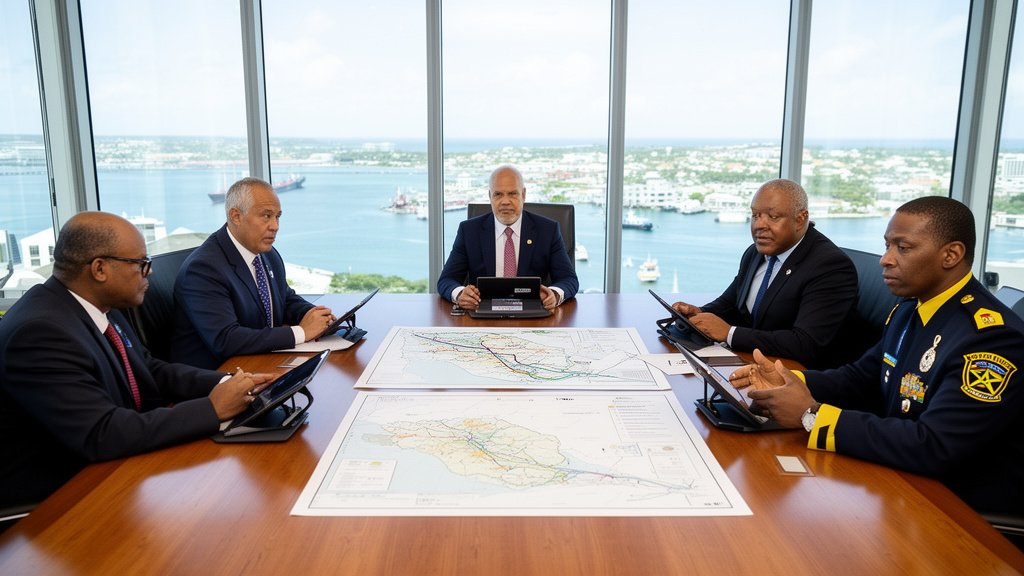
In a decisive move to bolster regional stability, Jamaica and the United States have formalized a renewed strategic partnership aimed at addressing three critical pillars of development: national security, economic investment, and post-hurricane infrastructure reconstruction. This diplomatic realignment, which has been accelerated by recent regional climate events and shifting geopolitical dynamics, signals a significant deepening of the relationship between the two nations, prioritizing tangible, measurable progress over conventional diplomatic platitudes.
Key Highlights
- Security Collaboration: Expanded intelligence sharing between the Jamaica Constabulary Force (JCF) and US federal agencies, focusing on the dismantling of transnational criminal organizations under the framework of the Caribbean Basin Security Initiative (CBSI).
- Economic Investment: Incentivized programs to increase Foreign Direct Investment (FDI) in Jamaica’s burgeoning BPO, technology, and green energy sectors, aiming to reduce the economic disparity that fuels local crime.
- Climate Resilience: A prioritized logistical and financial commitment from USAID to support the Office of Disaster Preparedness and Emergency Management (ODPEM) in rebuilding critical infrastructure destroyed or damaged by recent hurricane activity.
- Strategic Alignment: A structured, quarterly review mechanism established to track progress, ensuring this agreement functions as an actionable blueprint rather than an informal memorandum.
The Strategic Pivot: Advancing the Jamaica-US Bilateral Agenda
The formalization of this renewed cooperation marks a transition from reactive assistance to proactive, long-term development. For decades, the US-Jamaica relationship has been anchored by tourism and remittance flows; however, this latest accord reflects an understanding that regional stability is inextricably linked to infrastructure robustness and economic inclusion.
Tackling Organized Crime and Security Architecture
The core of the security agreement centers on the Caribbean Basin Security Initiative (CBSI). By integrating the technical capabilities of the US Department of Justice and the ATF with the localized expertise of the Jamaica Constabulary Force, both parties aim to curb the flow of illegal firearms—a primary driver of violence in the region. Analysts note that this is not merely a supply-side reduction strategy but a comprehensive effort to modernize Jamaican border security, including advanced screening technologies at air and seaports. This partnership emphasizes dismantling the ‘gang-to-global’ pipeline, where local gangs are increasingly leveraged by international cartels for narcotics trafficking.
Economic Investment as a Stability Tool
Economic instability acts as a force multiplier for crime. To combat this, the US has signaled a shift in its investment strategy, moving beyond traditional grants to facilitate high-impact Foreign Direct Investment (FDI). The focus is on diversifying Jamaica’s economy. By providing technical assistance to the Jamaica Chamber of Commerce and local entrepreneurs, the initiative aims to scale the Business Process Outsourcing (BPO) sector and modernize agricultural exports. The goal is clear: create high-quality jobs that offer an alternative to illicit economies. Furthermore, US financial institutions are working to streamline credit access for Jamaican small-to-medium enterprises (SMEs), which remain the backbone of the island’s employment landscape.
Post-Hurricane Reconstruction and Climate Resilience
Climate change presents an existential threat to the Caribbean. The recent hurricane seasons have highlighted the fragility of Jamaica’s energy grid and transportation networks. Through the collaboration with USAID and ODPEM, the bilateral partnership is now funding ‘resilience-first’ infrastructure projects. This includes the implementation of micro-grid technology, which ensures that essential services—hospitals, water treatment plants, and communication hubs—remain operational during catastrophic weather events. This segment of the agreement moves past emergency relief and focuses on hardening infrastructure, effectively lowering the long-term cost of recovery for the Jamaican government.
Secondary Angles for Future Context
1. Technological Infrastructure: The integration of 5G and cybersecurity infrastructure into the reconstruction phase, positioning Jamaica as a ‘smart’ regional hub, which is expected to attract Silicon Valley-tier investment.
2. Energy Independence: By leveraging US technical expertise to optimize renewable energy grids, Jamaica aims to reduce its dependence on imported fossil fuels, stabilizing the cost of living and, by extension, reducing civil unrest.
3. Diplomatic Domino Effect: Observers are watching closely to see if this model of deep, multi-sector cooperation will be replicated with other CARICOM nations, potentially setting a new standard for US foreign policy in the Caribbean.
FAQ: People Also Ask
Q: What is the primary goal of this new US-Jamaica agreement?
A: The goal is to synchronize efforts across security, economic development, and infrastructure to foster long-term regional stability, rather than providing one-off aid.
Q: How does this impact local crime in Jamaica?
A: Through increased intelligence sharing, technology transfer for border security, and targeted economic development, the initiative seeks to reduce the illicit flows and economic desperation that sustain criminal organizations.
Q: How are these projects being funded?
A: Funding involves a mix of direct US agency support (via USAID), private-public partnerships designed to attract FDI, and technical assistance programs aimed at capacity building for Jamaican institutions.
Q: Will this improve hurricane recovery efforts?
A: Yes, the focus is on ‘resilience-first’ infrastructure, meaning funds are directed toward hardening power grids and water systems to withstand future climate events, rather than just repairing damage after the fact.