
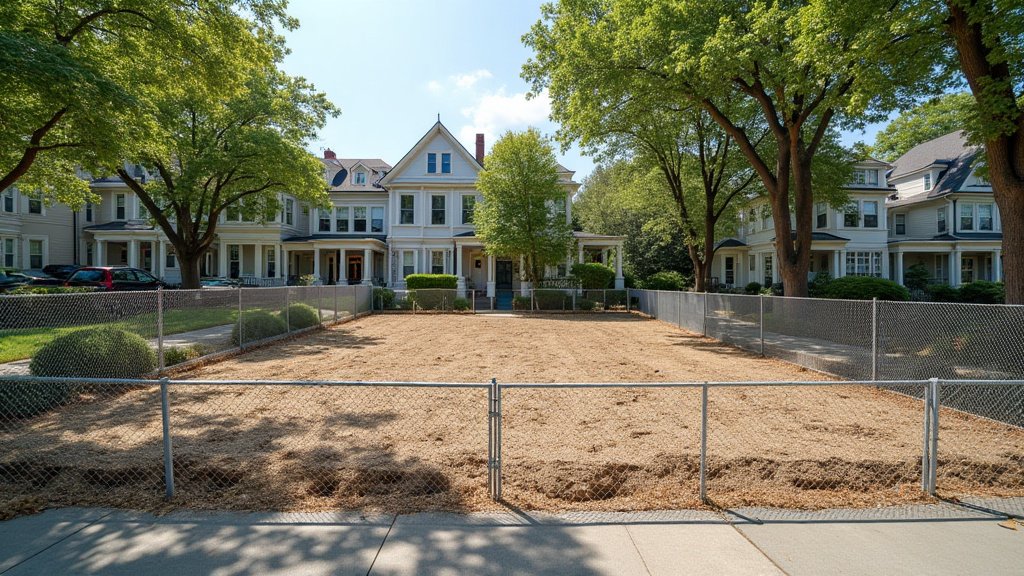
Residents of the Grosvenor district are breathing a collective sigh of relief this week as a long-standing eyesore—a derelict structure that has negatively impacted local property values and community safety for more than 12 years—has finally been razed. The demolition, which concluded late Tuesday afternoon, marks a significant milestone in a protracted battle between local homeowners and municipal authorities to restore the neighborhood’s aesthetic and economic vitality.
Key Highlights
- Site Remediation: The derelict property, abandoned since 2012, was fully cleared following a final enforcement notice issued by the Local Council.
- Safety Improvements: Local police reported that the removal of the site eliminates a “hotspot” for anti-social behavior and trespassing that had plagued the Grosvenor community.
- Economic Impact: Early estimates from local real estate analysts suggest that the removal of this blight could result in a 3-5% increase in property desirability for immediate neighboring homes.
- Future Planning: The site has been earmarked for mixed-use development, with proposals for a community-integrated green space currently under public review.
The Turning Point: Why Now?
The clearance of the Grosvenor eyesore was not an overnight success but the result of a rigorous, multi-year campaign spearheaded by the Grosvenor Residents’ Association (GRA). For over a decade, the site—a former industrial depot that ceased operations during the financial downturn—stood as a monument to urban decay. Broken windows, crumbling masonry, and overgrown vegetation became the defining features of an otherwise affluent and residential-heavy district.
For residents, the frustration was twofold: the physical danger the structure posed to local children, and the lingering sense of stagnation it projected to potential investors and visitors. The turning point occurred six months ago when the GRA presented a dossier of structural reports and incident logs to the municipal planning department, proving that the building violated at least four separate local zoning ordinances related to public safety and hazardous waste.
The Role of Regulatory Intervention
Local government intervention was the final lever. By escalating the matter to the regional Environmental Health & Safety committee, residents successfully argued that the building constituted a public nuisance. This forced the absentee property owners—who had previously ignored letters of inquiry—to either renovate or demolish. Faced with mounting daily fines and the threat of compulsory purchase, the owners opted for demolition.
The Economics of Urban Blight
The impact of such derelict sites extends far beyond mere aesthetics. In urban planning circles, the ‘Broken Windows Theory’ suggests that visible signs of disorder encourage further neglect. In the Grosvenor case, neighbors reported that the presence of the derelict site led to a sharp increase in fly-tipping and graffiti in the immediate vicinity. Removing this single eyesore is expected to break this cycle of neglect.
Real estate developers are already noting the change. By removing the physical barrier that depressed local land value, the neighborhood is now poised for a revitalization phase. This is a critical lesson for other urban centers: proactive community-led advocacy can successfully bypass bureaucratic inertia to trigger positive environmental change.
Sustainability and Next Steps
With the site now cleared, the focus shifts to sustainability. The current proposal—a combination of a small pocket park and a modest, low-density residential block—aims to address both the community’s need for green space and the broader city-wide demand for housing. The planning department has confirmed that any new construction must meet modern BREEAM (Building Research Establishment Environmental Assessment Method) standards, ensuring that the new development is carbon-efficient and integrates seamlessly with the existing Victorian-era architecture of the Grosvenor area.
FAQ: People Also Ask
Was the demolition publicly funded?
No, the demolition costs were borne entirely by the property owner to avoid further litigation and municipal penalties. The local council acted purely as an enforcement authority to ensure compliance.
How will this change local property taxes?
While individual tax assessments are unlikely to change immediately, the removal of the site eliminates a major factor that was suppressing local home values. Over the next 24 months, we anticipate a stabilization of market prices in the immediate streets surrounding the former site.
What happens to the site in the interim?
Until the new development permits are fully ratified, the site will be enclosed with high-quality, non-intrusive fencing and temporarily grassed to prevent further dust and aesthetic issues. The council has pledged to maintain the area to prevent it from becoming a ‘dead’ space again.