
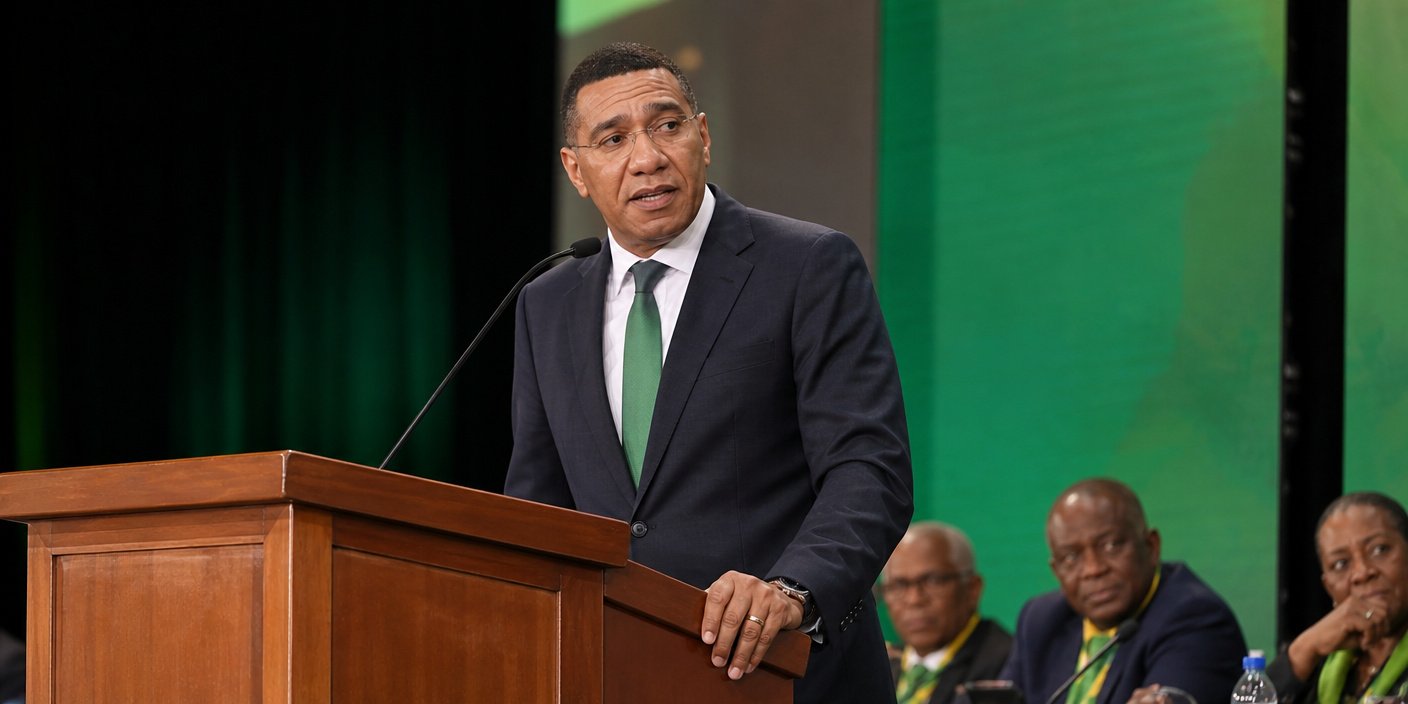
Prime Minister Dr. Andrew Holness has signaled a major shift in administrative accountability regarding national disaster relief, proposing the public release of hurricane grant records and the establishment of a centralized, searchable database. Speaking at the Jamaica Labour Party’s (JLP) 83rd Special Delegates’ Conference, Holness addressed mounting criticism and allegations of political bias regarding the distribution of state aid in the wake of recent extreme weather events, suggesting that full digital disclosure could be the decisive solution to countering misinformation.
Key Highlights
- Proposed Digital Disclosure: PM Holness aims to create a searchable online database containing lists of hurricane grant recipients to ensure public access.
- Countering Misinformation: The strategy is designed to combat allegations of political partiality in the distribution of post-disaster financial relief.
- Commitment to Transparency: The announcement reflects a push to modernize government accountability standards following the JLP’s 83rd Special Delegates’ Conference.
- Policy Evolution: This move signals a significant departure from traditional, opaque disbursement methods often associated with political patronage in Caribbean governance.
Advancing Transparency in Disaster Recovery
The Prime Minister’s proposal, articulated during a high-stakes moment for his administration at the JLP’s 83rd Special Delegates’ Conference, represents a calculated attempt to reclaim the narrative surrounding post-disaster relief. For years, the distribution of government grants in Jamaica—particularly in the aftermath of hurricanes and tropical storms—has been a flashpoint for accusations of political favoritism. These criticisms often allege that constituency caretakers and MPs selectively channel resources to supporters while sidelining opponents.
By pledging to publish recipient lists or create a searchable online infrastructure, the Holness administration is looking to institutionalize transparency. This approach does more than simply answer critics; it attempts to codify a new standard of “open government” where the movement of public funds is traceable by the very citizens who fund them through taxation.
The Mechanics of Public Accountability
Implementation of such a database would involve significant technical and legal hurdles. Specifically, the government must reconcile the push for transparency with the Data Protection Act (DPA). Privacy experts will likely scrutinize the proposal to ensure that the release of grant records does not expose vulnerable citizens to identity theft or unnecessary public scrutiny of their financial status.
However, the administration’s focus remains on “accountability as a buffer against falsehoods.” If a citizen can search a database to see which households in their district received assistance—and perhaps even the criteria used for selection—the opportunity for opposition actors to spread “misinformation” regarding political bias is theoretically neutralized. This move suggests a shift toward “Open Data” governance, moving away from traditional, siloed bureaucratic processes.
The Political Imperative
Beyond the logistics of digital databases, this proposal is highly political. The JLP’s 83rd Conference was, in part, a mobilization event for upcoming political cycles. By leaning into transparency, Holness is positioning his government as more equitable than his predecessors. It acts as a defensive strategy against the optics of corruption.
Historically, “hurricane money” has been a sensitive topic in Jamaican politics, frequently weaponized by the opposition to suggest that the government uses disaster relief as an electoral tool. By proactively inviting public scrutiny, the Prime Minister is essentially removing this specific weapon from the opposition’s arsenal, forcing a conversation about data and metrics rather than anecdotal allegations.
Challenges to Implementation
Despite the clear political advantages, executing this vision will be complex. First, the Ministry of Labour and Social Security, which typically handles the disbursement of these grants, would need to undergo a digital transformation. Moving from paper-based records to a public-facing digital ledger requires cybersecurity infrastructure that is currently being built out under the country’s Digital Transformation agenda.
Furthermore, there is the risk of the “data transparency trap.” If the released lists contain errors, omissions, or anomalies—even if innocent—it could generate a new wave of criticism. Transparency provides a snapshot, but that snapshot will inevitably be analyzed by political data miners looking for irregularities. The administration must ensure that if this database is launched, the data integrity is unimpeachable, or they risk creating more controversy than they resolve.
FAQ: People Also Ask
1. Why is the Prime Minister proposing this database now?
Holness is responding to recurring allegations of political bias in the distribution of disaster relief funds. The database serves as a proactive measure to counter misinformation and demonstrate that the selection process for grant recipients is equitable and data-driven.
2. Will individual privacy be compromised by public lists?
This is a central concern. The government will likely need to comply with the Data Protection Act, meaning they may need to redact sensitive personal identification information while still allowing the public to verify that funds reached the intended communities.
3. Is this proposal final?
It is currently a policy proposal announced at the JLP conference. The government has signaled an intent to move in this direction, but specific timelines for the launch of a searchable portal have yet to be finalized or formally legislated.
4. What entity will manage this data?
While not explicitly named, the Ministry of Labour and Social Security is the primary agency responsible for grant distribution, meaning they would likely lead the technical development and maintenance of any such public registry.