
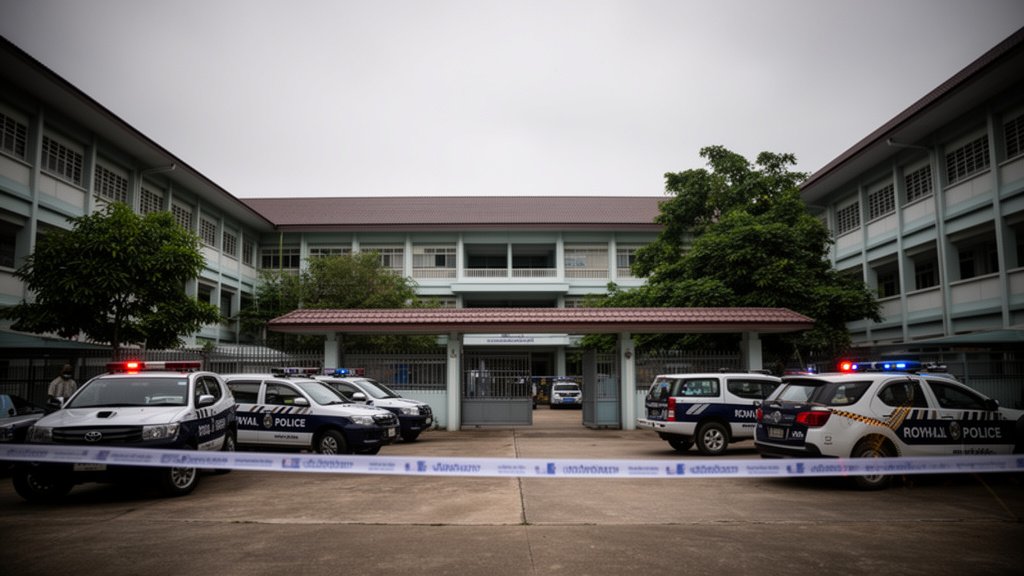
A somber atmosphere has descended upon a high school located in the outskirts of Bangkok, Thailand, following a devastating shooting incident in which a student opened fire, resulting in the deaths of at least six individuals and multiple injuries. The incident, which has sent shockwaves through the local community and the national education system, is currently the subject of an intense investigation by the Royal Thai Police. As the area remains cordoned off, the focus has shifted from the immediate tactical response to the profound questions regarding the circumstances that allowed such a tragedy to unfold on school grounds.
The Incident and Immediate Response
The shooting occurred during school hours, catching students and faculty entirely off guard. Witnesses described a chaotic scene as shots rang out, leading to a swift lockdown of the campus. Emergency services were dispatched immediately, with local medical facilities receiving several injured individuals shortly after the perimeter was secured. Law enforcement agencies, including local police units and special response teams, arrived at the scene to manage the situation and transport the victims. Authorities have confirmed the shooter was a student currently enrolled at the institution, though details regarding the individual’s history or potential motives remain under strict confidentiality while the investigation proceeds.
A Community in Crisis
The impact of this tragedy on the community cannot be overstated. Schools in Thailand are generally viewed as safe havens, and an event of this magnitude disrupts the sense of security fundamental to the educational environment. In the hours following the shooting, parents and family members gathered near the school’s vicinity, anxiously waiting for updates. Counseling services have been mobilized by the Ministry of Education to support the traumatized student body, teachers, and grieving families. This incident has reignited nationwide conversations about mental health resources within academic institutions and the necessity for more rigorous on-campus security protocols.
The Socio-Economic Context of Firearm Regulation
While this event is an anomaly in the context of recent Thai history, it brings to the forefront the complex issue of firearm regulation in the country. Thailand has historically maintained a significant volume of civilian-owned firearms, and this tragedy serves as a catalyst for a re-evaluation of current gun control policies. Analysts are currently debating whether the legislative framework governing weapon accessibility—specifically how a student managed to secure a firearm—needs immediate tightening. The economic impact of such events is also significant, as increased security infrastructure requirements often fall upon public school budgets, which are already tightly managed.
Analyzing the Security Landscape
Moving forward, the conversation is shifting toward the implementation of comprehensive safety measures. This includes not only the physical hardening of school infrastructure, such as gated entryways and surveillance systems, but also the integration of early-warning detection systems for student mental health crises. Educators and psychologists are calling for a systemic change that prioritizes behavioral health support, aiming to identify at-risk students before situations escalate to violence. The goal is to transform schools into environments where safety is proactive rather than reactive.
Future Implications and Policy Shifts
Government officials are facing pressure to enact legislative changes. The tragedy has prompted calls for a national inquiry into school safety standards, with potential outcomes including mandatory training for school staff on crisis intervention and stricter penalties for illegal possession of firearms. The long-term challenge for the administration will be balancing the need for heightened security with the desire to maintain a nurturing and open educational atmosphere. This incident will likely serve as a defining moment for educational policy in Thailand for the coming years, marking a shift toward more stringent oversight and preventative measures in schools across the country.