
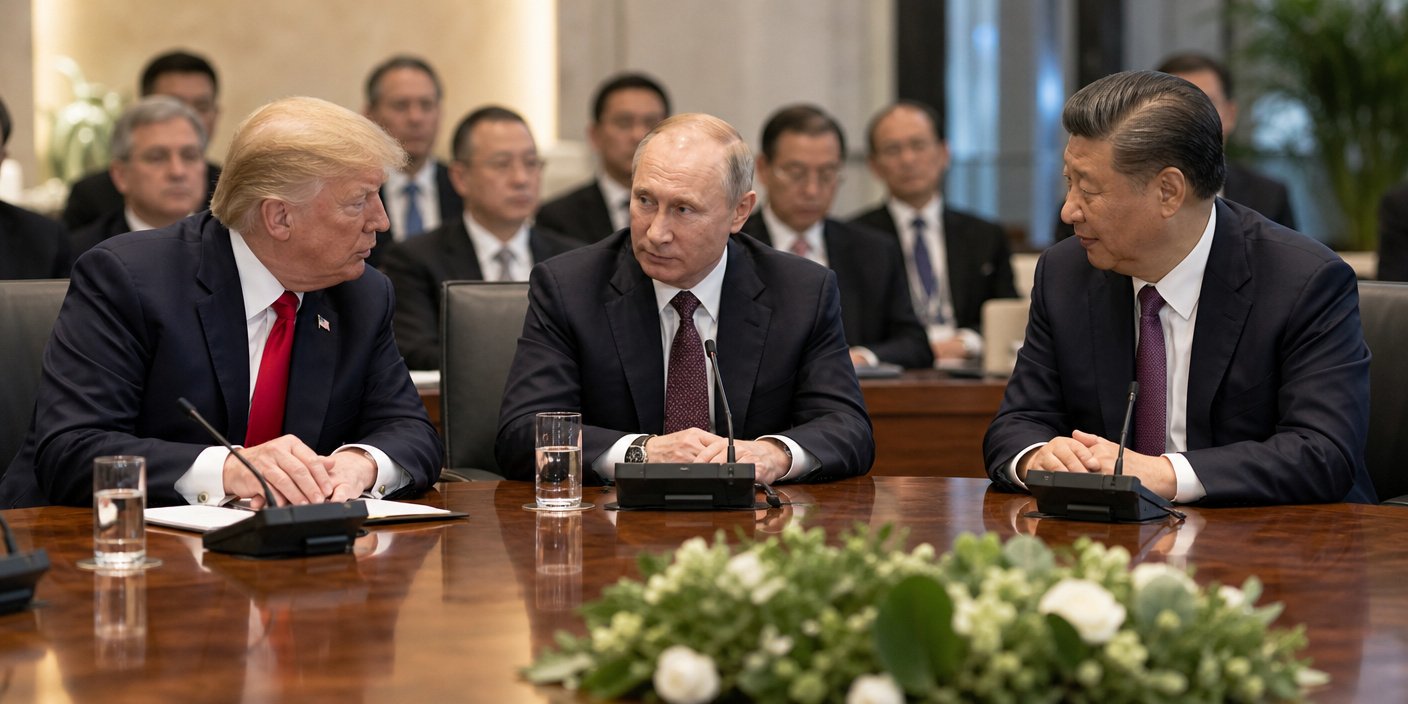
In an unprecedented diplomatic maneuver that has recalibrated the trajectory of the ongoing APEC summit, US President Donald Trump, Russian President Vladimir Putin, and Chinese President Xi Jinping have gathered in Shenzhen, China. The trilateral summit, occurring on the sidelines of the broader regional economic forum, represents a singular moment in contemporary geopolitics, with the three world leaders seeking common ground on issues that have defined global tension for the past decade. President Trump, arriving in Shenzhen ahead of the formal proceedings, notably emphasized his ‘great relationship’ with President Putin, a framing that has set a provocative tone for the discussions to follow.
Key Highlights
- Trilateral Convening: US, Russian, and Chinese heads of state meet in Shenzhen for a historic and previously unannounced trilateral session.
- Strategic Agenda: The talks prioritize nuclear arms reduction, international trade disputes, and the stability of global markets.
- Conflict Resolution: Urgent discussions are slated regarding de-escalation strategies for the ongoing conflicts in Ukraine and the Middle East.
- Diplomatic Optics: President Trump’s characterization of his rapport with President Putin introduces a complex dynamic to the established power structures of the APEC summit.
The Shenzhen Pivot: A New Geopolitical Triangle
The unexpected assembly of Donald Trump, Vladimir Putin, and Xi Jinping in the bustling tech hub of Shenzhen is being viewed by analysts as a high-stakes recalibration of global influence. Historically, APEC (Asia-Pacific Economic Cooperation) summits have functioned as forums for economic integration and trade liberalization. However, this trilateral sidebar has shifted the focus from regional market access to the hard-power realities of nuclear proliferation and systemic regional conflict.
For President Trump, this summit represents an attempt to bypass traditional diplomatic channels and engage directly with the primary counterweights to American influence. His public remarks regarding his ‘great relationship’ with President Putin serve a dual purpose: they signal a willingness to break from established diplomatic friction while simultaneously forcing a re-evaluation of the Russia-China-US triangular relationship. By positioning these talks within the APEC framework, the participants are effectively acknowledging that economic prosperity—the core mission of APEC—cannot be decoupled from the security architectures currently being tested in Ukraine and the Middle East.
Nuclear Disarmament and Global Trade Dynamics
At the core of the Shenzhen agenda are two pillars: nuclear arms control and the revitalization of stalled global trade protocols. With nuclear tensions at their highest point since the Cold War, the presence of the three leaders provides a rare opportunity for back-channel communication that is often impossible through formal diplomatic channels. Sources close to the proceedings suggest the discussion is centered on a proposed ‘freeze-and-verify’ framework, intended to de-escalate the rhetoric surrounding nuclear readiness in Eastern Europe and the Pacific.
Simultaneously, the trade discussion is critical. With US-China tariffs remaining a significant drag on global manufacturing and supply chains, the presence of President Trump and President Xi offers a window to mitigate ongoing economic disputes. The integration of Russia into these economic dialogues—a challenging prospect given existing sanctions—suggests that the talks are exploring a new ‘resource-for-access’ equilibrium, aiming to secure energy markets while maintaining domestic manufacturing protections.
Regional Conflict: Ukraine and the Middle East
Perhaps the most volatile element of the summit is the focus on the ongoing conflicts in Ukraine and the Middle East. The proximity of the three leaders creates an environment where direct demands can be made regarding proxies and resource flows. In Ukraine, the dialogue is expected to address the logistical supply lines and the potential for a ceasefire framework that respects the security interests of both the US and Russia. In the Middle East, the focus is on containing the regional spillover effects that threaten to destabilize global oil shipping lanes—a critical concern for all three nations represented at the table.
Historical Context of the APEC Summit
APEC has traditionally been a venue for economic dialogue, founded in 1989 to facilitate trade. The shift toward security-heavy, trilateral diplomacy in Shenzhen marks a significant evolution in the forum’s history. By hosting such a pivotal discussion, Shenzhen—a city symbolic of China’s economic ascent—now also serves as the backdrop for a potentially transformative geopolitical deal. The willingness of all three leaders to engage in this format highlights a shared recognition that the status quo is becoming unsustainable and that bilateral diplomacy is insufficient to address the complexities of a multipolar world.
FAQ: People Also Ask
1. Why was Shenzhen chosen for these trilateral talks?
Shenzhen was selected due to its symbolic role as a central hub of global technology and manufacturing, as well as its ability to provide the secure, logistical infrastructure necessary for a high-level summit between the US, Russian, and Chinese heads of state.
2. Is this the first time these three leaders have met in this format?
Yes, this is an unprecedented trilateral meeting between the three presidents. While they have met individually in various configurations, a formal trilateral summit focused specifically on nuclear, trade, and conflict resolution is historic.
3. How does Trump’s ‘great relationship’ comment affect the optics?
President Trump’s emphasis on his rapport with President Putin serves as a strategic signal, aiming to suggest a more fluid and direct channel of communication. This is intended to disrupt traditional alliances and signal a move toward more flexible, personality-driven diplomacy.
4. What are the key outcomes experts are watching for?
Observers are looking for tangible agreements on nuclear de-escalation, a possible roadmap for alleviating trade tariffs between the US and China, and a commitment to maintaining stability in oil-producing regions to prevent further price volatility.