
Ukrainian forces have launched an unprecedented aerial offensive against Moscow Oblast, deploying over 1,600 long-range drones in a high-stakes retaliatory operation. The coordinated strike targeted critical infrastructure, resulting in significant fires at the Moscow Refinery and confirmed casualties, marking a severe escalation in the ongoing conflict. This operation represents one of the largest single-wave drone incursions into the Russian capital since the start of hostilities, signaling a decisive shift in how Kyiv approaches long-range targeting.
Key Highlights
- Massive Scale: Ukrainian forces deployed over 1,600 long-range, custom-engineered drones in a coordinated, multi-axis wave targeting the Moscow region.
- Industrial Impact: Significant fires were reported at the Moscow Refinery, disrupting regional energy processing capabilities and underscoring the vulnerability of Russian industrial assets.
- Presidential Confirmation: President Zelenskyy officially confirmed the operation, framing the strikes as a strategic, necessary retaliation against ongoing aggression.
- Human Cost: The attack resulted in verified reports of at least two fatalities and multiple injuries, reflecting the volatility of long-range drone saturation tactics.
The Strategic Escalation: Changing the Calculus of Conflict
The sheer volume of drones utilized in this assault—surpassing the 1,600 mark—represents a fundamental change in Ukrainian military doctrine. Historically, long-range strikes were isolated or limited in number, intended to test air defense systems rather than saturate them. By deploying such a massive swarm, Ukrainian operators effectively overwhelmed Russian layered air defenses, which rely on a mix of Pantsir-S1 systems and electronic warfare suites to intercept incoming threats.
This saturation tactic suggests that Kyiv has successfully operationalized a high-volume manufacturing pipeline for long-range, low-cost UAVs. By flooding the airspace with cheap, expendable airframes, Ukraine is forcing the Russian Ministry of Defense to expend costly interceptor missiles on targets that are a fraction of the cost. The tactical success of this mission is not merely found in the damage dealt, but in the exhaustion of the defensive resources required to protect the political and industrial center of gravity in Moscow.
Industrial Vulnerability: The Moscow Refinery Strike
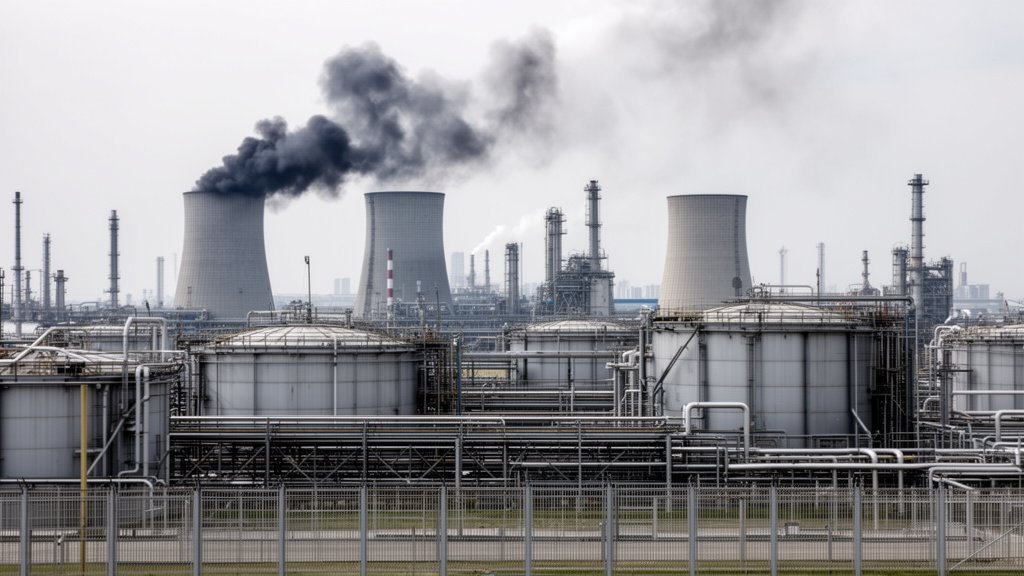
The most significant tactical outcome of this operation was the successful strike on the Moscow Refinery. As a critical piece of energy infrastructure, the refinery is vital for the processing of fuel that powers both civil transport and military logistics within the Central Federal District. Visual confirmation and emergency reports from the scene indicated massive fires erupting at the facility, which forced authorities to suspend certain operations.
This hit demonstrates that Ukraine’s intelligence gathering and targeting capabilities have reached a level of precision capable of bypassing the most protected areas of Russia. The attack serves two purposes: it creates a tangible economic impact by disrupting refined petroleum output, and it acts as a powerful psychological blow to the Russian domestic narrative, which has long portrayed Moscow as impenetrable and far removed from the frontlines of the conflict.
Secondary Angles: Analyzing the Ripple Effects
1. Global Energy Market Volatility:
The strike on the Moscow Refinery immediately rippled through energy markets. While the global supply is diversified, attacks on Russian refining capacity introduce “risk premiums” into the futures market for diesel and gasoline. If these strikes become a recurring tactic, analysts predict further fluctuations in the price of refined products, complicating Russia’s ability to generate revenue from its energy sector while balancing domestic consumption needs.
2. The Technological Arms Race:
This operation highlights the rapid evolution of Ukrainian domestic drone production. Moving beyond off-the-shelf commercial drones, these long-range units are increasingly sophisticated, featuring improved autonomous navigation and resistance to electronic countermeasures (ECM). The ability to guide a swarm of over 1,600 units into a specific target area requires significant advancements in mesh networking, satellite-linked guidance, and AI-assisted terminal guidance.
3. Diplomatic Constraints and Retaliatory Doctrine:
President Zelenskyy’s confirmation of the strikes as “retaliatory” serves a specific diplomatic function. It frames the actions within the context of self-defense rather than unprovoked aggression. By explicitly linking the drone wave to ongoing Russian attacks, Kyiv is navigating the complex boundaries set by Western allies regarding the use of provided weaponry on Russian soil. The implication is that if the West cannot guarantee the prevention of attacks on Ukrainian infrastructure, Ukraine will demonstrate its own capacity for long-range, asymmetric response.
FAQ: People Also Ask
How many drones were deployed in the attack?
Ukrainian forces reportedly utilized over 1,600 long-range drones in the coordinated attack, making it one of the largest single-wave operations of the war.
What was the primary target of this offensive?
While the drones spread across the Moscow region, the primary industrial target was the Moscow Refinery, where significant fires caused by the strikes led to operational disruptions.
Did leadership confirm the operation?
Yes, President Zelenskyy confirmed that the drone offensive was a strategic, retaliatory measure undertaken by Ukrainian forces.
What is the significance of the refinery attack?
The attack on the Moscow Refinery is significant because it impacts Russia’s refined fuel output, which is crucial for both domestic logistics and military operations, while also challenging the narrative of Russian home-front safety.