
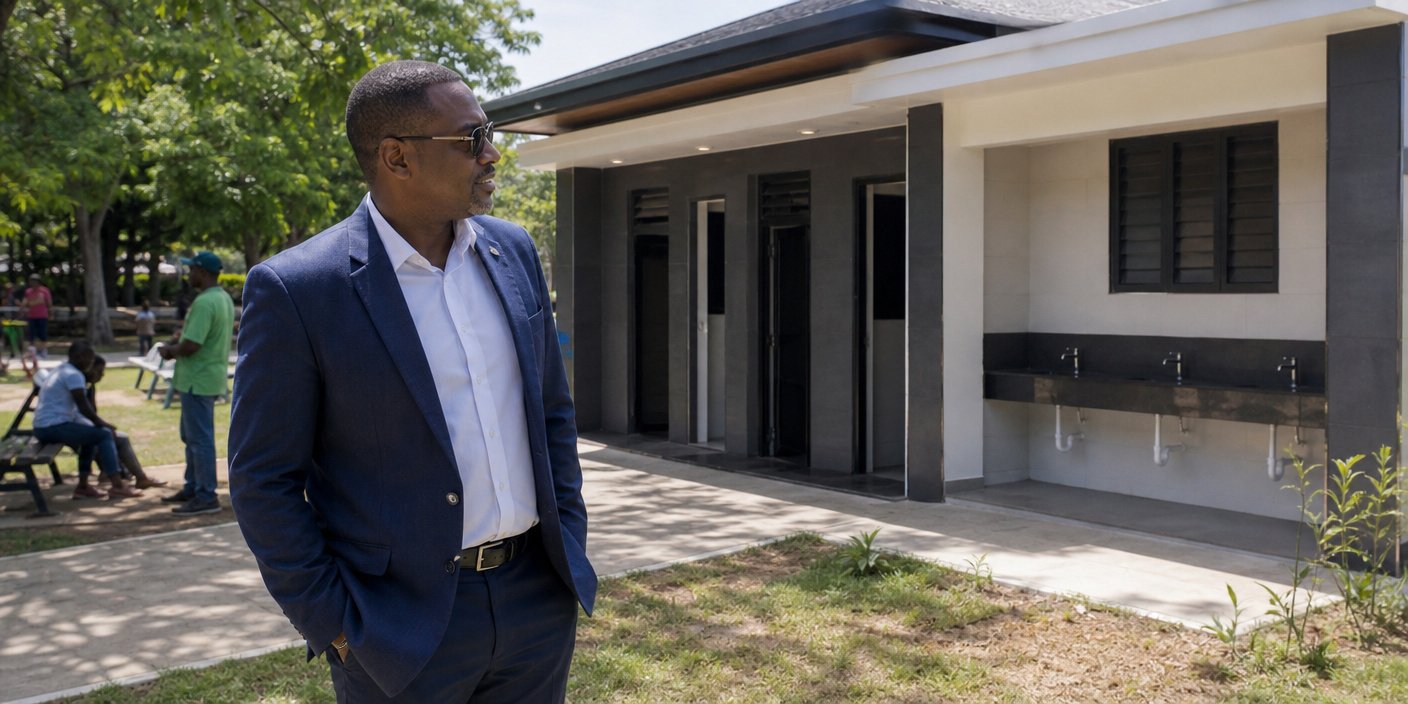
The Kingston and St. Andrew Municipal Corporation (KSAMC) has officially completed the refurbishment of public sanitary facilities at two critical community hubs: Gordon Town Square and Rocky Park in Harbour View. Spearheaded by Mayor Andrew Swaby, this infrastructure initiative represents a significant pivot in how the municipal body manages public utilities, moving away from centralized, top-down oversight toward a collaborative model that empowers local stakeholders. By restoring these essential facilities to operational standards, the KSAMC aims to address long-standing sanitation deficits in high-traffic public spaces while fostering a renewed sense of shared civic responsibility.
Key Highlights
- KSAMC successfully completed the refurbishment of public sanitary facilities at Gordon Town Square and Rocky Park.
- Mayor Andrew Swaby confirmed that the initiative integrates a new maintenance model involving local community groups.
- The program seeks to combat degradation of public infrastructure through shared accountability.
- This project reflects a broader commitment by the KSAMC to improve sanitation standards in St. Andrew’s public spaces.
Revitalizing Public Infrastructure: A Shift in Governance
The completion of refurbishment works at Gordon Town Square and Rocky Park is not merely a cosmetic upgrade; it is a tactical response to the persistent challenges of maintaining public assets in Kingston and St. Andrew. Historically, municipal facilities in the region have suffered from rapid deterioration due to high usage and inconsistent maintenance schedules. The KSAMC, under Mayor Andrew Swaby’s direction, has recognized that physical repairs are only half the solution. The core of this initiative is the strategic inclusion of local community partners. By engaging these groups to oversee the day-to-day operations and cleanliness of the facilities, the KSAMC is effectively decentralizing accountability. This approach ensures that the people who use the facilities the most are invested in their preservation.
The Mechanics of Shared Accountability
Public-private partnerships at the community level are difficult to execute, yet they remain the gold standard for sustainable urban management. In the context of Gordon Town Square, a pivotal transit and social nexus, the KSAMC’s decision to involve local community groups is a proactive measure against vandalism and neglect. The ‘shared accountability’ model functions as a feedback loop: local groups provide the eyes and ears on the ground, reporting issues before they become systemic failures, while the KSAMC provides the technical support and resources required for heavy-duty maintenance. This collaboration creates a social contract where residents view the facilities as community-owned assets rather than government-owned amenities, drastically reducing the likelihood of neglect.
Improving Public Health and Sanitation Standards
Access to hygienic sanitary facilities is a fundamental determinant of public health, particularly in public spaces where residents congregate for commerce and leisure. Rocky Park, situated in the Harbour View area, serves as a focal point for community activity. The previous state of the facilities had become a growing concern, creating potential health risks and detracting from the park’s utility as a recreational space. The refurbishment ensures that these facilities now meet modern hygiene standards, including improved plumbing, functional fixtures, and sanitation protocols. This upgrade is critical for enhancing the overall quality of life in these areas, encouraging more families to utilize public parks without the burden of inadequate sanitary support.
Economic Impact and Long-term Sustainability
Infrastructure development has a direct correlation with local economic stability. When public squares like Gordon Town are clean and functional, they become more attractive for small-scale commerce, social gatherings, and community events. By investing in the refurbishment of these sanitary facilities, the KSAMC is indirectly supporting the local economy by creating environments where people feel comfortable spending their time. The sustainability of this project, however, relies on the success of the new maintenance model. If this pilot proves successful at Gordon Town and Rocky Park, it sets a replicable template for other districts within the KSAMC’s jurisdiction. This could signify a transformative era for St. Andrew’s municipal management, where community partnership becomes the standard rather than the exception.
Addressing the Infrastructure Deficit
St. Andrew, as a rapidly urbanizing region, faces constant pressure on its public infrastructure. The KSAMC’s current strategy highlights a move toward ‘smart maintenance’—focusing on high-impact areas that serve the largest number of citizens. Moving forward, the corporation must continue to balance the budget between massive new infrastructure projects and the critical, ongoing maintenance of existing sites. The refurbishment of these facilities is a step toward closing the gap between the growth of the population and the availability of basic, dignified public amenities. The success of this initiative will be measured not just by the completion of the construction, but by the condition of these facilities six months to a year from now.
FAQ: People Also Ask
1. Which locations were prioritized for the KSAMC refurbishment project?
the KSAMC prioritized Gordon Town Square and Rocky Park in Harbour View as these are high-traffic, critical community hubs requiring immediate sanitary improvements.
2. How does the ‘shared accountability’ model work for maintenance?
The model pairs local community groups with the KSAMC. The community groups handle day-to-day monitoring and oversight of the facilities, while the KSAMC manages the underlying maintenance and technical resource support, ensuring consistent operational standards.
3. Will the KSAMC extend this maintenance model to other areas in St. Andrew?
While the current focus is on the refurbishment of the specific facilities at Gordon Town and Rocky Park, Mayor Andrew Swaby has indicated that this approach is intended to foster a template for future infrastructure maintenance across the municipality if successful.
4. Why is community partnership crucial for this initiative?
Community partnership is essential because it shifts the perception of these facilities from ‘government property’ to ‘community assets.’ This reduces the likelihood of vandalism and ensures more immediate reporting of maintenance issues, which is vital for long-term sustainability.