
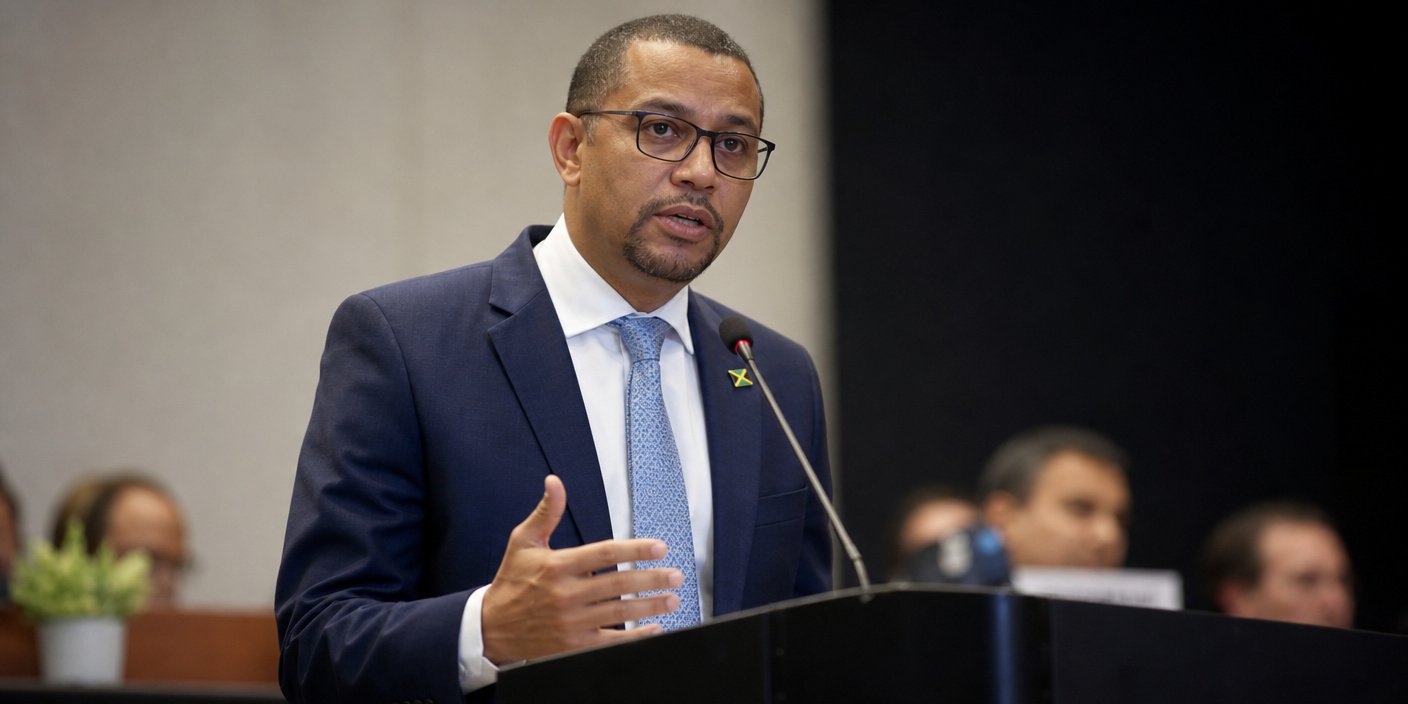
Jamaica’s Minister without Portfolio in the Ministry of Economic Growth and Job Creation, Matthew Samuda, has issued a stark warning regarding the global “climate financing shortfall” that continues to leave small island developing states (SIDS) increasingly vulnerable to environmental catastrophes. As extreme weather patterns intensify, the current international funding mechanisms remain woefully inadequate, failing to provide the rapid, accessible capital necessary for long-term climate adaptation and resilience-building in the Caribbean. Minister Samuda’s intervention highlights a systemic failure where the nations least responsible for global carbon emissions are being forced to shoulder the heaviest financial burden of the resulting climate crisis.
Key Highlights
- Systemic Funding Failure: Existing global climate funds are structurally unsuited to address the rapid, multi-faceted risks faced by SIDS.
- Adaptation Over Reaction: There is an urgent call to shift financing priorities from post-disaster relief to proactive, long-term infrastructure adaptation.
- Sovereign Debt Constraints: High debt-to-GDP ratios in island nations make traditional commercial borrowing for climate resilience financially unsustainable.
- Policy Advocacy: Jamaica continues to lobby for the reform of international financial architecture to create concessionary funding pathways tailored to small states.
The Fragile Frontline: Analyzing the SIDS Funding Crisis
The narrative surrounding climate finance has reached a critical inflection point. For nations like Jamaica, the conversation is no longer theoretical or environmental—it is a matter of economic survival. Minister Matthew Samuda’s recent assessment underscores a grim reality: while global rhetoric surrounding climate change has improved, the actual movement of capital to the frontlines remains stagnant. Small Island Developing States (SIDS) are disproportionately exposed to climate-induced hazards, including category-five hurricanes, rising sea levels, and catastrophic coastal erosion, yet the mechanisms designed to facilitate climate finance are often blocked by complex bureaucratic red tape and outdated eligibility criteria.
The Structural Deficit in Adaptation Finance
The fundamental issue lies in the distinction between mitigation and adaptation. Much of the global funding available through the Green Climate Fund and other multilateral institutions has historically prioritized mitigation—projects designed to reduce carbon emissions. While essential, this focus leaves SIDS, which contribute negligibly to global emissions, without sufficient funding for the adaptation projects that are vital for their immediate survival.
Minister Samuda has correctly identified that adaptation requires a different class of investment. Building seawalls, upgrading water management systems, and climate-proofing energy grids are capital-intensive projects that offer slow, long-term returns. When these costs are layered onto the existing sovereign debt profiles of Caribbean nations, the result is a fiscal trap. International lenders often view these projects through traditional risk lenses, failing to account for the “climate risk premium” that inherently exists in the region. Without de-risking mechanisms or grants that do not add to national debt, SIDS are effectively forced to under-invest in their own survival.
Economic Impact: Beyond the GDP
The economic implications of this funding gap extend far beyond immediate damage assessments after a storm. Climate volatility creates a climate of uncertainty that deters foreign direct investment (FDI) and increases insurance premiums for local businesses. This creates a feedback loop: increased climate risk leads to higher costs of doing business, which hampers economic growth, which in turn reduces the fiscal space available for the government to invest in climate resilience.
By continuing to treat climate financing as a charitable overlay rather than a core component of sustainable economic development, the international community is inadvertently stifling the growth potential of the Caribbean. Samuda’s critique points to the need for “blended finance” solutions—where public funds are used to mobilize private capital, provided that the terms are concessionary enough to be manageable for developing economies. The current reliance on market-rate loans is simply insufficient to address the scale of the threat posed by the climate crisis.
Geopolitical Leverage and Future Predictions
Looking toward the future, Jamaica is positioning itself as a leader in the global push for a more equitable financial architecture. This involves active participation in the Bridgetown Initiative and various COP forums, where SIDS are collectively demanding that the World Bank, the IMF, and other multilateral development banks (MDBs) undergo structural reforms.
Future predictions suggest that if the current financing gap persists, the cost of inaction will far exceed the cost of early intervention. We are likely to see an increase in climate-induced migration, agricultural instability, and a degradation of critical tourism assets. However, if Minister Samuda’s call for reform is heeded, we may see a pivot toward “resilience bonds” or parametric insurance instruments that provide automatic, rapid liquidity in the wake of a climate event. The path forward requires a transition from the current system of aid-based ad-hoc funding to a systemic, predictable, and fair financial framework that recognizes the specific vulnerabilities of small island nations.
FAQ: People Also Ask
1. Why is climate financing particularly difficult for Small Island Developing States (SIDS)?
SIDS face a unique combination of high vulnerability to climate change, limited land mass, and often high levels of existing sovereign debt. This makes it difficult to secure affordable loans for massive infrastructure projects, as the risk of default is perceived as higher by traditional lenders.
2. What is the difference between climate mitigation and adaptation?
Mitigation involves actions to reduce greenhouse gas emissions (e.g., renewable energy). Adaptation involves adjusting natural or human systems to moderate harm from climate change impacts (e.g., building sea walls to stop flooding).
3. How can international financial institutions help address this shortfall?
By offering concessionary loans with longer repayment periods, implementing debt-for-nature swaps, and creating faster, less bureaucratic access to grant-based funding for adaptation projects, these institutions can provide the necessary fiscal space for SIDS to build resilience.