
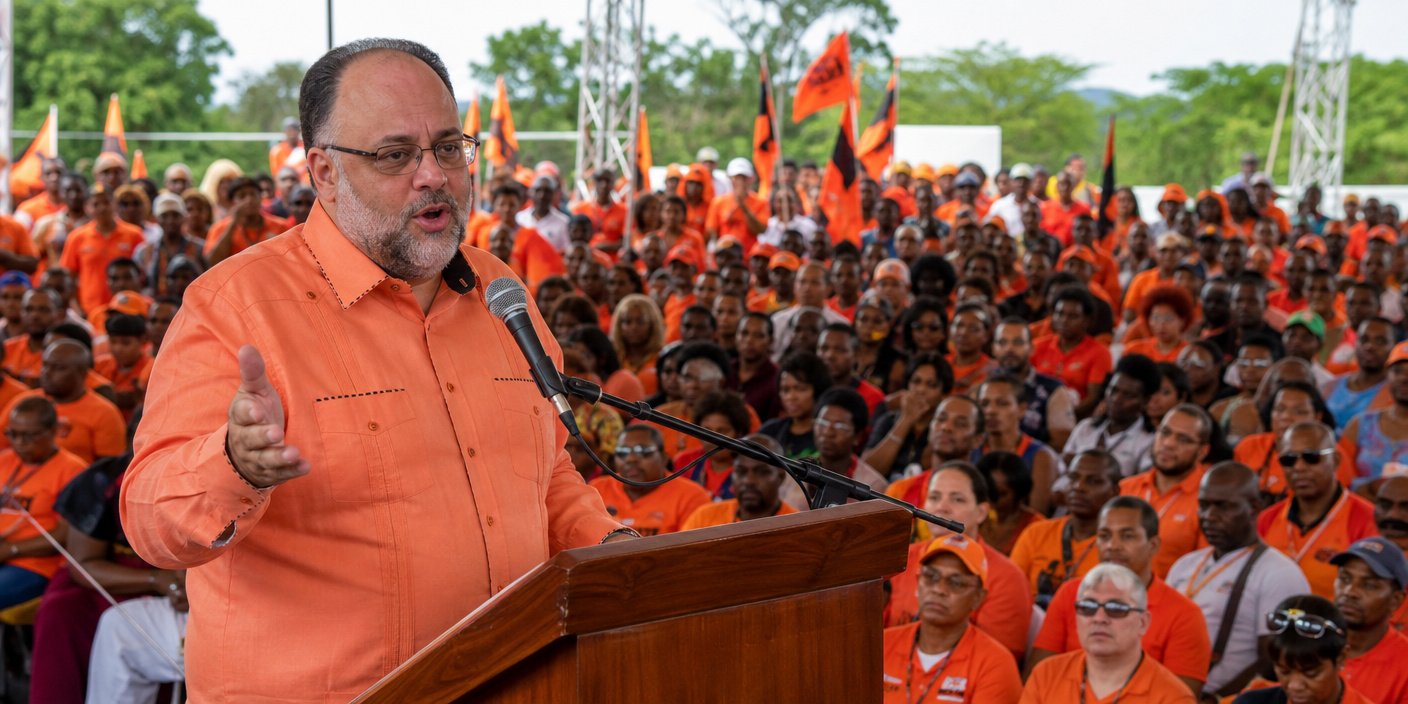
The People’s National Party (PNP) has officially set its sights on a transformative governance model, as party leader Mark Golding unveiled a robust ‘people first’ vision at the 88th annual national conference. Convened at Independence Park in Westmoreland, the event served as a critical platform for the PNP to articulate its socio-economic policies, aiming to address the pressing needs of the Jamaican population while galvanizing the party’s base for upcoming electoral challenges. By placing the citizen at the center of the political discourse, Golding is positioning the party to capture the shifting sentiments of an electorate seeking tangible change and improved living standards.
Key Highlights
- Strategic Pivot: Mark Golding introduced a ‘people first’ mandate, emphasizing direct social investment over macro-economic austerity measures.
- Inclusive Policy Framework: The conference highlighted specific commitments to addressing healthcare accessibility, educational equity, and small business support.
- Mobilization Milestone: The 88th annual gathering marked a record level of engagement from the party’s youth wing and regional representatives.
- Economic Reimagining: The party platform detailed a roadmap to stabilize the cost of living while stimulating growth in the grassroots economy.
A New Era of Governance: The ‘People First’ Agenda
The narrative emerging from the 88th PNP National Conference is one of deliberate focus and structural re-alignment. For Mark Golding, the ‘people first’ agenda is not merely a slogan but a response to the perceived disconnect between current economic statistics and the daily reality of the average Jamaican citizen. Throughout his keynote address, Golding articulated a vision that seeks to balance fiscal responsibility with robust social safety nets, suggesting that true national growth cannot occur if the majority of the population remains marginalized by current economic policies.
Economic Resilience and Grassroots Empowerment
At the heart of the debate within the conference was the necessity of stabilizing the Jamaican dollar and controlling inflation to protect purchasing power. Golding’s address underscored the importance of shifting focus away from purely top-down economic indicators. Instead, the PNP’s proposed strategy involves incentivizing the micro, small, and medium enterprise (MSME) sector, which remains the backbone of the Jamaican economy. By focusing on debt relief for small business owners and implementing tax incentives for local producers, the party aims to create a bottom-up stimulus effect that could potentially mitigate the rising cost of living.
Furthermore, the discussions at Independence Park highlighted the ‘People First’ approach to labor relations. Golding argued that the dignity of work must be restored through living wages and stronger collective bargaining protections. This commitment to the labor force is seen as a strategic effort to reclaim the party’s historical ties with union movements while appealing to the modern, gig-economy workforce that feels excluded from traditional labor protections.
Social Infrastructure: Education and Healthcare
The conference also served as a stage for unveiling major social policy proposals. The PNP leadership stressed that education reform must move beyond primary literacy to focus on vocational training and digital literacy—skills essential for the 21st-century global economy. By proposing a ‘National Skills Initiative,’ the party seeks to bridge the gap between education and high-demand employment sectors.
In the realm of healthcare, the ‘People First’ agenda demands a radical improvement in public hospital infrastructure and specialized medical access. The party’s stance, as clarified during the breakout sessions at the conference, is that access to healthcare should not be determined by one’s socio-economic status. This commitment is intended to frame the PNP as the party of social equity, distinguishing its policies from the current administrative status quo.
The Geopolitical and Electoral Context
The 88th conference was also a significant event for political strategy. By hosting the event in Westmoreland, the PNP signaled an intention to solidify its stronghold in rural regions while simultaneously signaling to urban centers that their concerns remain a top priority. The atmosphere was one of calculated optimism, with party delegates focusing on a unified messaging strategy ahead of the next general election.
Entities such as the PNP’s Youth Organization (PNPYO) and the party’s Women’s Movement played a pivotal role in the proceedings, showcasing the breadth of the party’s coalition. This internal cohesion is vital for Golding, who has been working to modernize the party’s image and operations since assuming the leadership. The integration of digital campaign tools, discussed in several closed-door sessions, suggests that the PNP is preparing for a modern, tech-forward election cycle that relies heavily on data-driven voter engagement.
Future Predictions and Sustainability
Looking ahead, the success of the ‘People First’ vision will likely be tested by its ability to translate campaign promises into actionable legislation. Critics have already begun to ask how the proposed social spending will be funded without destabilizing the national debt—a question the PNP must answer with precision in the coming months. If the party can successfully present a credible fiscal plan alongside their social agenda, they stand a strong chance of shifting the political narrative. The ‘People First’ agenda is fundamentally a bet on the electorate’s desire for empathy-driven governance, and its trajectory will be the primary metric for the PNP’s political health for the foreseeable future.
FAQ: People Also Ask
What does the ‘People First’ agenda specifically entail?
The agenda focuses on prioritizeing the well-being of ordinary citizens through targeted social welfare programs, support for MSMEs, and enhanced public healthcare and education systems, rather than solely focusing on macroeconomic debt-to-GDP ratios.
Why was the 88th PNP National Conference held in Westmoreland?
Holding the conference at Independence Park in Westmoreland was a strategic move to engage rural communities and demonstrate the party’s presence outside of the Kingston metropolitan area, solidifying its base in the region.
What is Mark Golding’s primary challenge following this conference?
Golding faces the challenge of demonstrating fiscal credibility to the international community while maintaining the support of the party’s base by fulfilling the promised social commitments of the ‘People First’ mandate.
How does this vision differ from previous party platforms?
While the PNP has historically championed social justice, this specific iteration of the ‘People First’ agenda is characterized by a heavier emphasis on modern digital economy integration and a more aggressive stance on protecting the workforce against inflation.