
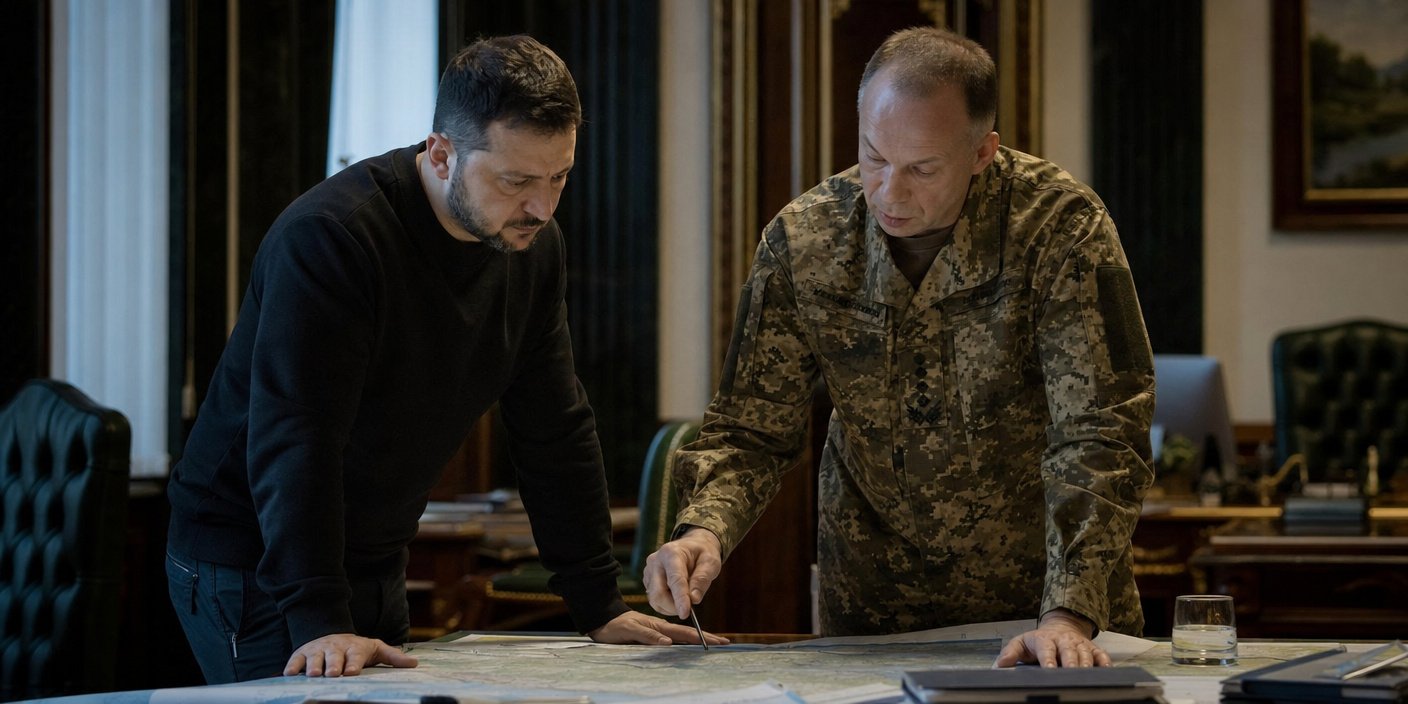
In a decisive move to break what President Volodymyr Zelenskyy described as the “stagnation” of the frontlines, Ukraine has initiated a major overhaul of its military leadership. The restructuring marks the most significant personnel shift since the full-scale Russian invasion began in February 2022. By replacing Commander-in-Chief Valerii Zaluzhnyi with Colonel-General Oleksandr Syrskyi, Kyiv is signaling a fundamental pivot in how it plans to execute the defense of the nation against a deeply entrenched adversary.
Key Highlights
- Leadership Transition: General Valerii Zaluzhnyi, widely regarded as a national hero, was replaced by Oleksandr Syrskyi, the former commander of the Ukrainian Ground Forces.
- Strategic Rationale: President Zelenskyy emphasized the need for a “new approach” to operations, citing the lack of significant territorial shifts during the 2023 counteroffensive.
- Tactical Continuity vs. Change: While Syrskyi is known for his role in the successful defense of Kyiv and the liberation of Kharkiv, his appointment brings a focus on rigid, methodical operational planning.
- Political and Military Cohesion: The shakeup aims to align the General Staff more closely with the political leadership’s vision, ensuring a unified strategy as the war enters its third year.
The Anatomy of a Strategic Pivot: Reshaping Ukraine’s Armed Forces
The decision to conduct a comprehensive Ukraine military leadership overhaul was not sudden; it was the culmination of months of friction between the political leadership and the military command regarding the trajectory of the war. For much of 2023, the discourse surrounding the conflict was dominated by the highly anticipated counteroffensive in the south. When that operation failed to deliver a decisive breakthrough, yielding only incremental territorial gains at a high cost, the public and political appetite for change grew.
The Shift from Zaluzhnyi to Syrskyi
General Valerii Zaluzhnyi had become the face of Ukrainian resistance, often referred to as the “Iron General.” His popularity rivaled that of the President, creating a delicate, though rarely explicit, tension regarding the strategic direction of the war. Zaluzhnyi advocated for a more cautious, long-term defensive strategy, focusing on attrition and preservation of resources. In contrast, President Zelenskyy’s administration sought a more dynamic approach that could leverage the limited Western aid more effectively against Russian fortified lines.
Oleksandr Syrskyi, the man tasked with filling this void, is a veteran of the war from its inception. Known as a commander who prioritizes discipline and operational security, his tenure as head of the Ground Forces was marked by the successful defense of Kyiv in the early months of the invasion and the brilliant, lightning-fast counter-offensive in the Kharkiv region in autumn 2022. However, his reputation also includes the grueling defense of Bakhmut, where he accepted heavy losses to grind down Russian forces. This “attrition-heavy” history is exactly what critics fear, yet it is arguably what the political leadership desires: a commander willing to execute orders to hold ground at all costs.
Tactical Doctrine and the Reality of War
The overhaul is not merely a change of faces; it is a signal of shifting military doctrine. The Ukrainian General Staff is currently grappling with critical shortages in munitions, dwindling manpower, and the necessity to build new defensive fortifications to replace the lack of an offensive momentum. The appointment of Syrskyi suggests a move away from the high-risk, high-reward gambles of 2023 toward a more rigid, centrally managed defensive posture.
This transition also addresses the “stagnation” mentioned by the President. By integrating newer tactical technologies—such as the increased reliance on FPV drones and advanced electronic warfare systems—the new command structure aims to maximize efficiency in an era where traditional artillery duels are increasingly difficult to sustain. The challenge for Syrskyi is whether he can maintain the morale of the rank-and-file soldiers who held high regard for his predecessor.
Geopolitical Ramifications and Western Aid
Ukraine’s military changes are being watched closely by Western capitals, specifically Washington and Brussels. The primary concern among international allies is not necessarily the competence of the new leadership, but rather the internal stability of the command structure. Continued military and financial aid depends on the perception that Ukraine has a coherent, sustainable path to victory. If the leadership overhaul leads to improved operational outcomes on the battlefield, international support may solidify. Conversely, if the change leads to internal disarray or a collapse in morale, the debate over “war fatigue” in Western legislative bodies will only intensify.
Furthermore, the reshuffle brings the military and civilian government into closer alignment. While this might improve decision-making speed in the short term, it also centralizes accountability. If the defense of frontline cities like Avdiivka fails or if territorial losses continue, the political consequences will now rest squarely on the desk of President Zelenskyy, rather than being mitigated by a buffer of distance from the military high command.
FAQ: People Also Ask
1. Why was General Valerii Zaluzhnyi replaced?
President Zelenskyy stated that the change was necessary to reset the military strategy, citing a lack of significant territorial progress in 2023 and the need for a “new approach” to management within the Armed Forces of Ukraine.
2. Who is Oleksandr Syrskyi?
Oleksandr Syrskyi is a Colonel-General who previously commanded the Ukrainian Ground Forces. He is credited with leading the successful defense of Kyiv in 2022 and the counter-offensive in Kharkiv, though he is also associated with the costly defense of Bakhmut.
3. How will this change the war effort against Russia?
It signals a shift toward a more centralized, disciplined command structure. The focus is expected to move toward stabilizing the current front lines, improving defensive fortifications, and optimizing the use of limited munitions and resources.
4. Is there political tension behind this move?
Yes, the move reflects months of growing friction between the political leadership and the top military brass regarding war strategy, mobilization tactics, and how to best utilize resources during a protracted war of attrition.