
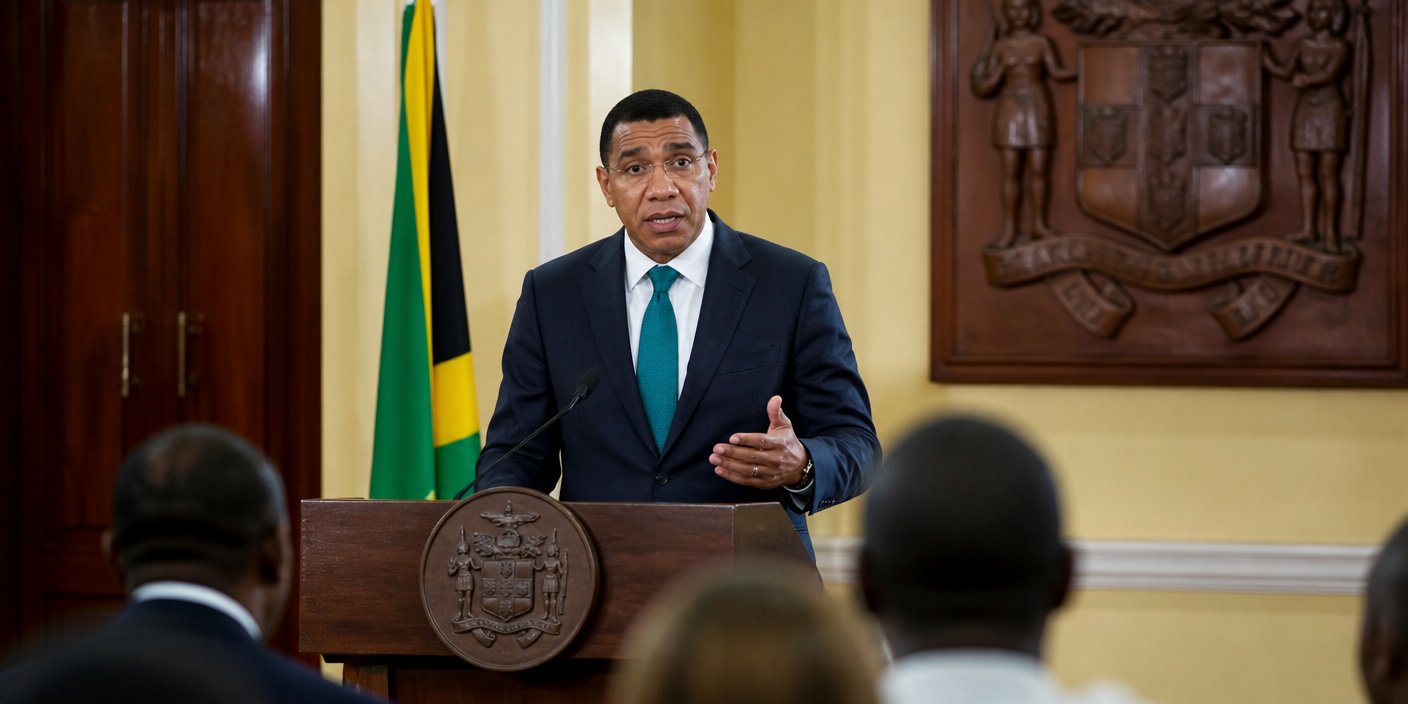
Prime Minister Dr. Andrew Holness has addressed the nation regarding the escalating concerns over fatal police shootings, issuing a declarative statement that the State remains subject to the law. Speaking amidst rising public outcry and scrutiny, the Prime Minister emphasized that independent institutions are empowered to hold security forces accountable for their actions, signaling a potential shift in policy enforcement and oversight regarding the use of lethal force by the Jamaica Constabulary Force (JCF).
Key Highlights
- Strict Accountability: Prime Minister Holness affirmed that no branch of the State, including law enforcement, is exempt from legal scrutiny, ensuring the rule of law remains paramount.
- Alarming Trends: The address follows a significant spike in fatal police encounters, with reports confirming 25 fatal police shootings occurring in the month of September alone.
- Independent Oversight: The administration has reinforced the role of independent institutions, specifically the Independent Commission of Investigations (INDECOM), to ensure transparent investigations into all lethal use-of-force incidents.
Upholding the Rule of Law in Modern Jamaica
The declaration from Jamaica House marks a critical juncture in the relationship between the government, the citizenry, and the security forces. By explicitly stating that the “State is not above the law,” Prime Minister Holness is attempting to address a widening trust gap that has persisted for years. This sentiment is not merely rhetoric but a direct response to the statistical reality of 25 fatal police shootings in September—a number that has ignited intense debate regarding police procedure, training, and the thresholds for the use of lethal force in high-crime environments.
The Role of INDECOM and Institutional Independence
At the heart of this discourse is the Independent Commission of Investigations (INDECOM). Established to probe actions by members of the Security Forces and other agents of the State that result in death or injury, INDECOM serves as the primary mechanism for accountability. Holness’s statement serves to reassure the public that the government will not interfere with the investigatory autonomy of this body. In the context of Jamaica’s democratic framework, the ability of an independent body to challenge state actors is a litmus test for the country’s institutional health. Experts argue that for the Prime Minister’s words to hold weight, they must be backed by the full cooperation of the JCF during ongoing investigations.
Balancing National Security and Human Rights
Jamaica continues to grapple with high rates of violent crime, which historically complicates the conversation around police conduct. The challenge for the Holness administration is to maintain a robust posture against organized crime while simultaneously ensuring that the tactics employed do not infringe upon the constitutional rights of citizens. The “State is not above the law” doctrine posits that security cannot be bought at the expense of justice. This tension is the defining characteristic of the current security strategy, necessitating a more nuanced approach that emphasizes de-escalation tactics, body-worn camera utilization, and rigorous post-incident reporting.
The Path Toward Reform
Future predictions suggest that the government may be moving toward a more transparent, technology-driven approach to policing. This includes potential investments in surveillance tech and enhanced training modules focused on human rights for recruits. However, these structural changes are long-term goals. The immediate challenge remains the public’s perception of the September figures. To maintain legitimacy, the state must demonstrate that it is willing to pursue accountability in the courts, even when it involves its own agents. This is the ultimate test of the Prime Minister’s recent commitment: the willingness to accept judicial outcomes that may not always favor the state’s current tactical doctrine.
FAQ: People Also Ask
What is the specific role of INDECOM in these cases?
INDECOM is the body mandated by the Independent Commission of Investigations Act to investigate fatal shootings by the police. They collect evidence, interview witnesses, and present findings to the Office of the Director of Public Prosecutions to determine if criminal charges should be laid.
What does the “State is not above the law” signify for the JCF?
It signals that the government will not shield officers from investigation or prosecution if they are found to have acted outside of the law, setting a tone of “zero tolerance” for extrajudicial killings.
Why are these statistics significant?
Tracking the number of fatal police shootings (such as the 25 reported in September) is essential for auditing the efficacy and morality of state security policies, and it provides a benchmark for civil society groups to lobby for necessary police reforms.