
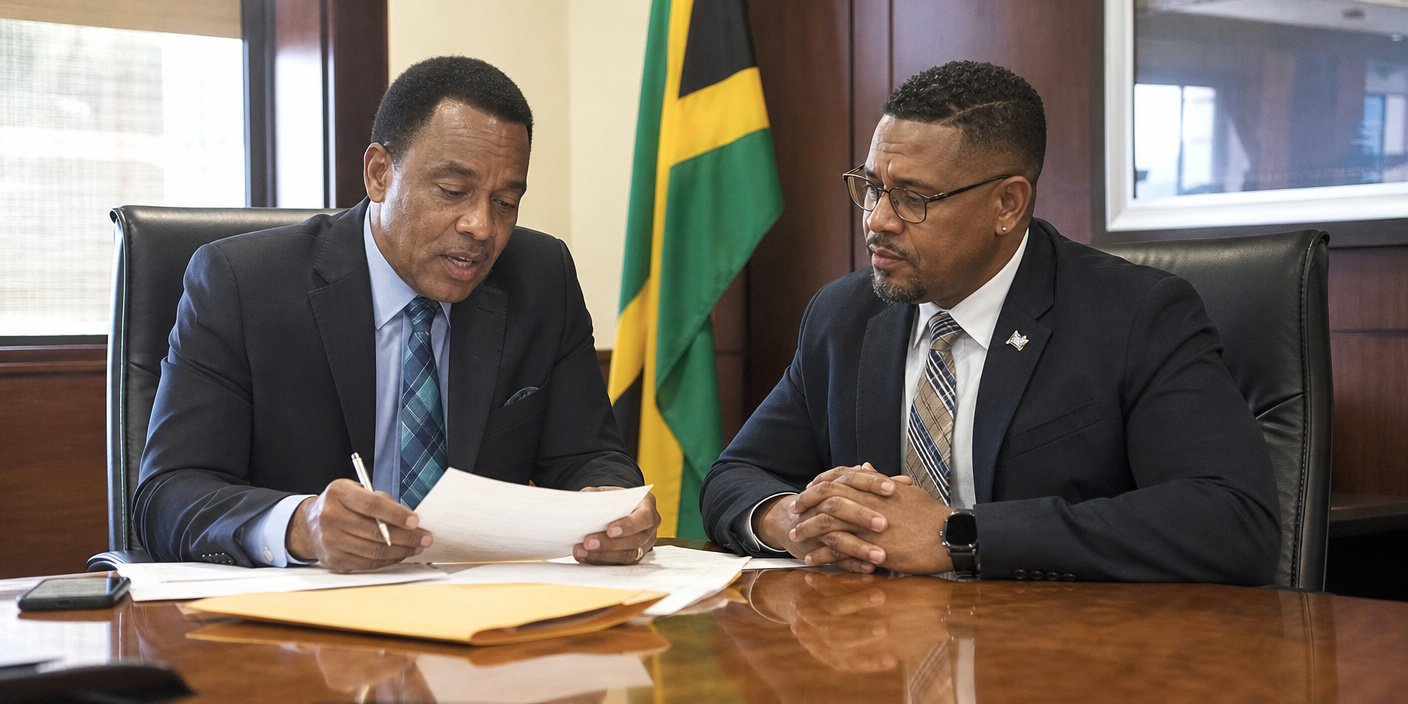
The drive to formalize Portmore as Jamaica’s 15th parish has hit a significant administrative roadblock as the Portmore Municipal Council (PMC) officially petitions the Ministry of Local Government and Community Development for immediate jurisdiction over designated parish lands. This legislative and operational push represents more than just a bureaucratic shift; it is a fundamental challenge to how development fees are allocated and how urban infrastructure is maintained in the country’s so-called “Sunshine City.”
Navigating the Jurisdictional Quagmire
At the heart of the current conflict is the division between central government control and municipal autonomy. Currently, the PMC is responsible for the day-to-day management of Portmore, a rapidly expanding urban center, yet it lacks the full legislative authority to manage the lands earmarked for the proposed parish status. This disconnect has created a “no-man’s-land” scenario where the local authority feels the pressure of infrastructure upkeep but lacks the corresponding authority to collect or direct the development fees that would fund these essential services. The petition serves as a formal declaration that the status quo is financially unsustainable. For the leadership in Portmore, the transition to parish status must include the devolution of real power, specifically regarding land-use planning and fiscal management.
The Financial Disconnect: Infrastructure vs. Revenue
Mayor Leon Thomas and Deputy Mayor Alric Campbell have been vocal regarding the economic reality of this transition. The core issue is the divergence between municipal responsibilities and fiscal capacity. When development projects are approved for the proposed parish lands, the associated fees and levies—vital for the ongoing maintenance of roads, street lighting, sewage, and drainage—often remain tied to central government channels or are subject to inter-ministerial delay. The PMC argues that they cannot be expected to provide municipal services for infrastructure that they do not control or receive the tax revenue from.
This fiscal bottleneck creates a cascading effect on urban planning. Without the ability to collect development fees directly, the Council faces recurring budget deficits. The maintenance of the rapidly aging infrastructure in certain parts of the municipality becomes a secondary concern to the legal and administrative red tape surrounding the land designation. The Council is asserting that for Portmore to succeed as an independent parish, the “purse strings” must follow the governance responsibilities.
Voices from the Council: Thomas and Campbell
Deputy Mayor Alric Campbell has framed this petition not merely as a request, but as a prerequisite for effective governance. In public statements, Campbell has emphasized that the residents of Portmore demand accountability, yet the Council is hampered by a lack of control over the land use. If the Council is to be held accountable for the state of the city’s development, it must have the tools—legal and financial—to manage that development. Mayor Leon Thomas has echoed these sentiments, noting that the Ministry of Local Government must recognize the maturity of the Portmore Municipal Council. The argument is clear: the central government cannot continue to use a legacy administrative model for a modern, sprawling city that is poised to function independently.
The Broader Economic Impact on Portmore
The implications of this move extend far beyond the Council chambers. Portmore acts as a major residential hub for the Kingston Metropolitan Area. The economic health of the city is intrinsically linked to the efficiency of its governance. If the Council is granted the administrative control they are seeking, it would likely streamline the approval processes for housing, commercial developments, and industrial expansion. A faster, more localized approval process could reduce the “red tape” that often plagues development in Jamaica, potentially attracting more investment into the 15th parish.
Conversely, critics of the expansion argue that decentralization requires a robust local administrative team capable of handling complex land-use regulations. The PMC’s move is therefore a test of capacity. By pushing for this control, the Council is effectively saying they are ready to step up to the plate. If they win this, they will have the power to prioritize local needs over centralized planning objectives. If the request is denied or delayed further, the city risks continued stagnation in critical infrastructure projects, as the “wait-and-see” approach of the central government continues to stifle the potential for local economic growth.
Future Outlook: The 15th Parish
The push for the 15th parish status has been a long, multi-year narrative in Jamaican politics. It is not just about a name change or a reclassification of boundaries; it is about the right to self-determination. The petition by the PMC is a significant milestone in this journey. Whether the Ministry of Local Government grants this request will set a precedent for how other municipalities across Jamaica might seek to manage their own affairs in the future. As the government continues to weigh the fiscal and legal complexities, the residents of Portmore are looking to their local leaders to secure a future where their city is not just a bedroom community, but a fully functional, self-governing entity. The resolution of this land dispute will likely define the political legacy of the current Council administration.