
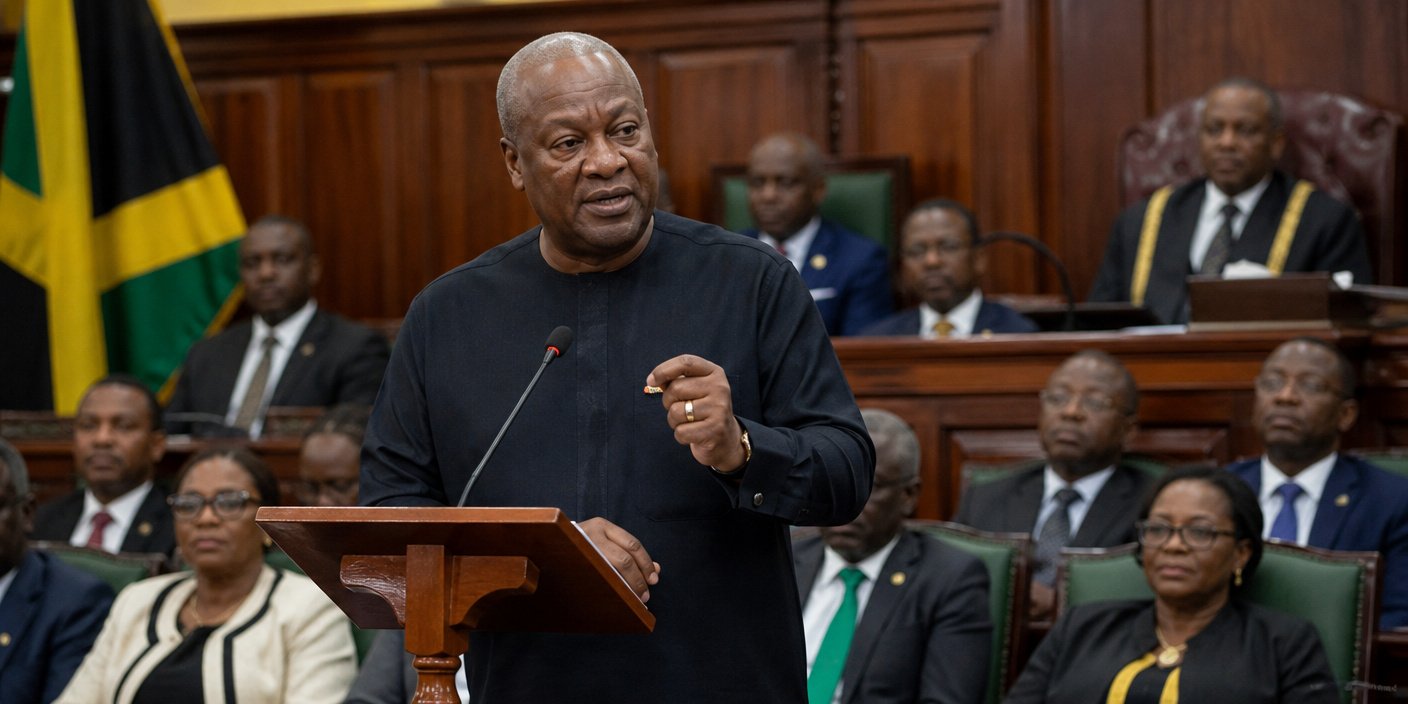
President John Mahama of Ghana made a historic appearance in Kingston, Jamaica, where he addressed a joint sitting of the Jamaican House of Representatives and the Senate. This rare and highly ceremonial event underscored the deepening diplomatic and economic ties between West Africa and the Caribbean during a period marked by Jamaica’s Emancipation and Independence commemorations. By stepping into the halls of Gordon House, Mahama effectively transformed a routine state visit into a symbolic reactivation of the transatlantic bond that has historically united these two nations through shared struggles, culture, and aspirations for self-determination.
The Historical Weight of the Joint Sitting
The invitation for a foreign leader to address a joint sitting of Jamaica’s Parliament is a privilege reserved for the most significant international allies. President Mahama’s address was not merely a diplomatic pleasantry but a calculated move to harmonize the geopolitical objectives of Ghana and the Caribbean Community (CARICOM). Standing before the assembled legislators of the Upper and Lower Houses, the Ghanaian leader spoke to the weight of history. The timing was deliberate; by aligning his visit with the anniversary of Emancipation and Independence, Mahama acknowledged the visceral connection between the two peoples—a connection that stems from the dark history of the Transatlantic Slave Trade but has been transformed into a modern narrative of cooperation and mutual empowerment.
Forging Economic Bridges: The South-South Strategy
Beyond the ceremonial rhetoric, the core of Mahama’s address focused on the pragmatism of South-South cooperation. In an era where global economic powers often dominate the development narrative, Mahama argued for a robust framework of trade and technical exchange between Ghana and Jamaica. His speech highlighted potential avenues for growth, particularly in the aviation and tourism sectors. By advocating for direct air links, the Ghanaian government sought to reduce the logistical hurdles that have historically stifled direct trade between African nations and their Caribbean counterparts. This strategic push for connectivity is intended to move beyond cultural exchange, establishing tangible economic channels that benefit the private sectors of both nations. The address served as a call to action for the Jamaican business community to view Ghana not merely as a historic relative, but as a frontier for investment and industrial partnership.
Pan-Africanism in the 21st Century
Mahama’s presence in Kingston served as a potent symbol of the enduring relevance of Pan-Africanism. For decades, the intellectual and political giants of Jamaica and Ghana—ranging from Marcus Garvey to Kwame Nkrumah—have been the architects of the global movement for Black liberation and autonomy. Mahama’s address acted as a bridge between this past intellectual legacy and the modern realities of the African Union and CARICOM. He emphasized that the struggle for true sovereignty is continuous, necessitating that African nations and Caribbean states pool their resources and political capital on the global stage. By addressing the legislators, he reinforced the idea that Ghana and Jamaica are not isolated nations in their respective regions but are anchor points in a broader, interconnected global community of nations that share common development goals.
Diplomatic Unity Amidst Global Challenges
Furthermore, the address touched upon the necessity of international cooperation in the face of modern existential threats, including climate change and global economic instability. Mahama’s speech recognized the vulnerability of island nations like Jamaica and the developmental challenges faced by emerging markets in West Africa. He called for a unified voice in international forums, suggesting that by coordinating policy positions, Ghana and Jamaica could exert greater influence over multilateral institutions. This diplomatic unity, articulated within the chambers of the Jamaican Parliament, signaled to the international community that the South-South axis is consolidating its influence, moving away from a reliance on traditional Western partners toward a more diversified model of international relations.
Legacy of the Visit
The impact of Mahama’s address resonated long after he departed Kingston. It solidified the image of Ghana as a key partner for Jamaica and, by extension, the wider CARICOM bloc. The legislative sitting served as the high-water mark of a visit that sought to institutionalize friendship, transforming shared sentiment into actionable policies. As both nations continue to navigate the complexities of the 21st-century global economy, the precedent set in Kingston remains a testament to the power of high-level diplomacy in bridging geographical distances, turning shared history into a roadmap for future progress.
FAQ: People Also Ask
Why was John Mahama’s address to the Jamaican Parliament considered historic?
It was historic because foreign heads of state rarely address joint sittings of the Jamaican Parliament. His address was the first of its kind for a Ghanaian leader, highlighting the unique fraternal and historical bond between the two nations.
What was the significance of the timing of the visit?
The visit coincided with Jamaica’s Emancipation and Independence commemorations in early August. This timing was symbolic, linking the abolition of slavery and the attainment of political independence with the ongoing strengthening of ties between Ghana (a primary source of the Transatlantic Slave Trade) and Jamaica.
What were the key areas of cooperation discussed?
Discussions centered on enhancing ‘South-South cooperation,’ with specific focus areas including aviation connectivity, trade, tourism, and diplomatic collaboration on the international stage to address development challenges and climate change.
How does this address impact the Ghana-CARICOM relationship?
The address served as a catalyst for closer institutional ties, encouraging CARICOM member states to view Ghana as a strategic economic partner and a gateway into the West African market, fostering a more direct exchange of goods, services, and political solidarity.