
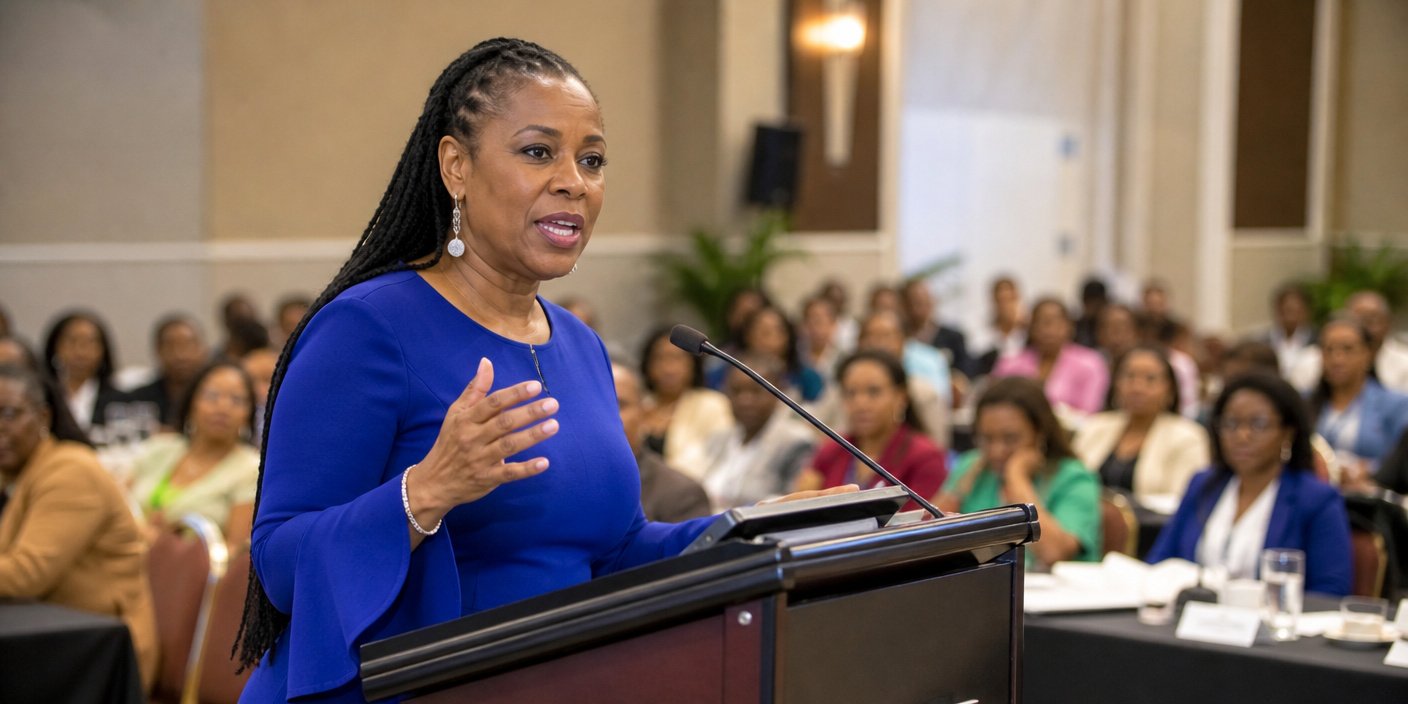
At the 62nd annual conference of the Jamaica Teachers’ Association (JTA), held at the Ocean Coral Spring in Trelawny, President La Sonja Harrison delivered a keynote address that reverberated far beyond the walls of the convention center. Embracing her identity as a vocal advocate for the nation’s educators, Harrison declared, “I cannot change who I am,” solidifying her reputation as a “disruptor of the status quo” within the Jamaican education system. Her speech served as both a rallying cry for members and a direct challenge to the Ministry of Education, specifically Education Minister Dr. Dana Morris Dixon, to address the pervasive “culture of fear” that Harrison claims is crippling the professional autonomy and morale of teachers.
Key Highlights
- Disruption as Advocacy: La Sonja Harrison formally rebranded her leadership style, identifying herself as a “disruptor” necessary to challenge stagnant systemic issues.
- The Culture of Fear: The core of the JTA’s grievance lies in a bureaucratic environment that intimidates teachers, hindering innovation and professional confidence.
- Ministerial Accountability: A direct call to action was issued to Education Minister Dr. Dana Morris Dixon to initiate structural changes in how the Ministry engages with educators.
- Conference Setting: The 62nd JTA annual conference in Trelawny served as the platform for this mandate, signaling a shift in the union’s tactical approach to government negotiations.
Challenging the Status Quo: The Anatomy of a Union Mandate
The 62nd JTA Annual Conference was framed by an air of urgency. For years, the Jamaican education sector has grappled with the competing pressures of academic performance mandates and the deteriorating working conditions of its teaching workforce. Harrison’s address was not merely a ceremonial opening; it was a policy intervention. By positioning herself as a “disruptor,” Harrison is signaling a departure from traditional, consensus-heavy union diplomacy toward a more combative, confrontational advocacy model. This shift is critical, as it attempts to address the underlying psychological barriers that keep many teachers from speaking out against policy directives they believe to be harmful.
The ‘Culture of Fear’ Defined
Harrison’s rhetoric centered on a specific phenomenon: the “culture of fear.” Within educational institutions, this often manifests as a top-down management style where teachers feel unable to provide critical feedback on Ministry policies, curriculum changes, or infrastructural challenges without fear of administrative reprisal. This chilling effect, according to Harrison, has led to a stagnation of ideas. When educators—the frontline workers of the system—feel stifled, the quality of instruction inevitably suffers. Harrison’s insistence that she “cannot change who I am” is a message to her membership: the leadership will not be cowed by ministerial pressure, and by extension, teachers should feel empowered to voice their own professional grievances.
The Ministry’s Role in Reform
The ball is now firmly in the court of Dr. Dana Morris Dixon. The Minister of Education and Youth is currently facing a delicate balancing act: maintaining the Ministry’s reform agenda while pacifying a volatile labor union environment. Harrison’s call for a dismantling of this culture is not vague; it implies a need for a shift in communication protocols, a reduction in unnecessary administrative red tape, and a guarantee of professional protection for teachers who offer dissent. The success of the current administration’s education policy may well hinge on their ability to pivot from a compliance-focused model to one that values collaborative feedback.
Secondary Angles: Examining the Broader Impact
To fully understand the weight of this conference address, one must look at three secondary angles that provide necessary context.
First, the Teacher Retention Crisis. Jamaica, like many other nations, faces a shortage of qualified educators, many of whom are migrating to North American and European markets. Harrison’s focus on the “culture of fear” is intrinsically linked to retention; when the work environment is psychologically draining, financial incentives alone are rarely enough to keep talent from leaving the classroom. If the Ministry fails to address the cultural issue, salary negotiations will likely be insufficient to solve the staffing crisis.
Second, the Psychological Impact on Student Outcomes. There is a direct, measurable correlation between teacher wellbeing and student academic achievement. A teacher operating under duress is less likely to engage in creative pedagogy. By demanding an end to the culture of fear, Harrison is advocating for the mental health of educators, which is a foundational requirement for the intellectual health of students. The 62nd conference delegates are essentially arguing that student success is being sacrificed at the altar of administrative rigidity.
Third, the Evolution of Union Tactics. This speech marks a potential evolution in the JTA’s strategic operations. Historically, unions in the Caribbean have often utilized strike actions or public protests. By focusing on the cultural atmosphere, Harrison is expanding the battlefield to include the ideological and psychological landscape of the Ministry itself. This is a more sophisticated form of advocacy that targets the internal mechanics of the education bureaucracy rather than just external budget allocations.
FAQ: People Also Ask
What is the primary grievance of the JTA under La Sonja Harrison’s leadership?
The primary grievance is the existence of a “culture of fear” within the education system, which Harrison argues prevents teachers from speaking out or implementing necessary professional improvements due to fear of reprisal.
Who is the current Education Minister being challenged by the JTA?
The current Minister of Education and Youth is Dr. Dana Morris Dixon, who has been urged by the JTA to take concrete steps to improve the working culture for educators.
What does La Sonja Harrison mean by calling herself a ‘disruptor’?
By calling herself a “disruptor of the status quo,” Harrison is signaling that she intends to challenge the traditional, quiet, or overly compliant approaches to government negotiations, preferring to take direct, public stances against policies or administrative cultures that harm teachers.
Where was the 62nd JTA annual conference held?
The 62nd annual conference was held in Trelawny, specifically at the Ocean Coral Spring, where members gathered to discuss the future of the teaching profession and union strategy.