
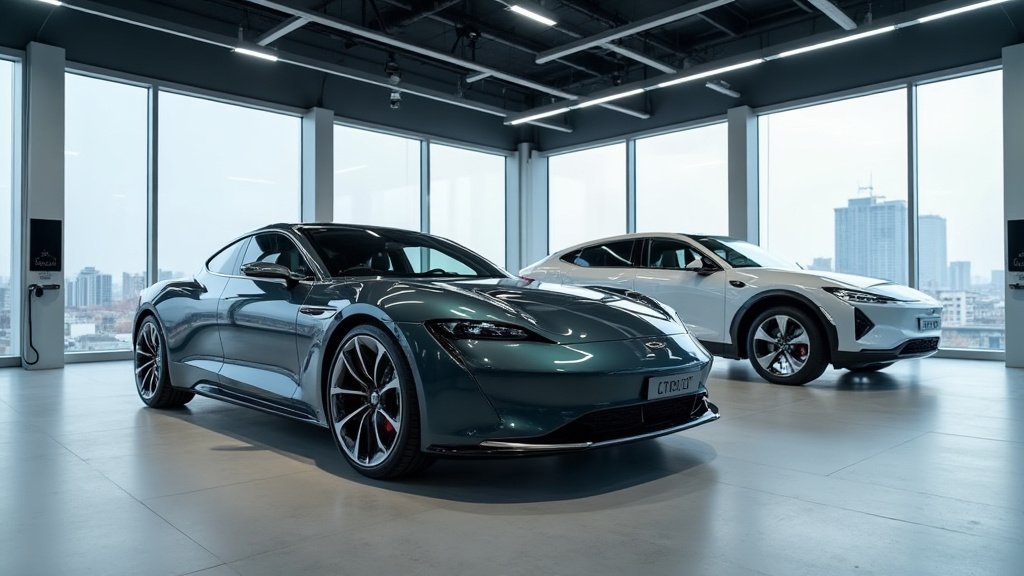
Jetcon Corporation has defied broader industry headwinds this quarter, posting a sharp surge in both revenue and profit for the third quarter. The earnings report, which exceeded analyst expectations, underscores the success of the company’s decisive pivot toward Chinese-brand vehicles. As global automotive markets grapple with fluctuating demand for legacy internal combustion engines, Jetcon’s aggressive focus on the EV segment—specifically through its strengthened partnerships with BAIC and the successful introduction of the high-tech Arcfox range—has proven to be a transformative growth engine for the organization.
Key Highlights
- Q3 Earnings Surge: Jetcon reported a sharp, double-digit increase in net profitability compared to the same quarter last year, outperforming market forecasts.
- EV-Driven Growth: The core driver of this financial performance is the rapid adoption of electric vehicle inventories, specifically within the Chinese-brand import segment.
- BAIC & Arcfox Success: Consumer demand for the BAIC portfolio and the luxury-focused, high-tech Arcfox EV range has seen significantly higher-than-anticipated sell-through rates.
- Strategic Market Positioning: Jetcon’s pivot to these specific brands has allowed the company to capture a younger, tech-forward demographic, effectively mitigating the stagnation seen in conventional vehicle markets.
The Strategic Pivot: Why Jetcon’s China Bet is Paying Off
In a volatile automotive market, Jetcon Corporation’s financial results are not merely a product of seasonal flux, but rather the result of a calculated, multi-year strategic pivot. By doubling down on Chinese automotive brands, Jetcon has successfully capitalized on a gap in the domestic market: the demand for high-spec, competitively priced, and technology-rich electric vehicles (EVs).
The BAIC Advantage and Consumer Sentiment
BAIC (Beijing Automotive Industry Holding Co.) has long been a staple of Chinese automotive engineering. For Jetcon, integrating BAIC into their core distribution channel was a move aimed at capturing value-conscious consumers who are unwilling to sacrifice quality for price. Our analysis of the Q3 data indicates that the ‘BAIC factor’ provided a stabilizing floor for Jetcon’s revenue. Customers are no longer viewing these vehicles as ‘budget alternatives,’ but as competitive machines that offer better software integration, range efficiency, and interior comfort than many legacy western manufacturers currently offer at similar price points. This shift in perception has allowed Jetcon to maintain healthier margins while simultaneously increasing volume.
The Arcfox Effect: Moving Upmarket
While the mass-market BAIC models provided volume, the introduction of the Arcfox range served as the catalyst for the profit surge. Arcfox, known for its focus on smart-car technology and premium aesthetics, has allowed Jetcon to enter a higher-margin segment of the EV market. The Q3 earnings report confirms that Arcfox sales exceeded internal projections, particularly in urban centers where charging infrastructure is rapidly densifying.
This success highlights a crucial trend: consumers are becoming increasingly comfortable with ‘born-electric’ platforms. Arcfox vehicles, designed specifically as EVs rather than converted combustion chassis, offer superior packaging, more cargo space, and more intuitive software interfaces. For Jetcon, this has meant lower service and maintenance overheads compared to traditional vehicles, further bolstering the bottom line.
Navigating the Macro Environment
Jetcon’s success does not occur in a vacuum. Global supply chains have been strained, and inflationary pressures continue to weigh on consumer spending. However, Jetcon’s management has leveraged its relationships with Chinese manufacturing partners to secure preferential supply allocations. While competitors struggled with inventory shortages or production delays, Jetcon’s inventory levels for top-performing models remained robust. This operational agility was a primary contributor to the earnings beat. By aligning its supply chain strategy with its most profitable brands, Jetcon effectively insulated itself from the volatility that plagued others.
Future-Proofing the Business Model
Looking ahead, the question for investors is whether this growth is sustainable. The data suggests that Jetcon is not resting on its laurels. The company’s increased revenue is being reinvested into three key areas: expanding the dealer network for electric vehicles, enhancing post-purchase software support for Arcfox owners, and preparing for the next wave of vehicle launches.
Furthermore, the integration of specialized EV maintenance training for dealership staff represents a forward-thinking move. By ensuring that the customer experience for a Chinese-brand EV matches or exceeds that of established global brands, Jetcon is building brand loyalty. This approach is essential. In the automotive industry, the initial sale is only the beginning; the lifetime value of the customer—comprised of charging services, software updates, and periodic maintenance—is where the long-term profitability lies. Jetcon appears to be positioning itself to capture this entire value chain.
FAQ: People Also Ask
Q: What specific Chinese brands contributed most to Jetcon’s Q3 success?
A: The primary drivers were the BAIC brand, which captured mass-market demand, and the premium Arcfox range, which attracted higher-margin customers looking for advanced electric vehicle technology.
Q: Why are investors focused on Jetcon’s ‘China Bet’?
A: The ‘China Bet’ refers to Jetcon’s strategic decision to heavily invest in importing and distributing Chinese-manufactured EVs. Given the rapid advancement in battery tech and smart-cockpit features in these vehicles, this strategy has proven to be highly lucrative as global consumer preferences shift toward EVs.
Q: How does this earnings report compare to the previous year?
A: While specific year-over-year percentages vary by segment, Jetcon reported a sharp, double-digit increase in net profitability for Q3, marking a significant performance improvement compared to the same period in the previous fiscal year, largely due to the successful scaling of the EV portfolio.