
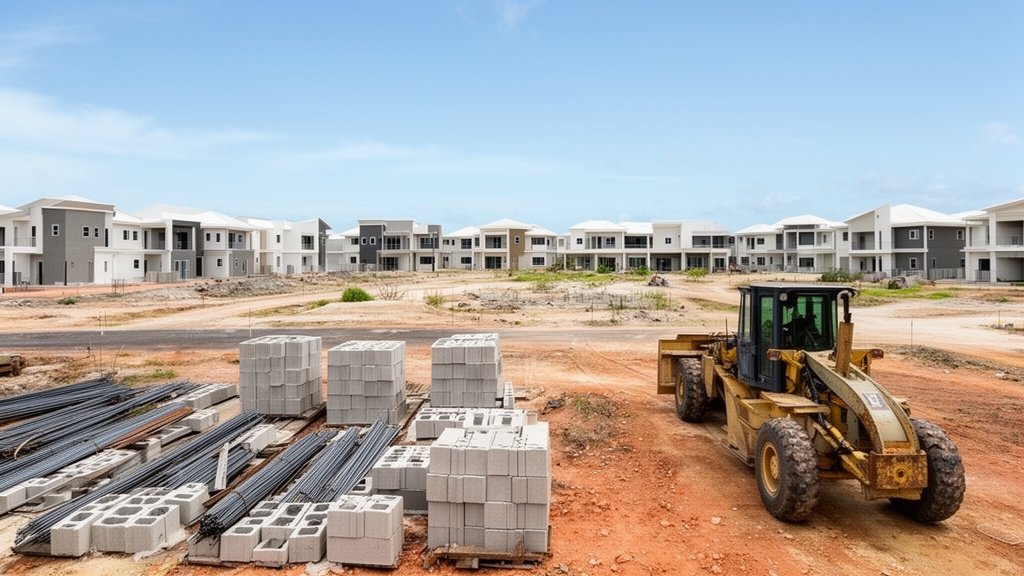
The Jamaican real estate sector is currently navigating a period of notable volatility, defined by a distinct separation between market valuation and transaction volume. According to the latest data released by the Bank of Jamaica (BOJ), the property market experienced a measurable softening in overall activity throughout 2026. This trend, which sees a continued rise in the Residential Real Estate Price Index (RREPI) contrasted against dwindling sales numbers, suggests that the market is grappling with a complex set of macroeconomic headwinds, primarily fueled by restrictive monetary policies and persistent affordability pressures.
Key Highlights
- Market Contraction: The BOJ identifies a clear softening in real estate activity, with transaction volumes failing to keep pace with valuations.
- Upward Price Trajectory: Despite the decline in sales, the Residential Real Estate Price Index continues to climb, highlighting a supply-demand imbalance.
- The Borrowing Barrier: Higher borrowing costs, driven by the current interest rate environment, are identified as the primary catalyst for buyer hesitation.
- Affordability Crisis: Middle-income earners and first-time homebuyers are being systematically priced out, creating a stagnation in entry-level market movement.
Unpacking the Market Disconnect
The current state of the Jamaican real estate landscape presents a classic economic paradox: assets are becoming more expensive, yet fewer are changing hands. Traditionally, a market with rising prices signifies high demand, but the BOJ’s data suggests that the price appreciation is less about high-volume market enthusiasm and more about underlying costs of construction, land, and capital.
The Monetary Policy Ripple Effect
At the heart of this cooling trend is the Bank of Jamaica’s monetary policy. In an effort to curb inflation and maintain macroeconomic stability, the Monetary Policy Committee (MPC) has maintained a restrictive stance on interest rates. While this strategy has been effective in controlling the Consumer Price Index (CPI) to some degree, it has had an immediate, negative impact on mortgage lending. As commercial banks pass these higher costs onto borrowers, the monthly debt servicing requirements for potential homeowners have reached levels that significantly outpace average wage growth. This has effectively sidelined a large segment of the population that would otherwise be active in the property market.
The Residential Real Estate Price Index (RREPI) Conundrum
Why, if sales are softening, do prices continue to rise? The answer lies in the supply-side dynamics. Developers and property owners are facing increased costs for labor, raw materials, and financing. These overheads are being baked into the sale price of new residential units. Furthermore, there is a lack of inventory in the mid-to-lower income segments, where demand is traditionally the highest. This shortage of affordable stock prevents the market from clearing, allowing prices to remain elevated due to scarcity, even while the velocity of sales plummets. This creates a “sticky” market where sellers are reluctant to lower prices due to their own increased input costs, and buyers are unable to meet the asking price due to financing limitations.
Economic Implications for 2026
This stagnation carries broader implications for the Jamaican economy. Real estate and construction are critical pillars of national growth. A prolonged slowdown in property sales can lead to a cooling effect on the construction sector, reducing employment opportunities for skilled laborers and architects. Furthermore, it creates a backlog in the housing pipeline. If developers perceive the market as unresponsive, they are less likely to initiate new projects, which will only exacerbate the supply shortage in the long run.
Shifting Dynamics in Investment and Rentals
The environment is also shifting the nature of property investment. With the “buy-to-live” market cooling due to mortgage constraints, we are seeing a pivot toward high-end rentals and speculative development. Investors who are not reliant on traditional financing are still moving, but the volume is insufficient to offset the drop in primary home sales. This risks creating a two-tiered market where high-value luxury real estate continues to see movement, while the foundational segments of the market remain paralyzed. Policymakers will likely need to evaluate whether targeted housing incentives or refined lending criteria are necessary to prevent a long-term freeze in this vital sector.
FAQ: People Also Ask
Q: Why are house prices rising if sales are falling?
A: Prices are rising largely due to supply-side inflation—including higher costs for construction materials, labor, and the financing required for developers to initiate projects. When combined with a limited inventory of affordable homes, prices remain high despite lower sales volume.
Q: How do high interest rates specifically affect property buyers in Jamaica?
A: Higher interest rates directly increase the monthly mortgage payments for new loans. Since income growth has not kept pace with these rising borrowing costs, many potential buyers no longer qualify for the financing required to purchase property at current market prices.
Q: What does the BOJ data suggest for the future of the housing market?
A: The data suggests a period of market adjustment. Without a shift in interest rate policy or a significant increase in affordable housing supply, the current trend of slow transaction volumes may persist as the market attempts to find a new equilibrium between affordability and asset value.