
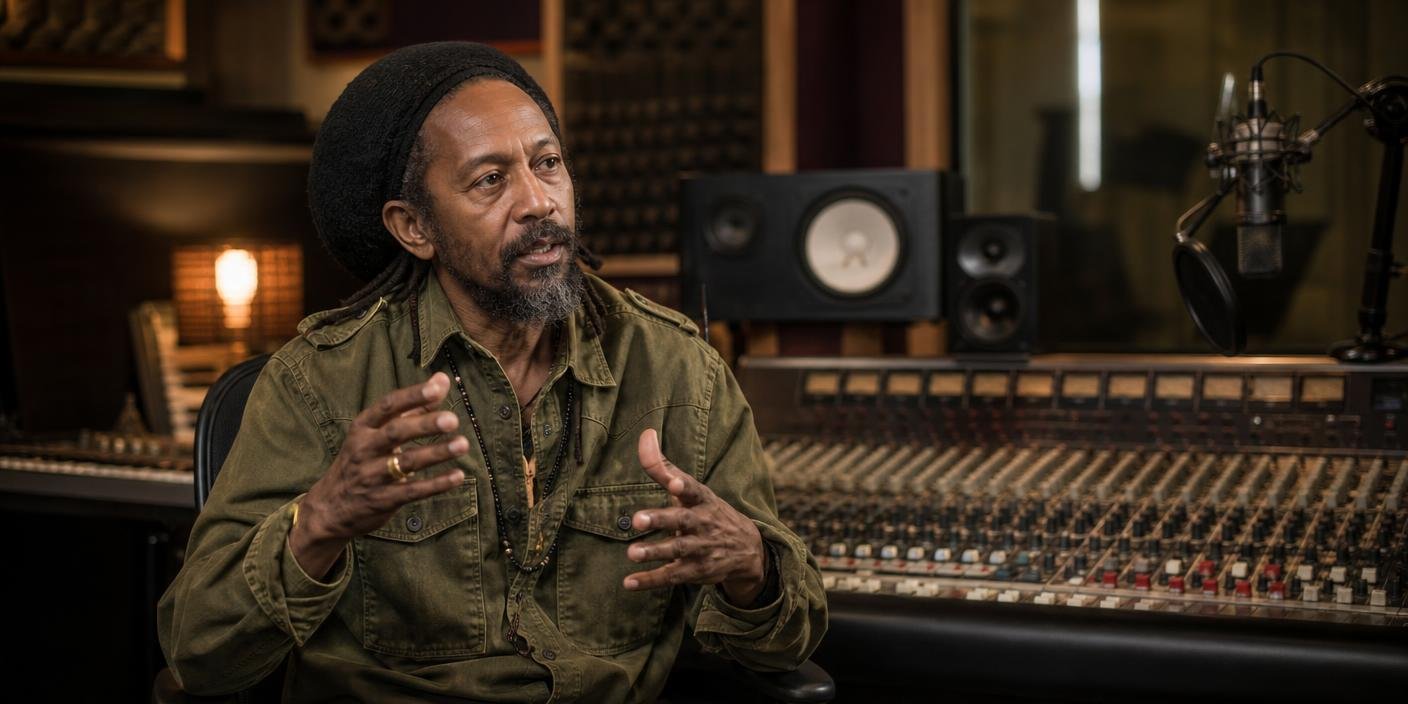
The 69th Grammy Awards have sparked a complex dialogue within the Jamaican music industry, specifically regarding the categorization of island sounds on the world stage. As the Recording Academy finalized its nominations for the Best Reggae Album category, a notable shift has occurred: the lineup is entirely composed of Jamaican acts. While this milestone has been greeted with celebration by many, including conscious reggae artiste Ras-I, it has simultaneously reignited a long-standing, heated debate regarding the need for a separate Dancehall category.
The Significance of the All-Jamaican Lineup
The 69th Grammy nominations for Best Reggae Album represent a moment of national pride. For many industry observers, having a ballot comprised exclusively of Jamaican artists validates the authenticity of the genre and reinforces the island’s dominance in shaping global musical trends. Ras-I, an artiste known for his commitment to the roots of the music, expressed clear approval of this development. The current list features nominees who have consistently pushed the boundaries of sound, cultural expression, and lyrical potency.
However, this celebration is not an uncritical endorsement of the status quo. The core of the industry’s friction lies in the historical “lumping” of distinct genres. Reggae, with its emphasis on “one drop” rhythms, conscious lyrical themes, and its roots in the Rastafarian movement, shares a lineage with Dancehall—a more kinetic, digital, and often hedonistic or socially explosive genre that emerged in the late 1970s and exploded in the 1980s. When the Recording Academy places these two distinct musical languages into a single “Reggae” basket, it creates a structural erasure of the specific history, production styles, and cultural utility of Dancehall.
The “Reggae vs. Dancehall” Divide: Why It Matters
For decades, the Recording Academy has been criticized for its inability—or refusal—to properly classify Caribbean music. By housing both genres under the “Best Reggae Album” umbrella, the Academy inadvertently suggests that the two are interchangeable, which industry purists argue is a gross simplification.
Ras-I and other industry stakeholders argue that a standalone Dancehall category is no longer just a preference; it is a necessity for the preservation of the art form. Dancehall music requires different metrics for judgment—rhythm composition (the “riddim”), flow, vocal prowess, and social commentary—which often differ drastically from the traditional instrumentation and arrangement expectations of Reggae. When a Dancehall project is judged against a roots Reggae project, the jury is forced to compare apples to oranges. This creates a scenario where the unique technical innovations of Dancehall producers are either overlooked or forced to conform to a “Reggae” aesthetic that may not reflect the project’s true intent.
Cultural Identity and Commercial Viability
Beyond the artistic argument lies the economic reality. A Grammy nomination, and ultimately a win, is a significant commercial driver. It dictates streaming algorithms, booking fees, and international tour viability. When Dancehall artists are forced to compete in the Reggae category, they are essentially fighting for space in an already crowded field, often losing out to artists who fit a more palatable, traditional mold of what Western institutions perceive “Reggae” to be.
This creates a “glass ceiling” effect. If an artist produces a high-octane Dancehall album, they must hope it appeals to the sensibilities of a Grammy voting committee that may have a rigid, perhaps outdated, definition of Caribbean music. Establishing a separate Dancehall category would signal that the Recording Academy acknowledges the global economic and cultural weight of the genre, which has influenced everything from mainstream American pop music to global club culture.
Looking Ahead: The Future of Jamaican Music
The calls for expansion are growing louder. The industry is reaching a maturity level where it no longer needs to “fit in” to Western categories; it demands that Western institutions adapt to the reality of the music produced in Kingston. While the all-Jamaican lineup for the 69th Grammys is a victory for the country’s collective output, it is viewed by many as a tactical success, not a strategic victory for long-term genre equity.
As the awards ceremony approaches, the conversation remains focused not just on who will take home the gold, but on the structural changes necessary to ensure that future nominees are judged within the correct cultural context. Ras-I’s advocacy reflects a growing consensus: respect for the music begins with respect for its distinctions. Whether the Recording Academy will heed these calls and adapt its structure for the 70th awards cycle remains to be seen, but the pressure to modernize the categories is now unavoidable.
FAQ: People Also Ask
Why are Reggae and Dancehall grouped together at the Grammys?
Historically, the Recording Academy established the “Best Reggae Album” category in 1985 to encompass music from Jamaica and the Caribbean. Over time, as the distinct evolution of Dancehall became undeniable, the Academy failed to update its structure, leading to the current grouping that many artists argue conflates two distinct musical evolutions.
Who is Ras-I and why is his opinion significant?
Ras-I is a prominent Jamaican reggae artiste known for his “conscious” musical style and advocacy for the roots of Jamaican music. His voice carries weight in the industry because he represents a segment of the population that prioritizes cultural preservation and the authenticity of the sound over commercial compromise.
What are the main differences between Reggae and Dancehall?
Reggae is generally defined by the “one drop” beat, a mid-tempo pace, and lyrics often focused on spirituality, social justice, and love. Dancehall is faster, characterized by digital production, heavy basslines, and often focuses on street culture, fashion, and party themes. They share a root but have diverged significantly over 40 years.
Does the Recording Academy have plans to add a Dancehall category?
While there has been constant internal pressure from Jamaican music industry leaders, the Recording Academy has not yet announced an official split of the category. Critics argue that the institution is slow to recognize the technical and cultural autonomy of Caribbean genres compared to other global music markets.