
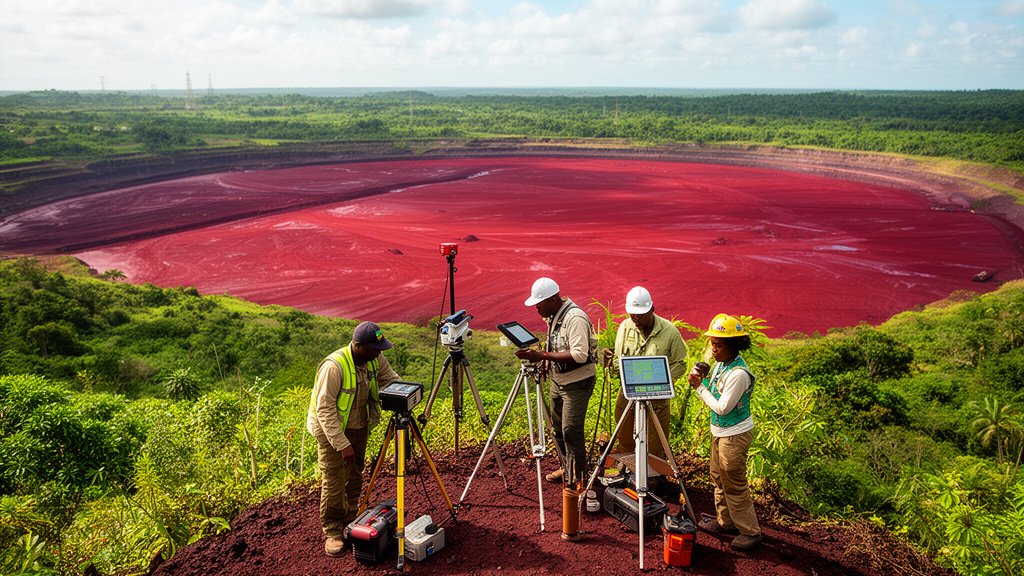
Jamaica is set to transform the environmental liability of its long-standing bauxite mining industry into a lucrative strategic asset. Through a newly signed Memorandum of Understanding (MOU), ElementUSA Inc.—a US-based entity specializing in mineral recovery—and Geophysx Jamaica Limited, a leader in Jamaican geological data, have partnered to explore the extraction of critical minerals and iron from bauxite residue. This collaboration marks a significant pivot for the Caribbean nation, positioning Jamaica not just as a traditional alumina exporter, but as a potential player in the global supply chain for rare earth elements (REEs) and critical metals.
Key Highlights
- Strategic Partnership: ElementUSA Inc. and Geophysx Jamaica Limited have signed an MOU to research and deploy technologies for recovering critical minerals from bauxite residue.
- Asset Recovery: The project focuses on extracting iron, rare earth elements, and other critical materials trapped in “red mud,” a byproduct of alumina production.
- Circular Economy: The initiative aims to solve a significant environmental challenge by processing legacy waste while simultaneously boosting the national economy.
- US-Jamaica Ties: The collaboration strengthens the commercial relationship between Jamaica and US-based technology firms in the essential materials sector.
Unlocking the Potential of Bauxite Residue
For decades, the extraction of bauxite to produce alumina has left Jamaica with vast deposits of “red mud” (bauxite residue). This caustic, alkaline byproduct has long been viewed primarily as a waste management problem, requiring expensive containment strategies and posing long-term environmental concerns. However, the MOU between ElementUSA Inc. and Geophysx Jamaica Limited fundamentally reframes this substance from a burden to a bounty.
Bauxite residue is not chemically inert waste; it is a complex cocktail of materials. It is typically composed of iron oxides, titanium dioxide, silica, and, crucially, a suite of Rare Earth Elements (REEs) and other critical minerals essential for modern technology, electric vehicles, and renewable energy infrastructure. The challenge has never been the presence of these materials, but the difficulty of their recovery. The partnership aims to bridge this gap by leveraging ElementUSA’s proprietary processing technologies to extract these valuable components at a commercial scale.
Technological Frontiers in Mineral Recovery
The core of this initiative lies in advanced hydrometallurgical and beneficiation technologies. Previous attempts to reclaim minerals from red mud often struggled with the economic viability of the extraction process—the energy and chemical costs of separating rare elements from the surrounding alkaline matrix were often higher than the value of the minerals themselves.
ElementUSA’s approach is designed to change this economic calculus. By utilizing specific chemical catalysts and optimized separation techniques, the partnership aims to lower the energy threshold required for extraction. Geophysx Jamaica, with its extensive, proprietary geological data and mapping, provides the necessary site-specific intelligence to identify the most mineral-rich residue stockpiles across the island. This synergy between granular geological data and advanced extraction technology is the cornerstone of the project’s feasibility.
The Strategic Geopolitical Context
This partnership does not occur in a vacuum. It aligns with a broader global push to secure domestic and friendly-nation supply chains for critical minerals. The United States, in particular, has prioritized reducing dependency on foreign adversaries for the rare earth elements required for national security and the green energy transition. By partnering with a Caribbean ally like Jamaica, US firms are effectively “near-shoring” the supply chain for critical materials.
For Jamaica, this represents an opportunity to diversify its economy. Traditionally, the bauxite industry has been subject to the volatile price swings of the global aluminum market. By moving into the “value-added” space of mineral extraction—effectively treating the byproduct as a secondary mine—Jamaica can decouple a portion of its mining revenue from aluminum prices, creating a new, high-margin export category.
Environmental Remediation as a Business Model
One of the most compelling aspects of this MOU is its potential for environmental remediation. Bauxite residue deposits occupy significant land area and require constant management to prevent leakage or dust dispersion. If the partnership succeeds in processing these stockpiles, the volume of waste could be drastically reduced, potentially remediating legacy sites that have been dormant for years.
This project represents a “circular economy” model in action. The extraction process could theoretically treat the residue, remove the valuable iron and critical minerals, and potentially neutralize the remaining tailings, leaving behind a less caustic, more stable byproduct. While this is an ambitious goal, it aligns with Jamaica’s commitment to sustainable development and environmental stewardship, providing a dual benefit of economic growth and ecological rehabilitation.
Future Outlook and Challenges
The path from MOU to operational facility is complex. The partners will need to navigate regulatory frameworks, environmental impact assessments, and the scaling of pilot technologies to an industrial level. However, the alignment of interests between the Jamaican government, local geological experts, and US technology partners provides a robust foundation. If this venture proves successful, it could serve as a template for other nations with large bauxite residues, fundamentally changing how the mining industry approaches waste management worldwide.
FAQ: People Also Ask
1. What is “red mud” and why is it valuable?
Red mud, or bauxite residue, is the highly alkaline byproduct of the Bayer process used to refine bauxite into alumina. It is valuable because it contains concentrated amounts of iron oxides, titanium, and rare earth elements (REEs) that are critical for modern high-tech manufacturing and the green energy sector.
2. Why is the US-Jamaica partnership significant?
This partnership facilitates the transfer of advanced mineral recovery technology to the Caribbean while helping the US secure supply chains for critical minerals, reducing reliance on distant or geopolitical rivals for raw materials needed in high-tech industries.
3. How does this impact the environment?
Beyond the economic benefits, the project aims to process existing waste piles. By extracting minerals from these stockpiles, the project could reduce the overall footprint of residue storage areas, helping to remediate land and lower the environmental risks associated with long-term tailings management.
4. What are the next steps for ElementUSA and Geophysx?
Following the signing of the MOU, the companies are expected to conduct feasibility studies, pilot-scale testing of extraction methods, and geological surveys of specific residue sites to determine the commercial viability of full-scale operations.