
In a pivotal move for the Caribbean nation’s economic roadmap, the Inter-American Development Bank (IDB) has officially approved a US$50 million loan aimed at accelerating the competitiveness of Jamaica’s core economic sectors. This injection of capital, specifically designated for the manufacturing, logistics, and construction industries, represents a strategic pivot toward higher-value industrial output and a more sophisticated, digitally integrated workforce.
Key Highlights
- Financial Injection: US$50 million loan approved by the Inter-American Development Bank (IDB) to bolster sector-specific competitiveness.
- Sector Targeting: Focused intervention in manufacturing, logistics, and construction, the pillars of Jamaica’s industrial expansion.
- Human Capital Focus: A significant portion of the funding is earmarked for workforce development, bridging the skills gap in technical trades.
- Economic Resilience: The program aims to simplify the business environment, reducing red tape and fostering long-term sustainable growth.
Unlocking Jamaica’s Industrial Potential
The US$50 million facility from the Inter-American Development Bank is not merely an infusion of liquidity; it is a structural intervention. By targeting manufacturing, logistics, and construction, the Government of Jamaica is aiming to harmonize these traditionally disparate sectors into a cohesive industrial engine. For years, the ‘logistics-centered economy’ has been a core tenant of the nation’s Vision 2030 plan, and this loan serves as the capital catalyst required to modernize infrastructure and regulatory frameworks alike.
The Financial Architecture of the Deal
At its core, this financing package is structured to address the ‘productivity gap’ that often hinders developing economies. The funds are designated to support policy reforms that simplify trade logistics, streamline construction permits, and digitize manufacturing processes. By lowering the administrative burden—essentially cutting the red tape that often stifles small and medium-sized enterprises (SMEs)—the government expects to see a measurable increase in foreign direct investment (FDI).
Analysts suggest that the timing of this loan is critical. Following a period of rigorous fiscal discipline and debt reduction, Jamaica is now in a position to leverage international credit for growth-oriented investments rather than simple debt servicing. The IDB’s involvement acts as a ‘seal of approval,’ signaling to international investors that Jamaica’s macroeconomic environment is stabilized and ready for long-term commitment.
Strategic Sectors: Manufacturing, Logistics, and Construction
Each of the three sectors targeted by the IDB loan serves a specific function in Jamaica’s economic transformation:
- Manufacturing: The focus here is on moving away from low-value-add processes toward high-value, tech-enabled production. This includes the integration of automation and sustainable energy practices that make Jamaican goods more competitive in global export markets.
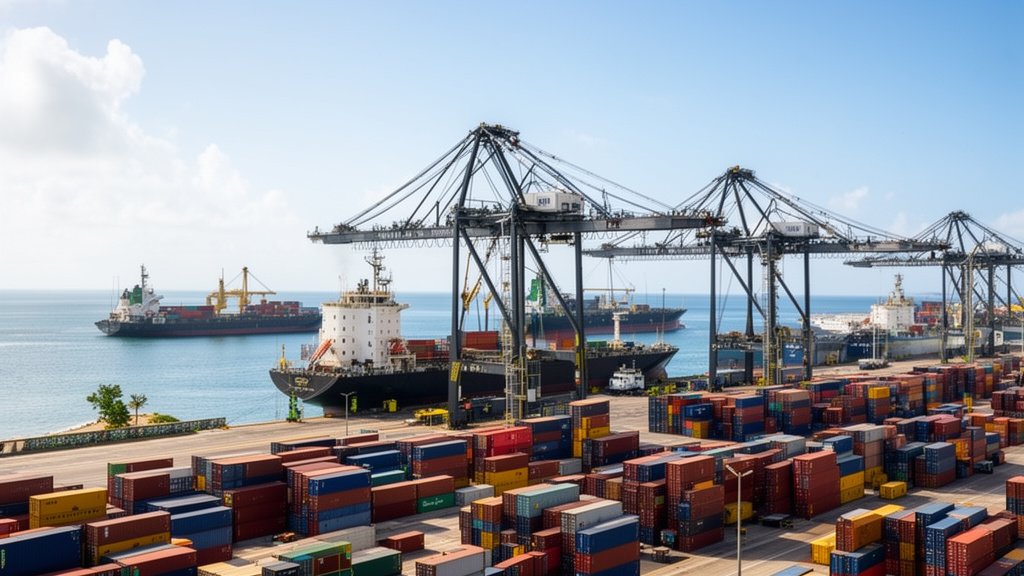
- Logistics: As Jamaica seeks to capitalize on its geography, the funds will enhance port efficiency and supply chain connectivity. Strengthening the logistics sector is about positioning Kingston not just as a transshipment point, but as a regional distribution hub that connects the Americas with global markets.
- Construction: This sector is the barometer of domestic economic health. The funding aims to professionalize the sector, pushing for sustainable construction standards that meet international criteria, which in turn reduces long-term operational costs for new industrial facilities.
Workforce Evolution and Job Creation
A cornerstone of the agreement is the emphasis on workforce development. Financial capital is useless without the human capital to deploy it. The initiative includes robust funding for vocational training programs designed to align with the evolving needs of the manufacturing and construction industries.
By partnering with local educational institutions and industry leaders, the government intends to create a ‘skills pipeline.’ This involves certification programs in advanced manufacturing techniques, modern logistics software proficiency, and green construction methods. The goal is to move the local workforce from informal labor to specialized, higher-paying roles, thereby addressing both unemployment and the persistent ‘brain drain’ that often impacts the Caribbean region.
The Path to Global Competitiveness
The ultimate metric of success for this US$50 million program will be Jamaica’s ranking on global ease-of-doing-business indices and the tangible growth of non-traditional exports. By streamlining regulations and investing in people, Jamaica is signaling to the world that it is open for business. This is a deliberate shift from a debt-repayment model to a growth-and-expansion model, ensuring that the country’s industrial footprint is not just larger, but fundamentally stronger and more resilient to global market volatility.
FAQ: People Also Ask
What is the primary purpose of the IDB loan?
The US$50 million loan is designed to increase productivity and economic competitiveness in Jamaica by reforming the regulatory environment for manufacturing, logistics, and construction, and by investing in targeted workforce training to create high-quality jobs.
How will this impact small to medium-sized enterprises (SMEs)?
SMEs are expected to be the primary beneficiaries of the ‘administrative simplification’ components of the loan. By reducing the time and cost associated with business permits and compliance, these enterprises can scale operations faster and access markets more efficiently.
What is the timeline for implementation?
While specific milestones are dictated by the IDB’s project management framework, the initiative is structured as a medium-term program. Key policy reforms are anticipated to roll out within the next 12 to 24 months, with workforce development outcomes expected to materialize over the next three to five years.
How does this fit into Jamaica’s Vision 2030?
This funding directly aligns with Vision 2030’s goal of making Jamaica the ‘place of choice to live, work, raise families, and do business.’ It advances the objective of developing a prosperous, knowledge-based economy driven by innovation and high-value industry.