
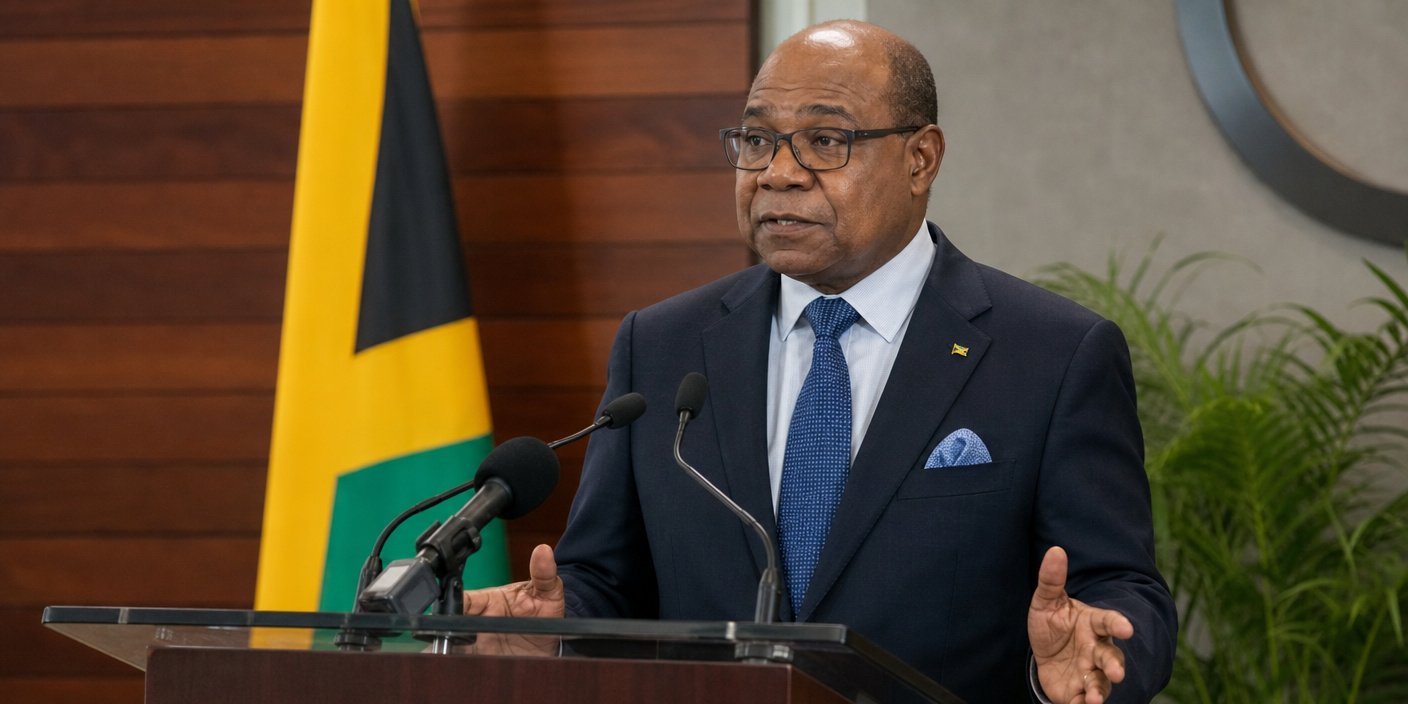
Tourism Minister Edmund Bartlett has officially declared a major turning point for the Jamaican tourism sector, announcing that the island welcomed 35,000 international visitors over a critical five-day period. This surge represents the most significant arrival figure recorded since the devastating impact of Hurricane Melissa, which stifled regional travel and local infrastructure for more than a year. The data points to a robust, accelerated recovery that industry experts suggest may signal a permanent shift in how Jamaica manages post-disaster tourism resilience.
The Resurgence of Jamaican Tourism
The influx of 35,000 visitors within such a concentrated timeframe is more than a statistical curiosity; it is a vital indicator of market confidence. Minister Bartlett, speaking from the Ministry of Tourism, emphasized that this volume of traffic is not merely a seasonal fluctuation but a testament to the aggressive marketing campaigns and infrastructure hardening initiatives undertaken by the Jamaica Tourist Board (JTB) in the wake of Hurricane Melissa.
For months, the hospitality sector operated under a cloud of uncertainty, struggling to re-establish the steady flow of international travelers that sustains the island’s economy. The sudden spike, concentrated largely at Sangster International Airport (MBJ) and Norman Manley International Airport, demonstrates that the demand for the Jamaican product remains inelastic even in the shadow of major weather events.
Analyzing the Economic Impact
The arrival of 35,000 visitors over five days serves as a direct injection of liquidity into the Jamaican economy. According to recent Tourism Ministry projections, the average spend per visitor is currently trending upwards, driven by an increase in luxury bookings and extended stay durations. This visitor influx creates an immediate ‘multiplier effect’—where revenue generated at resorts translates directly into wages for hospitality staff, demand for locally sourced agricultural products, and transportation services.
Economists have long argued that the tourism sector acts as the primary engine for Jamaica’s GDP. The post-Melissa stagnation period served as a stress test for the local supply chain. The fact that the sector successfully absorbed this high-volume arrival suggests that the logistical improvements made to airport throughput and ground transportation networks are performing as intended. It effectively signals to foreign investors that Jamaica’s infrastructure is no longer just resilient, but capable of scaling rapidly to meet peak demand.
Strategic Recovery: Beyond the Storm
Minister Bartlett’s optimism is anchored in a broader strategic framework designed to insulate the industry from future climate shocks. Following the widespread disruption caused by Hurricane Melissa, the government implemented a series of initiatives focused on ‘Tourism Resilience.’
These strategies include:
- Enhanced Marketing Diversification: Shifting focus to mid-week travel and non-traditional source markets to flatten arrival curves.
- Infrastructure Hardening: Upgrading energy grids and communication systems at key resorts to ensure operational continuity during weather events.
- Aviation Negotiations: Strengthening partnerships with major international carriers to prioritize capacity into Montego Bay and Kingston.
The recent 35,000-visitor milestone acts as a performance review for these policies. Bartlett noted that the seamless processing of these arrivals validates the investments made in digitalizing the immigration and customs experience, which had previously been a friction point for international travelers.
The Human Element: Employment and Stability
Beyond the raw numbers, the surge in arrivals is a morale booster for the thousands of Jamaicans employed in the service sector. The ‘Melissa’ aftermath forced many hotels and attraction sites to scale back operations, leading to temporary furloughs and reduced shifts. This sudden return to near-capacity operations allows for the immediate recall of staff, stabilizing household incomes across the island.
Industry leaders are now watching the secondary data closely—hotel occupancy rates and food and beverage (F&B) sales—to see if this visitor spike correlates with a sustained trend for the upcoming fiscal quarter. If the current trajectory holds, Jamaica is on track to outperform its pre-Melissa revenue targets, effectively closing the gap that was created during the storm’s peak disruption.
Future Outlook: Sustainability and Growth
Looking ahead, the Ministry of Tourism faces the challenge of managing this growth sustainably. While 35,000 visitors in five days is a cause for celebration, it also places pressure on environmental resources and public utilities. Minister Bartlett has alluded to new policies regarding ‘sustainable carrying capacity,’ ensuring that the drive for volume does not compromise the quality of the visitor experience or the integrity of the island’s natural assets.
As the winter season approaches, the focus will shift from recovery to expansion. The goal is to leverage this momentum to secure long-term contracts with tour operators, ensuring that Jamaica remains a top-tier destination for international travel, regardless of historical weather challenges. The rebound is no longer just a recovery; it is an evolution into a more responsive, efficient, and robust tourism machine.