
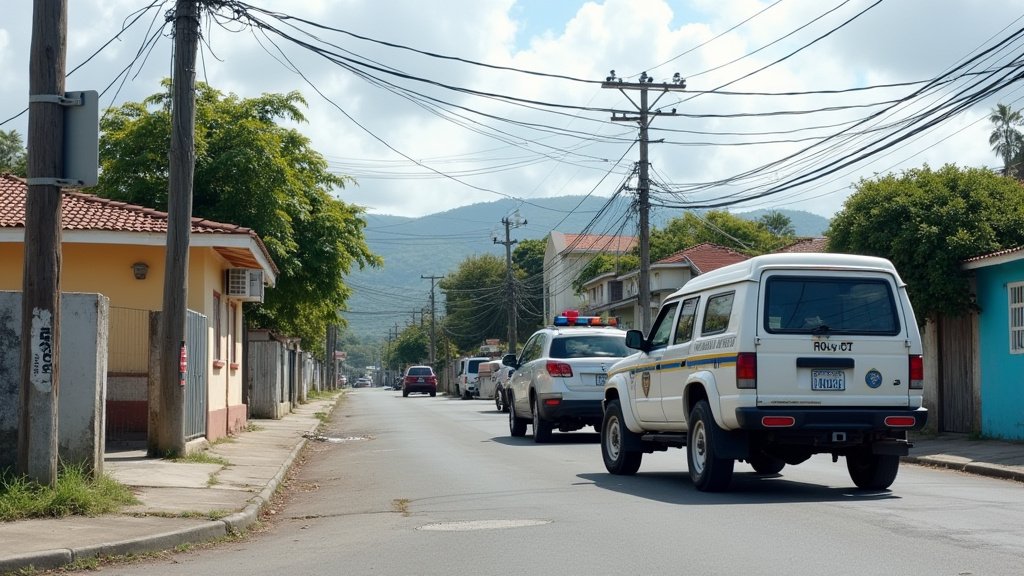
Authorities have officially extended a 48-hour curfew in the Denham Town community of the Kingston Western Police Division, with the mandate now scheduled to expire at 6:00 pm on September 29, 2026. This administrative decision comes as part of ongoing strategic security operations aimed at restoring order and ensuring public safety within the Kingston Western jurisdiction.
Key Highlights
- Extended Timeline: The curfew order has been formally extended, with the current expiration set for 6:00 pm on September 29, 2026.
- Geographic Scope: The mandate strictly covers the Denham Town community within the Kingston Western Police Division.
- Enforcement Protocol: Security forces are maintaining a heightened presence to facilitate the enforcement of this order and conduct targeted operations.
- Public Advisory: Residents are urged to remain within their premises and comply with all instructions issued by the Jamaica Constabulary Force (JCF) during this operational window.
Operational Parameters and Security Oversight
The decision to extend the curfew order highlights the prioritized approach the Jamaica Constabulary Force (JCF) is taking within the Kingston Western Division. A curfew, as defined under the Emergency Powers or standard policing acts in Jamaica, effectively limits the movement of individuals within a designated geographic boundary during specific hours. The extension of this order suggests that the security assessment performed by local commanders requires additional time to complete the necessary operational objectives.
The Strategic Role of the Kingston Western Division
The Kingston Western Police Division occupies a complex and critical role in the broader national security framework of Jamaica. As a division responsible for densely populated urban centers, including Denham Town, the area requires constant vigilance. The implementation of a curfew is a tactical tool used to neutralize threats, prevent the congregation of criminal elements, and allow law enforcement officers to conduct thorough investigations or preventative patrols without the obstruction of high civilian traffic.
By restricting movement, the JCF creates a sterile environment for specialized units to operate more effectively. This strategic pause, while disruptive to daily life, is designed to reduce the risk of collateral damage during high-stakes security interventions. The extension until September 29 indicates that the initial 48-hour window was insufficient to achieve the specific intelligence or tactical goals identified by the division’s leadership.
Historical Context: Curfews as a Security Tool
Historically, the utilization of curfew orders in communities like Denham Town is not an isolated event but rather a calibrated response to escalating tension or intelligence regarding potential criminal activity. Historically, these zones have been subjected to varied security measures, ranging from State of Public Emergency (SOE) declarations to more localized curfew orders.
Analysts note that while curfews are often viewed as a temporary measure, they serve as a critical “circuit breaker.” By forcing a cessation of normal activity, authorities can effectively disrupt the operational tempo of criminal organizations that rely on the cover of darkness or the anonymity provided by active commercial hubs. The challenge for authorities, however, remains balancing the immediate need for suppression with the long-term goal of fostering community trust.
Socio-Economic Impact and Community Cooperation
Beyond the immediate tactical gains, the extension of a curfew has tangible socio-economic implications. Local businesses within Denham Town, many of which operate on daily revenue cycles, face significant challenges when movement is restricted. Supply chains, public transportation, and casual labor are all severely impacted by these mandates.
To mitigate these disruptions, the JCF typically engages in community outreach, though the strict nature of an active curfew often limits these interactions. The success of these operations is heavily dependent on the cooperation of the citizenry. When residents comply with the curfew, it provides a clearer operational picture for the security forces, reducing the likelihood of accidental encounters or confusion. Communication strategies by the JCF during this period are vital; ensuring that residents understand the parameters of the order—who is exempt, what constitutes an emergency, and how to verify police directives—is essential to maintaining order.
Looking Forward: Security Predictions
The extension of the curfew until September 29, 2026, signals that the JCF is likely acting on specific intelligence. Looking ahead, if the security situation does not stabilize, authorities may be forced to either maintain the curfew, implement a broader zone of special operations, or transition to different surveillance methods. The goal is always a return to normalcy, but the timeline is ultimately dictated by the threat level within the Kingston Western Division. Citizens should remain tuned to official JCF channels for updates beyond the current expiration date.
FAQ: People Also Ask
What are the boundaries of the Denham Town curfew?
The curfew strictly encompasses the Denham Town community within the Kingston Western Police Division. Specific boundaries are defined by the JCF at the time of the order and are typically marked by security checkpoints and police presence at designated entry and exit points.
Who is exempt from the curfew order?
Generally, essential workers, medical personnel, and individuals with legitimate, verifiable emergencies are exempt. However, these individuals must be prepared to provide identification and documentation to security forces if stopped at checkpoints. All others are strictly required to remain indoors.
What happens if a citizen violates the curfew?
Violation of a declared curfew is a serious matter. Individuals found in breach of the order may be detained, questioned, or arrested depending on the circumstances of their presence in the restricted area and their level of compliance with police directives.