
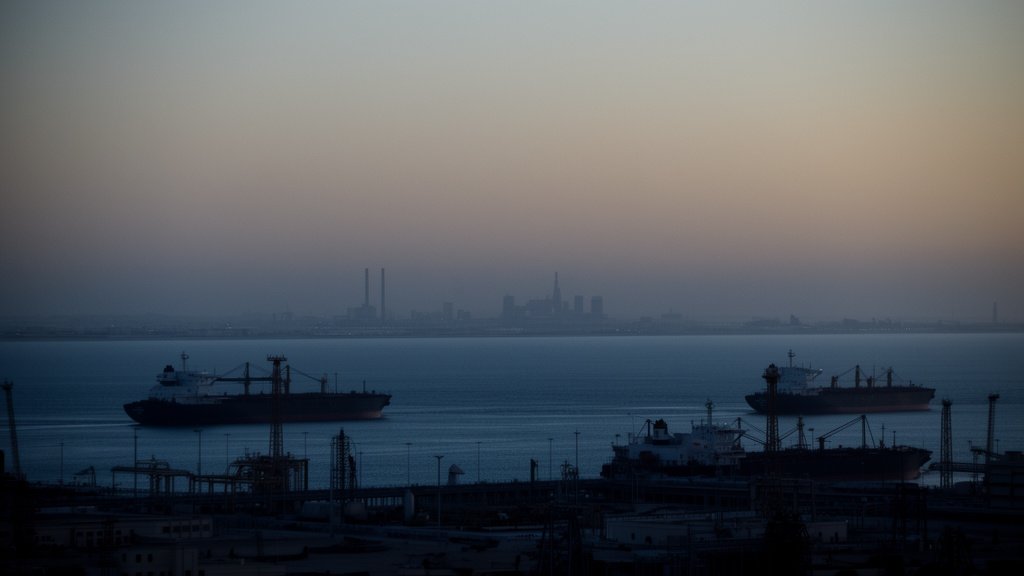
The Persian Gulf stands on the precipice of a full-scale regional conflict following a rapid escalation between US forces and the Islamic Republic of Iran. The chain of events, which began with US military strikes on Iranian assets in Kuhestak, has spiraled into direct, kinetic retaliation from Tehran. The situation is particularly volatile following confirmed reports that US munitions caused civilian casualties at a wedding in the Kuhestak region, a development that has radically altered the narrative of the confrontation and intensified the diplomatic and security pressures on neighboring Gulf states.
Regional Tensions Explode: The Shift from Proxy to Direct Conflict
The immediate aftermath of the US-led operations has transformed the regional landscape. By targeting Iranian military assets in the village of Kuhestak, the United States aimed to degrade Tehran’s offensive capabilities. However, the subsequent collateral damage—specifically the reported deaths of civilians attending a wedding—has provided Iran with significant diplomatic leverage and internal justification for a forceful response. This is not merely a resumption of long-standing tensions; it marks a distinct shift toward direct kinetic exchange, moving beyond the historical norm of proxy warfare.
Tehran’s response was swift and calculated. By launching coordinated drone and missile strikes against targets in Kuwait and Bahrain, Iran is sending an unambiguous signal to the United States and its regional allies: the strategic depth previously enjoyed by the Gulf Cooperation Council (GCC) states is no longer a given. These strikes serve as a pressure campaign, aiming to force these nations to reconsider their alignment with US military posture and base-sharing agreements.
The Strategic Calculus of Retaliation
The choice of targets—Kuwait and Bahrain—is highly strategic. Both nations host critical US military infrastructure that supports regional operations. By striking these partners, Iran is effectively testing the ‘extended deterrence’ umbrella provided by the United States. Tehran’s military planners understand that a direct strike on a US base would necessitate an overwhelming American response, which they likely wish to avoid at this stage. Instead, by hitting neighboring host nations, Iran creates a dilemma for Washington: how to defend its allies without triggering a wider, uncontrollable regional war.
This strategy is designed to fracture the unified front of the GCC. If Kuwait and Bahrain perceive that their security partnership with the United States is actively endangering their territorial integrity rather than securing it, the political pressure on their leadership to demand a reduction in the US military footprint will increase significantly. This is a classic ‘gray zone’ tactic, utilizing low-to-medium-intensity kinetic strikes to achieve high-level diplomatic and strategic outcomes.
Economic Implications and the Strait of Hormuz
The geopolitical fallout extends well beyond the immediate military theater. The Persian Gulf remains the world’s most critical maritime choke point, with a significant percentage of global oil and liquefied natural gas (LNG) passing through the Strait of Hormuz. Markets have reacted with immediate volatility as traders factor in the risk of maritime disruption. Any escalation that threatens shipping lanes, or leads to the potential mining or blockade of the Strait, would result in immediate, severe global energy price shocks.
Furthermore, the psychological impact on the shipping and insurance sectors cannot be overstated. Insurance premiums for vessels entering the Gulf are likely to surge, potentially causing logistical bottlenecks even before a single tanker is directly threatened. The specter of a prolonged conflict discourages long-term investment in regional infrastructure and forces energy-dependent nations in Asia and Europe to reconsider their supply chain dependencies on the Middle East.
Diplomatic Hurdles and the Path Forward
The diplomatic environment is currently paralyzed. The ‘humanitarian’ component of this crisis—the tragic loss of civilian life in Kuhestak—complicates Washington’s ability to frame its intervention as a surgical anti-terrorism operation. Diplomatic channels are likely currently flooded with emergency communications, but the ‘face-saving’ requirements for all sides make a de-escalation difficult.
For the United States, the challenge is two-fold: maintaining the credibility of its security commitments to Gulf partners while preventing an irreversible slide into a broader war that would require massive deployment of assets. For Iran, the challenge is balancing the need for domestic propaganda (demonstrating strength and retribution) against the reality of American military superiority, which could pose an existential threat if the conflict intensifies further. The coming days will be critical, as international mediators from the UN and regional powers scramble to establish a de-confliction baseline before further miscalculations lead to an irreversible expansion of hostilities.
FAQ: People Also Ask
How have the civilian casualties in Kuhestak changed the regional dynamic?
The civilian deaths have stripped away the ‘precision’ narrative often used to justify airstrikes. This has allowed Tehran to characterize the US actions as an unprovoked assault on the Iranian people, rather than a targeted strike against military infrastructure. This has galvanized domestic support within Iran and placed enormous political pressure on Gulf neighbors to distance themselves from US military operations.
Why did Iran target Kuwait and Bahrain specifically?
Kuwait and Bahrain are key hosts for US military assets in the region. By targeting these nations, Iran is attempting to create a ‘cost of hosting’ dilemma. Tehran aims to prove to these countries that the presence of US military facilities makes them vulnerable to retaliation, thereby hoping to force these nations to pressure the US to de-escalate.
What does this mean for global oil markets?
Volatility is the immediate outcome. As the Persian Gulf is a vital artery for global energy, any increase in kinetic activity raises the risk profile for shipping and insurance providers. Markets are currently pricing in the fear of potential disruptions to the Strait of Hormuz, which could lead to significant spikes in energy prices if the conflict does not de-escalate rapidly.