
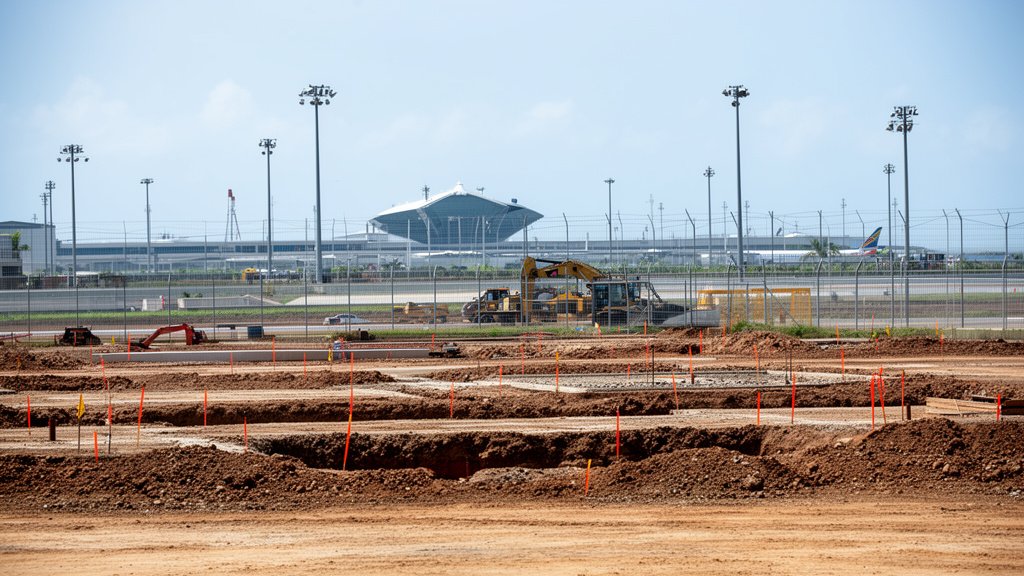
Regency Petroleum Limited (RPL) is preparing to break ground on a $300 million service station near the Norman Manley International Airport, aiming for a late September construction start to capitalize on the high-traffic transportation corridor. This strategic development represents a significant milestone in the company’s ongoing retail expansion efforts, positioning RPL to serve the diverse flow of commuters, logistics operators, and travelers traversing the Kingston-based airport perimeter.
- Strategic Investment: $300 million capital allocation for the development of a state-of-the-art service station.
- Timeline: Construction is slated to commence in late September, targeting a critical Q4 development phase.
- Location Advantage: Sited near the Norman Manley International Airport (NMIA) to capture maximum volume from the island’s primary air transport hub.
- Corporate Growth: Underscores RPL’s strategy to diversify revenue streams through high-visibility, high-traffic retail locations.
Driving Growth: The Strategic Pivot to Airport-Adjacent Retail
Capitalizing on the High-Traffic Airport Corridor
The decision by Regency Petroleum Limited to establish a footprint near the Norman Manley International Airport (NMIA) is a calculated move designed to capture a persistent and high-value traffic flow. Airport corridors are unique in the petroleum retail market because they command a constant stream of taxis, tourist transportation services, airport staff, and logistics companies. By securing this location, RPL is not merely adding another service station; it is entering an ecosystem that demands reliability, speed, and high-quality fuel products.
For RPL, the proximity to the NMIA is about more than just volume; it is about brand visibility. Positioned at one of the country’s main entry points, the new facility will act as a billboard for the company, solidifying its presence in the minds of both domestic and international travelers. The $300 million investment signifies the company’s confidence in its operational model and its ability to handle the rigorous demands of a high-security and high-traffic zone. This move is indicative of a broader industry trend where fuel retailers are moving away from generic roadside spots toward specialized locations that offer captive audiences and specific service needs.
The Economic Landscape and RPL’s Trajectory
Regency Petroleum Limited, which has been steadily building its profile on the Jamaica Stock Exchange (JSE) Junior Market, is utilizing this project to demonstrate its commitment to shareholder value and long-term asset growth. The petroleum sector in Jamaica has historically been competitive, dominated by long-standing global and regional players. RPL’s ability to secure and develop this site demonstrates a level of agility that smaller, publicly listed entities often strive for.
By diversifying into this specific corridor, RPL is hedging against broader market volatility. While consumer fuel consumption can fluctuate with economic cycles, airport transit remains a resilient necessity. This project is expected to be a cornerstone of the company’s portfolio, providing a reliable revenue stream that supports its broader aspirations for nationwide expansion. The investment, valued at $300 million, covers not just the basic fuel infrastructure but likely encompasses modern retail amenities, which are essential for keeping pace with the evolving expectations of modern motorists. Convenience store integration, high-speed pumps, and efficient layout design will be critical in ensuring that the station remains the preferred stop for commercial and private airport traffic.
Managing the September Build-Out
The target for a late September construction start is ambitious, requiring precise logistical coordination. In the Jamaican construction sector, managing project timelines amidst weather fluctuations and supply chain variables is a significant undertaking. However, breaking ground in September aligns well with the lead-up to the peak travel season, often seen in the latter part of the year. If RPL can adhere to its construction schedule, it will likely see the facility operational in time to capitalize on increased holiday travel and the heightened logistical activity that accompanies the year-end fiscal period.
The project will require close collaboration with local planning authorities and airport management to ensure compliance with the specific security and zoning regulations inherent to the Norman Manley International Airport area. These regulatory hurdles are significant, and RPL’s ability to navigate them will be a testament to its operational maturity. The successful completion of this station would signal to the market that RPL is capable of handling complex capital projects from inception to commission, further strengthening investor sentiment in the company.
Future Implications and Competitive Positioning
As the fuel retail market moves toward an era of increased convenience, RPL’s investment could potentially set a new standard for their regional competitors. If the station proves successful, it may open doors for similar developments in other high-traffic, transport-heavy corridors across the island. The model is clear: identify high-volume, transit-dependent zones and provide a premium, modern, and highly accessible fuel and retail experience. This strategy not only drives direct profit but also builds the brand equity necessary for sustained growth in a crowded market.
Ultimately, the $300 million airport service station is a pivot point for RPL. It marks a transition from a company focused primarily on distribution to one that is aggressive in its pursuit of premium retail real estate. As the company moves toward the September start date, stakeholders and industry observers alike will be watching closely to see if the execution matches the ambition. If successful, this venture will serve as a foundational element of the company’s narrative for years to come, illustrating the power of strategic location in the modern petroleum business.
FAQ: People Also Ask
1. Why is the Norman Manley International Airport location strategic for Regency Petroleum?
The location is strategic because it captures a constant, high-volume flow of taxis, tourism-related transport, airport staff, and logistics vehicles. This constant traffic ensures a steady demand for fuel and retail amenities, making it a highly profitable niche compared to general residential locations.
2. What is the total investment amount for the new RPL service station?
The investment is valued at $300 million, covering land development, infrastructure, modern fuel pumps, and retail facilities.
3. When is the construction expected to start?
Regency Petroleum Limited (RPL) is targeting a late September start for the construction of the facility.
4. How does this project impact RPL’s standing on the Jamaica Stock Exchange?
This project signals strong corporate growth and operational ambition, which generally increases investor confidence in RPL’s ability to execute large-scale infrastructure projects and diversify its revenue streams effectively.
5. What are the key features expected at this new service station?
While specific internal retail plans are finalized, such developments typically include high-speed fuel dispensers, upgraded convenience store facilities, and high-security infrastructure to comply with airport zoning requirements.