
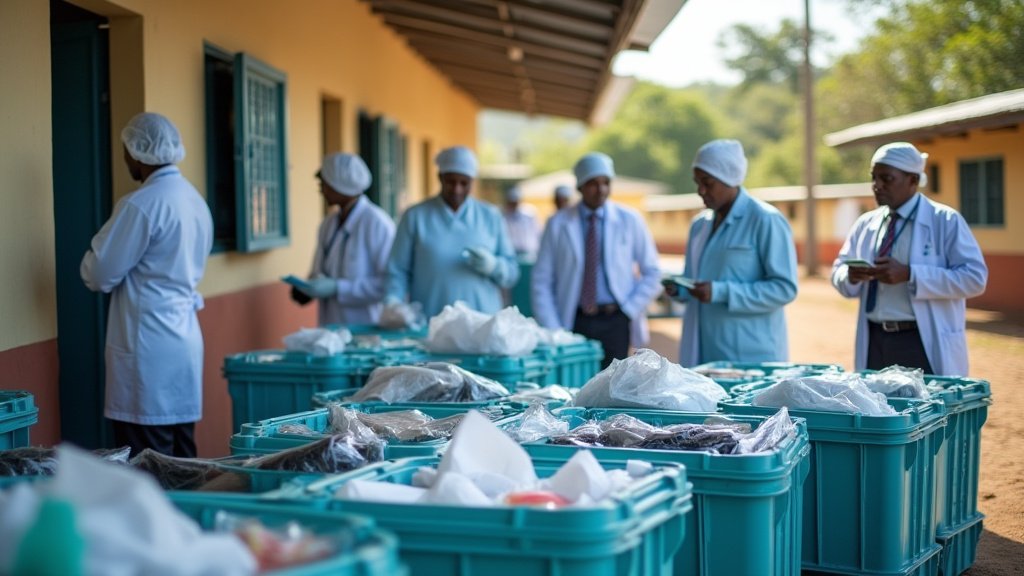
On September 2, 2026, the Help Jamaica Medical Mission will launch a critical, large-scale healthcare initiative across the island, marking the arrival of a 35-member specialized team dedicated to bridging the gap in healthcare access for underserved populations. This significant volunteer effort, drawing from the deep pool of medical expertise within the New York, New Jersey, and Connecticut tri-state area, arrives at a pivotal moment, with a primary focus on pediatric wellness as students prepare for the upcoming academic season.
The Tri-State Connection: A Hub of Specialized Care
The 35-member volunteer contingent represents a robust cross-section of the North American medical landscape. These specialists, including pediatricians, general practitioners, and administrative support staff, are bringing high-quality diagnostic equipment and medical supplies to facilitate a range of services. The “Tri-State” designation is not merely geographic; it signifies a massive mobilization of diaspora-linked expertise. Many of the volunteers possess a deep personal connection to the island, viewing this mission as an essential bridge between their current professional practice in the United States and their commitment to public health outcomes in Jamaica.
By leveraging the resources and advanced medical protocols often reserved for private practices in the Northeast, the mission aims to deliver a standard of care that is rarely accessible in rural or overburdened health sectors. The team has prepared for this arrival for months, coordinating with local health authorities to ensure that their services—ranging from acute care to chronic disease screening—are targeted where they are needed most.
Addressing the Seven-Parish Healthcare Gap
The scope of this mission is strategically divided across seven key parishes: Kingston, Manchester, St. Catherine, Clarendon, St. Thomas, and others to be announced. This geographic distribution is deliberate, reflecting a data-driven approach to addressing the disparities in healthcare accessibility found between the urban capital of Kingston and the more rural, mountainous regions.
In St. Thomas, for instance, access to specialists is historically limited. The team’s presence in these regions is designed to alleviate the pressure on local clinics, providing an immediate surge in capacity that allows local facilities to focus on long-term management while the mission team handles the acute backlog of check-ups and screenings.
Back-to-School Medical Screenings: A Priority
One of the defining features of this 2026 initiative is the heavy emphasis on back-to-school medical screenings. For many Jamaican families, the administrative and financial burden of securing a comprehensive medical report for school entry can be substantial. By offering these services entirely free of charge, the Help Jamaica Medical Mission is effectively removing a barrier to education.
These screenings go beyond simple vision or hearing tests; they serve as a critical opportunity to identify underlying developmental issues, nutritional deficiencies, or chronic conditions that might otherwise remain undiagnosed until they cause significant academic or physical hindrance. This preventative approach aligns with global public health goals, ensuring that children can enter the classroom with a clean bill of health and the baseline stability required for effective learning.
Logistical Precision and Institutional Partnership
The complexity of moving 35 medical professionals and their associated equipment into a foreign jurisdiction cannot be overstated. Success in such an endeavor requires more than just goodwill; it requires ironclad coordination with the Jamaican Ministry of Health and Wellness. This mission demonstrates the power of formalizing volunteer efforts into structured, institutional partnerships. By vetting the team and synchronizing their arrival with local clinical schedules, the mission avoids the common pitfalls of “medical tourism” and instead creates a symbiotic relationship that supports the existing infrastructure rather than bypassing it.
Looking forward, the mission hopes that this model—utilizing a large, mobile, multi-disciplinary team—will serve as a blueprint for future diaspora-led medical interventions. The goal is to establish a sustainable cycle of support where American-trained specialists return annually or semi-annually, not just to “provide” care, but to share diagnostic techniques and assist in capacity building for local medical staff.
FAQ: People Also Ask
Is the healthcare provided by the mission truly free?
Yes, the Help Jamaica Medical Mission provides all medical consultations, screenings, and services free of charge to the residents of the designated parishes, ensuring that financial barriers do not prevent individuals from accessing high-quality care.
How were the seven parishes selected for this mission?
Parishes are selected based on an assessment of local healthcare accessibility and the volume of unmet needs. By analyzing patient-to-provider ratios in regions like St. Thomas and Clarendon, the mission identifies areas where an influx of 35 specialists will create the most meaningful, immediate impact.
What specific roles make up the 35-member team?
While specific roles fluctuate based on individual volunteer availability, the team generally consists of pediatricians, family medicine physicians, nurses, and medical assistants, all of whom have been licensed and vetted to practice within their respective fields in the Tri-State area.
How does this mission coordinate with the Jamaican government?
All activities are coordinated in partnership with local health authorities and the Jamaican Ministry of Health and Wellness to ensure that the mission complies with all local medical licensing regulations and that their work integrates seamlessly with existing public health programs.