
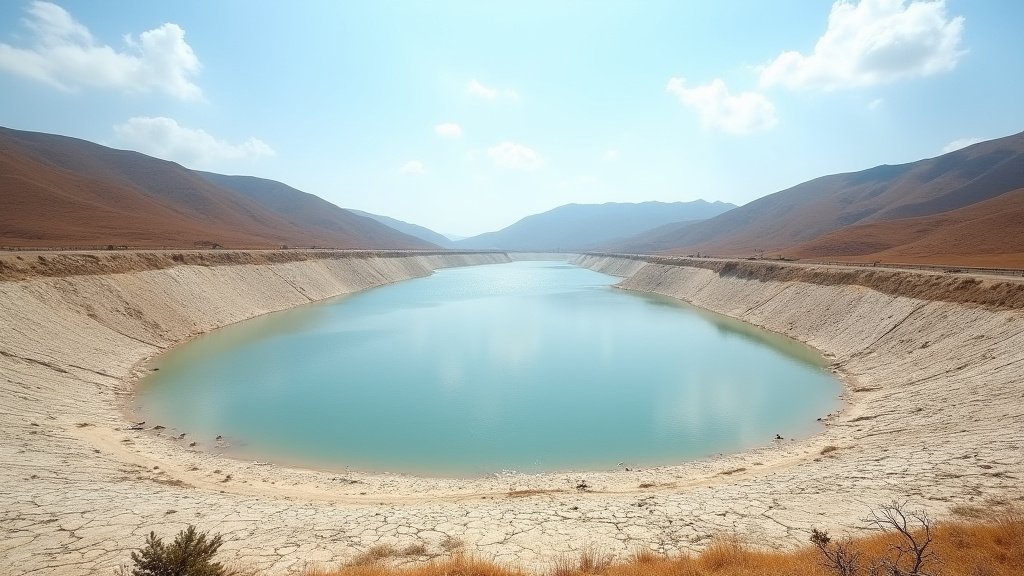
Jamaica is currently navigating a period of severe hydrological stress as authorities, led by the National Water Commission (NWC), have issued urgent water conservation notices across the island. The deepening drought has left major storage facilities, including the Hermitage Dam and the Mona Reservoir, struggling to maintain capacity, with current climate projections from the Meteorological Service of Jamaica indicating no significant rainfall relief for the coming weeks. As the country faces this critical water crisis, the government is scrambling to implement demand management strategies to avoid total supply failure.
Key Highlights
- Critical Reservoir Levels: Major water storage facilities, specifically the Hermitage Dam and Mona Reservoir, have dipped below sustainable operational thresholds.
- Mandatory Conservation: The National Water Commission has implemented strict rationing protocols, urging residential and commercial sectors to limit non-essential water use immediately.
- Agricultural Impact: Farmers in key parishes are reporting crop failure and livestock stress, threatening local food security and rural livelihoods.
- Climate Outlook: Meteorological forecasts show a prolonged dry season, necessitating a shift in long-term infrastructure and water management policy.
The Drying Reservoir: Assessing Jamaica’s Water Scarcity
The current state of water security in Jamaica has reached a tipping point. As the island grapples with the intensification of the drought, the focus has shifted from standard seasonal conservation to urgent, systemic demand management. The National Water Commission (NWC) has publicly acknowledged that the lack of significant precipitation over the last several months has created a deficit that cannot be easily offset by current distribution infrastructure.
The Numbers Behind the Notice
The severity of the situation is best understood through the data provided by the NWC and the Meteorological Service of Jamaica. Reservoir levels are currently being monitored daily. In previous drought cycles, the Mona Reservoir has seen depletion levels that forced the activation of emergency supply schedules. Today, those same patterns are re-emerging earlier than anticipated. With current levels in many catchment areas hovering well below the 40% capacity mark—a critical threshold for municipal stability—the risk of widespread service disruptions is increasing. The government is utilizing a tiered alert system to manage the distribution of water, prioritizing essential services like hospitals and schools while cutting supply to secondary residential areas on a rotating schedule.
Economic Consequences of a Thirsty Nation
The impact of this drought extends far beyond the household tap. Jamaica’s economy is deeply tethered to the availability of water, specifically within the agricultural and tourism sectors. In rural parishes, small-holder farmers are finding it increasingly difficult to irrigate crops, leading to a spike in local food prices as yields shrink. This creates a dual pressure: citizens are facing higher costs of living while simultaneously being asked to restrict their usage to preserve the nation’s limited supply. Furthermore, the tourism sector, a cornerstone of the Jamaican economy, is now tasked with managing water consumption at hotels and resorts that typically require massive volumes of water daily. The government has begun consultations with industry leaders to implement greywater recycling and on-site conservation technologies to mitigate the strain on the national grid.
Adaptive Infrastructure: The Path Forward
This crisis is not merely a weather event; it is an inflection point for Jamaican policy. Experts are now calling for a comprehensive overhaul of the island’s water management architecture. The reliance on seasonal rainfall to fill reservoirs is being viewed as an outdated model in the face of climate change. Current government discussions are centering on three main pillars: the expansion of desalination capacity to reduce reliance on rainfall, the repair of aging distribution pipelines that suffer from high non-revenue water (leaking) rates, and the implementation of mandatory rainwater harvesting systems for new commercial developments. These measures, while costly, are being positioned as the only viable path to insulating the country against the increasing frequency of prolonged dry spells.
Public Response and Conservation Directives
The NWC has been explicit in its directives: all non-essential usage, including the watering of lawns, filling of pools, and washing of vehicles, is currently prohibited. These measures are enforceable by law, and the Commission has deployed monitoring teams to enforce compliance in key urban zones. While public cooperation has been generally positive, the fatigue of constant rationing is beginning to show in urban centers. Authorities continue to stress that without collective restraint, the transition to total supply interruption becomes not just a possibility, but a certainty. The focus remains on short-term survival while simultaneously advocating for the long-term structural changes needed to ensure that Jamaica can withstand the ‘new normal’ of regional climate patterns.
FAQ: People Also Ask
1. What are the main reservoirs currently affected by the drought in Jamaica?
The Hermitage Dam and the Mona Reservoir are the primary facilities currently under the highest scrutiny. These facilities serve a significant portion of the Kingston and St. Andrew metropolitan areas and are showing critically low levels.
2. Are there penalties for ignoring water usage restrictions?
Yes, the National Water Commission (NWC) has the authority to issue fines and disconnect services for repeated or egregious violations of the current water conservation orders, particularly for non-essential use during this emergency period.
3. How long is this drought expected to last?
Meteorological forecasts provided by the Meteorological Service of Jamaica suggest that while sporadic showers may occur, no significant, sustained rainfall—which is required to replenish reservoir levels—is projected for the next several weeks. The situation is being treated as a medium-term crisis.
4. What should households do to conserve water immediately?
Households are advised to adopt strict conservation habits: limiting shower times, fixing all leaky faucets immediately, avoiding car washing or garden watering, and reusing rinse water for cleaning or irrigation where safe to do so.