
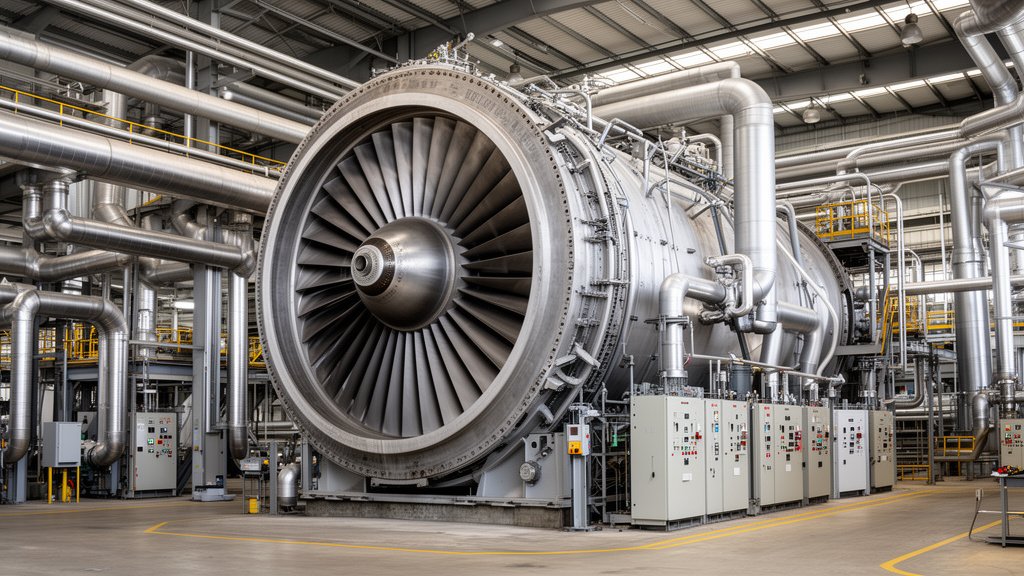
Jamalco, the prominent alumina refinery based in Clarendon, Jamaica, has officially transitioned to independent power generation with the activation of its new TG4 turbine. This strategic pivot disconnects the facility from the Jamaica Public Service (JPS) national grid, marking a significant milestone in the company’s operational history. By self-generating its electricity, the refinery, owned by Century Aluminum Company, is projected to realize substantial financial relief, with efficiency gains and cost reductions estimated at approximately US$28 million annually.
Key Highlights
- Energy Independence: The commissioning of the TG4 power turbine allows Jamalco to fully decouple its energy consumption from the national power grid.
- Financial Impact: The shift is expected to bolster the refinery’s bottom line by saving US$28 million in annual operating costs.
- Operational Control: By generating its own power, Jamalco gains superior control over its energy stability, reducing vulnerability to national grid fluctuations.
- Strategic Growth: This infrastructure upgrade aligns with Century Aluminum Company’s broader efficiency strategies to streamline alumina refining operations in the Caribbean.
The Infrastructure Shift: Powering Jamalco’s Future
The move to install the TG4 turbine is not merely a cost-saving measure; it represents a fundamental shift in the operational architecture of the Jamalco refinery. For decades, industrial operations in Jamaica have contended with the complexities of regional energy pricing and grid stability. By taking its electricity generation in-house, Jamalco has mitigated the unpredictability associated with relying on a national utility provider, JPS.
The Technical Edge: Unpacking TG4
The TG4 turbine serves as the centerpiece of this transformation. In an environment like an alumina refinery, energy consumption is the most significant variable cost. The refinery’s energy needs are immense, requiring constant, high-voltage, and stable power to maintain the thermal processes necessary for processing bauxite into alumina. The TG4 unit is engineered to meet these specific, high-demand industrial requirements. Unlike standard generators, this turbine is designed to integrate seamlessly into the refinery’s existing thermal plant, creating a closed-loop system that maximizes thermodynamic efficiency. The transition process required significant engineering precision to synchronize the turbine with the existing plant hardware without interrupting the core refining cycle—a feat that highlights the technical sophistication of the engineering team at the Halse Hall site.
Economic Implications: The US$28 Million Calculation
The reported US$28 million in annual savings is a transformative figure for the facility. In the global alumina market, margins are often razor-thin and highly sensitive to external inputs, particularly energy costs. By generating its own electricity, Jamalco is essentially insulating its operations from the volatile commercial rates charged by the national grid.
Analysts have noted that this savings figure is likely derived from the differential between the cost of self-generated electricity (utilizing the turbine’s fuel-to-power efficiency) and the retail rate previously paid to JPS. Furthermore, beyond the direct savings, there is an intangible value in operational reliability. When a refinery relies on a national grid, any maintenance work, grid failure, or fluctuating load across the regional network poses a direct threat to the refinery’s uptime. With the TG4 unit, Jamalco effectively becomes its own master of utility uptime, theoretically reducing the risk of costly production stoppages caused by grid instability.
A Broader Industrial Trend
Jamalco’s decision mirrors a broader, albeit quiet, trend among heavy industries in the Caribbean and Central America. Facing high energy costs, private corporations are increasingly bypassing public utility providers in favor of decentralized, on-site power solutions. This trend has significant implications for national utility providers. While it benefits the specific corporation, it changes the demand landscape for national grids, which often rely on large industrial consumers to subsidize the broader network.
From the perspective of Century Aluminum Company, this is a strategic play for long-term survival and competitiveness. As global commodity prices for aluminum fluctuate, lowering the cost of production per ton is the most effective way to protect profitability. By locking in a lower cost of energy, Jamalco positions itself more favorably against global competitors operating in regions with cheaper, grid-subsidized power.
Future Outlook: Sustainability and Stability
Moving forward, the primary question for stakeholders is how this independent power structure will evolve. While the focus is currently on the US$28 million savings, industry observers are looking for potential expansions in efficiency. Could the waste heat from the TG4 turbine be recaptured for other industrial processes? Can the refinery integrate renewable sources to offset the carbon footprint of the new turbine?
While the immediate priority is operational stability and cost-cutting, the infrastructure is now in place for Jamalco to explore further energy optimizations. This pivot to self-reliance is a clear signal that for heavy industry in Jamaica, the future of power is decentralized. By taking control of its electrical generation, Jamalco has not only secured its immediate bottom line but has also established a resilient blueprint for industrial operations in the region.
FAQ: People Also Ask
1. Why did Jamalco decide to disconnect from the JPS grid?
Jamalco aimed to gain energy independence and reduce operational costs. By generating its own power, the company avoids the retail costs and potential instability associated with the national Jamaica Public Service (JPS) grid, leading to an estimated US$28 million in annual savings.
2. What is the TG4 turbine, and why is it important?
TG4 is a new power-generation turbine commissioned by the Jamalco refinery. It is a specialized industrial unit designed to provide the massive, consistent voltage required for alumina refining, effectively allowing the refinery to operate its own power plant independently.
3. How does this move impact the local energy landscape?
Jamalco’s move to go off-grid highlights a trend of decentralized power generation among major industrial consumers. While this significantly lowers the refinery’s costs and improves its reliability, it shifts the demand profile for the national grid, as one of its largest industrial consumers becomes energy self-sufficient.
4. Is this a permanent solution for the refinery?
Yes, the installation of the TG4 turbine is an infrastructure upgrade intended to provide a long-term, stable power solution for the refinery’s operations, prioritizing cost efficiency and operational uptime for the foreseeable future.