
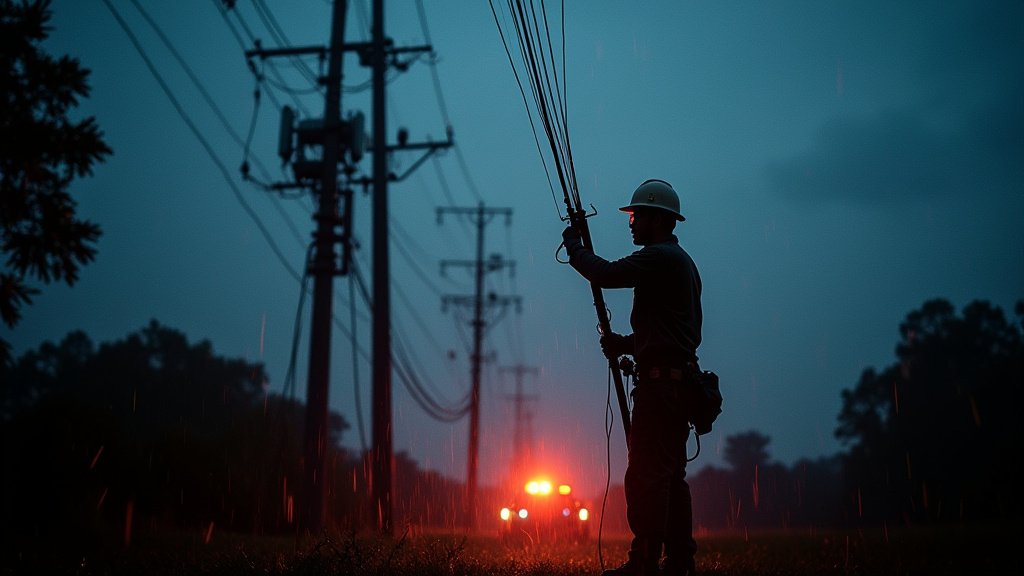
In the wake of Hurricane Melissa’s destructive path, utility companies and telecommunications providers have forged an unprecedented collaboration to expedite the restoration of critical services. This partnership aims to leverage shared resources and expertise to bring power and communication back to affected communities faster and more efficiently than ever before.
Key Highlights:
- Joint task forces established between utility and telecom sectors for coordinated response.
- Prioritization of essential services like hospitals, emergency response centers, and shelters.
- Accelerated deployment of repair crews and equipment through mutual aid agreements.
- Enhanced communication protocols to ensure seamless information sharing during restoration efforts.
- Focus on long-term infrastructure resilience to better withstand future storm events.
Collaborative Resilience: Restoring the Grid and the Lines
Following the widespread devastation wrought by Hurricane Melissa, a critical need for enhanced inter-industry cooperation has become apparent. The storm’s fury not only downed power lines but also severed vital communication networks, leaving many communities isolated and hindering emergency response. In recognition of this, leaders from major utility providers and telecommunications giants have initiated a strategic alliance. This initiative moves beyond traditional, independent restoration efforts to embrace a unified approach, pooling resources, personnel, and technical knowledge to tackle the monumental task of rebuilding.
The Genesis of Cooperation
The immediate aftermath of Hurricane Melissa highlighted the interconnectedness of modern infrastructure. When power fails, communication systems are often rendered inoperable, and vice versa. Recognizing that a dual failure amplifies the impact on residents and emergency services, industry leaders convened rapidly. The outcome is a structured framework for mutual assistance, designed to streamline the deployment of repair crews, share specialized equipment, and optimize logistical operations. This unprecedented level of collaboration is expected to significantly shorten restoration times, bringing essential services back online more rapidly.
Prioritizing the Most Vulnerable
A core tenet of this collaborative effort is the strategic prioritization of restoration. High-ranking officials from both sectors have agreed to focus initial efforts on critical infrastructure. This includes hospitals, which rely heavily on consistent power and communication for patient care; emergency response centers, the nerve of any disaster management operation; and community shelters, providing refuge for those displaced by the storm. By securing these essential points first, the partnership aims to stabilize the immediate crisis and ensure the safety and well-being of the most vulnerable populations.
Streamlining Operations and Information
To achieve these ambitious goals, new communication protocols and operational procedures are being implemented. This involves the establishment of joint command centers where representatives from utility and telecom companies can share real-time updates, assess damage comprehensively, and coordinate the dispatch of repair teams. Mutual aid agreements, previously more ad-hoc, are now formalized, allowing for the swift mobilization of crews and equipment from unaffected regions. The focus is on creating a seamless flow of information and resources, minimizing delays and maximizing the efficiency of the workforce on the ground.
Building Back Stronger
Beyond the immediate restoration, this collaboration carries a long-term vision of enhancing infrastructure resilience. Lessons learned from Hurricane Melissa are being integrated into future planning, with a focus on strengthening power grids and communication networks against the increasing severity of climate-related weather events. This may involve investments in undergrounding utility lines, deploying more robust communication technologies, and developing advanced early warning systems. The aim is to create a more durable and reliable infrastructure capable of withstanding future storms with reduced impact.
FAQ: People Also Ask
What is the primary goal of the collaboration between utilities and telecoms?
The primary goal is to accelerate the restoration of critical services, such as power and communication, to affected communities in the aftermath of natural disasters like Hurricane Melissa, by leveraging shared resources and expertise.
How are restoration efforts being prioritized?
Restoration efforts are being prioritized based on the criticality of the service, with a focus on hospitals, emergency response centers, and community shelters, followed by broader community needs.
What are some of the challenges faced during post-storm restoration?
Challenges include widespread damage to infrastructure, logistical difficulties in deploying repair crews and equipment, ensuring the safety of workers, and coordinating efforts among multiple agencies and companies.
How will this collaboration improve future storm responses?
This collaboration aims to improve future responses by establishing formalized mutual aid agreements, enhancing communication protocols, sharing best practices, and investing in more resilient infrastructure.
Are there any specific technologies being employed in this new collaborative effort?
While specific technologies can vary, the emphasis is on improving communication systems for coordination and utilizing advanced diagnostic tools for damage assessment and repair, alongside potentially more resilient grid and network technologies for future deployments.