
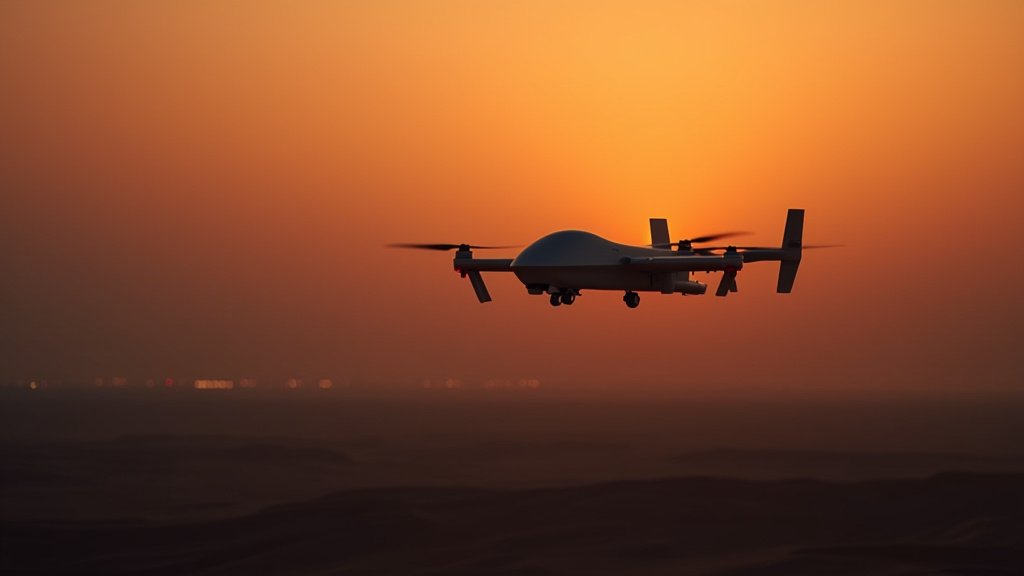
President Trump has issued a stark warning to Iran, vowing to launch new U.S. attacks if the country’s nuclear deal falters. This threat comes amid heightened tensions and reports of a drone attack in the UAE linked to Iraq, further escalating regional instability.
Key Highlights:
- President Trump has threatened renewed U.S. military action against Iran.
- The threat is directly tied to the potential collapse of Iran’s nuclear deal.
- A drone attack in the UAE, reportedly linked to Iraq, has increased regional friction.
- The situation underscores the volatile geopolitical landscape surrounding Iran.
Escalating Tensions: The Iran Nuclear Deal Under Fire
The Unraveling Accord
The international community has been closely monitoring the delicate negotiations surrounding Iran’s nuclear program. The Joint Comprehensive Plan of Action (JCPOA), aimed at curbing Iran’s nuclear ambitions in exchange for sanctions relief, has faced numerous challenges since its inception. Recent statements from President Trump suggest a hardening stance, indicating that the U.S. is prepared to use military force to prevent Iran from developing nuclear weapons should the deal disintegrate. This assertive posture signals a potential return to the kind of maximum pressure campaign seen in previous years, raising concerns about a wider conflict.
Regional Repercussions: UAE Drone Attack
Adding to the already precarious situation, a drone attack targeting the United Arab Emirates has been preliminarily linked to forces operating out of Iraq. While details remain scarce, such incidents have become increasingly common and are often seen as proxy actions or retaliatory measures within the complex web of Middle Eastern rivalries. The U.S. has previously accused Iran and its allied militias of orchestrating similar attacks against regional adversaries and U.S. interests. This latest incident, if confirmed to have Iranian links, would provide further justification for a more aggressive U.S. policy.
Strategic Implications and Future Outlook
The dual pressures of a potentially failing nuclear deal and an uptick in regional proxy attacks create a volatile environment. Analysts are divided on the likelihood of a full-scale conflict. Some believe Trump’s threats are primarily diplomatic leverage to force concessions, while others fear a miscalculation could trigger an uncontrollable escalation. The economic impact of renewed sanctions or military action on global oil markets would be significant. Furthermore, the stability of neighboring countries and the broader fight against groups like ISIS could be jeopardized by a wider regional conflict. The international response, particularly from European allies who remain committed to the JCPOA, will be crucial in shaping the unfolding events. The United States’ commitment to regional security and its relationship with key allies like Saudi Arabia and Israel will also play a pivotal role in the strategic calculus.
FAQ: People Also Ask
What is the Joint Comprehensive Plan of Action (JCPOA)?
The JCPOA, commonly known as the Iran nuclear deal, is an agreement reached in 2015 between Iran and the P5+1 countries (the U.S., UK, France, China, Russia, plus Germany) to limit Iran’s uranium enrichment activities in exchange for sanctions relief.
What are the main concerns regarding Iran’s nuclear program?
The primary concern is that Iran could develop nuclear weapons. The JCPOA aimed to prevent this by imposing strict limits and inspections on Iran’s nuclear facilities and materials.
How has the U.S. stance on the Iran deal evolved?
Under the Trump administration, the U.S. withdrew from the JCPOA in 2018 and reimposed stringent sanctions. The Biden administration has sought to revive the deal, but negotiations have been complex and fraught with difficulties.
What is the significance of the UAE drone attack?
Drone attacks in the region are often viewed as acts of aggression, and if linked to Iran or its proxies, they increase regional tensions and could provoke retaliatory measures, potentially drawing in global powers.
What are the potential economic consequences of renewed conflict or sanctions?
Renewed conflict or severe sanctions on Iran could significantly disrupt global oil supplies, leading to sharp increases in energy prices and potentially destabilizing international markets.