
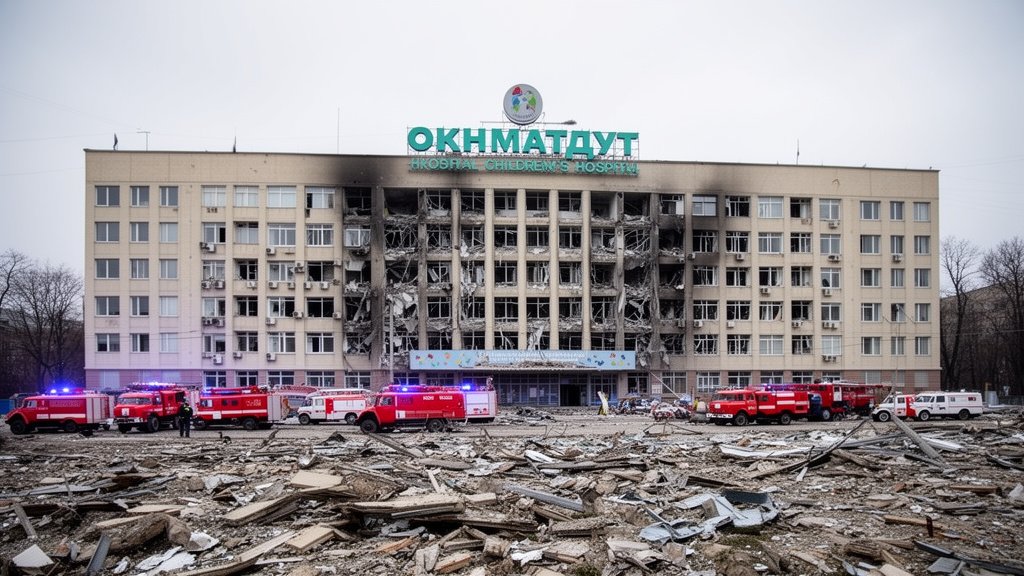
A catastrophic wave of Russian missiles and explosive drones has struck the heart of Kyiv and its surrounding regions, resulting in at least 17 confirmed fatalities and widespread destruction. The assault, characterized by military analysts as one of the most brazen aerial campaigns of the ongoing conflict, directly impacted sensitive civilian sites, including a prominent preschool, an educational facility, and the Okhmatdyt Children’s Hospital—the largest pediatric medical center in Ukraine. The attack has sent shockwaves through the international community, reigniting intense debates regarding the efficacy of current air defense systems and the strategic intentions behind the targeting of medical and educational institutions.
Key Highlights
- Casualty Update: At least 17 individuals have been confirmed dead, with dozens more suffering from shrapnel wounds and trauma-related injuries as rescue operations continue through the rubble.
- Critical Infrastructure Hit: The Russian strike deliberately targeted civilian zones, causing catastrophic damage to the Okhmatdyt Children’s Hospital, disrupting life-saving medical care, including dialysis and oncology treatments.
- Weapon Systems: Reports from the Kyiv City Military Administration indicate the use of high-precision cruise missiles, including the Kh-101, alongside explosive drones, aimed at overwhelming urban air defense batteries.
- Humanitarian Impact: The targeting of schools and preschools has drawn international condemnation, with human rights observers documenting the incident as a potential violation of international humanitarian law.
The Anatomy of the Escalation: A Targeted Aerial Campaign
The coordinated nature of the attack suggests a departure from standard bombardment tactics. Intelligence analysts observe that this specific wave of missiles utilized a “saturation” technique, designed to exhaust the layered air defense network surrounding the capital. By deploying low-altitude, radar-evading cruise missiles in tandem with high-altitude ballistic threats, Russian forces sought to create gaps in the protective umbrella. The resulting impact zones reveal that while many projectiles were intercepted, the sheer volume of debris and direct hits on civilian centers caused the devastating death toll.
Targeting the Vulnerable: The Okhmatdyt Crisis
Perhaps the most harrowing aspect of the bombardment was the direct hit on the Okhmatdyt Children’s Hospital. This facility is not merely a hospital; it is a critical hub for complex pediatric surgeries, organ transplants, and cancer treatments for children across the nation. The destruction of the facility has forced the immediate evacuation of hundreds of patients, many of whom were connected to life-support systems at the time of the impact. The emotional weight of this incident has resonated globally, with footage of parents and medical staff working amidst the dust and shattered glass to evacuate pediatric patients becoming a defining image of the tragedy.
Military Analysis: Overcoming Air Defenses
Military experts are closely analyzing the missile trajectories to understand how these munitions penetrated one of the most heavily fortified cities in the world. The Kyiv City Military Administration has noted that while Patriot systems and other Western-supplied air defense units successfully downed a significant percentage of the incoming threats, the density of the strike overwhelmed local defensive pockets. This event highlights the precarious nature of maintaining air superiority over civilian population centers when faced with sustained, multi-vector aerial saturation. The use of the Kh-101 missile—a platform known for its low radar cross-section—underscores the ongoing technological evolution of the conflict, as both sides engage in a continuous cycle of defensive adaptation and offensive innovation.
Geopolitical and Strategic Context
This attack arrives at a sensitive moment in the broader theater of the war. Secondary analysis of the event suggests three primary strategic drivers behind such an escalation:
1. Psychological Warfare and Attrition: By targeting symbols of societal stability, such as hospitals and schools, there is an evident attempt to erode the morale of the civilian population. The goal is to cultivate a sense of permanent insecurity, making daily life in Kyiv unsustainable and pressuring the Ukrainian leadership toward concessions.
2. Counter-Defensive Posturing: The strike serves as a reminder that the Russian Aerospace Forces (VKS) retain the capacity to strike deep into the Ukrainian interior, even as the frontline remains largely static. It is a signal aimed at external backers, intended to demonstrate the high cost of continued material support for Ukrainian defense initiatives.
3. Economic and Logistical Disruption: Beyond the immediate loss of life, the attack has paralyzed critical administrative and medical functions in the capital. The cost to repair and reconstruct damaged urban infrastructure runs into the hundreds of millions, placing further strain on the national budget which is already heavily reliant on international aid.
As the search and rescue efforts transition into the recovery phase, the focus for the Ukrainian authorities shifts to clearing the debris and restoring basic utility services to the affected districts. However, the psychological and physical scars of this event will likely linger long after the rubble is cleared.
FAQ: People Also Ask
Was the targeting of the hospital intentional?
While official Russian channels often claim they only strike military-industrial targets, the visual evidence and debris analysis of the strike on the Okhmatdyt Children’s Hospital indicate a direct hit on a non-military civilian medical facility. International observers and the Ukrainian government classify this as a deliberate act of terror.
How does this affect the future of the war?
This event likely stiffens the resolve of the local population and will likely serve as a rallying cry for the Ukrainian government to secure more advanced air defense batteries, specifically long-range interceptors capable of engaging missiles before they reach urban envelopes.
What can the international community do?
Beyond sending financial aid, the primary request from Ukrainian officials following such attacks is the immediate provision of additional air defense systems, such as Patriot or NASAMS batteries, to better protect urban centers from aerial saturation attacks.