
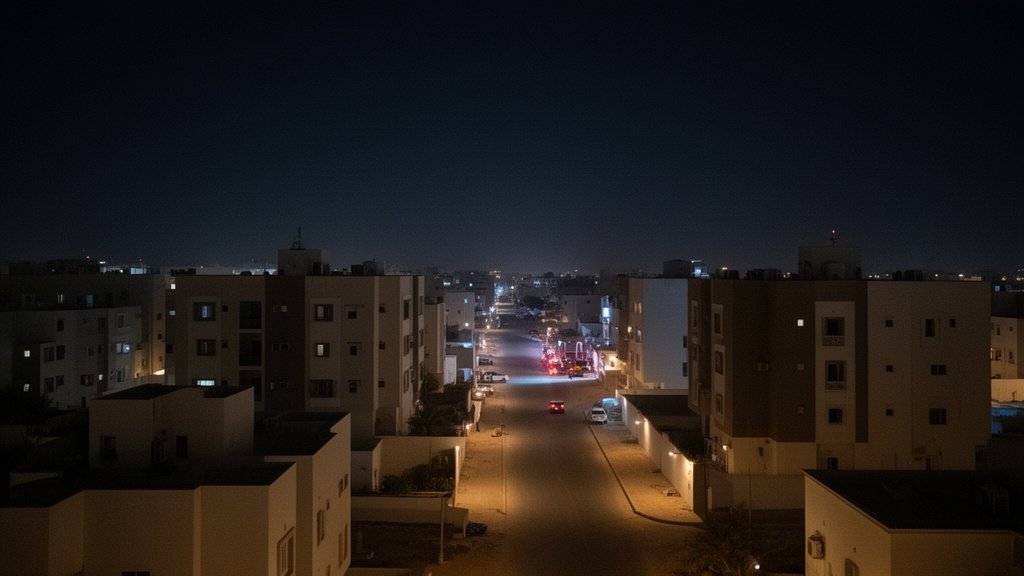
Residents in the Saudi Arabian capital, Riyadh, were jarred by a series of explosions that echoed across the city, as a Saudi-led coalition force successfully intercepted a ballistic missile launched by Houthi forces. While the interception prevented a direct impact on the city’s primary infrastructure, the fallout from the engagement resulted in debris scattering across residential neighborhoods. Authorities have confirmed that the incident caused four injuries and inflicted damage on at least 15 homes, sparking renewed concerns regarding regional security and civilian safety in urban centers.
Key Highlights
- Interception Success: A Saudi-led coalition intercepted a Houthi-fired ballistic missile targeting Riyadh, preventing a catastrophic direct strike.
- Residential Impact: Debris from the interception descended upon populated neighborhoods, resulting in four confirmed injuries among residents.
- Property Damage: Initial assessments indicate that 15 residential properties sustained structural damage from falling fragments.
- Security Alert: The event highlights the ongoing threat of long-range aerial attacks and the critical reliance on multi-layered air defense systems in the region.
Riyadh Security Crisis: Analyzing the Interception
The interception of the ballistic missile over Riyadh marks a continuation of the tense, multi-year conflict that has frequently spilled over from the Yemen border to major Saudi urban centers. For residents, the night began with the distinct, thunderous sound of aerial defense systems engaging, followed by the secondary concussions of falling interceptor debris. While the coalition’s primary objective—neutralizing the incoming threat before it hits critical infrastructure—was achieved, the incident serves as a stark reminder of the risks associated with air defense engagements over densely populated areas.
The Sequence of Events: A Night of Tension
According to reports from the Saudi-led coalition, the missile was detected early in its trajectory. The response, utilizing sophisticated Patriot missile battery systems, was immediate. However, intercepting a ballistic missile at high altitudes often results in the projectile shattering into multiple high-velocity fragments. When these fragments fall, they follow unpredictable, gravity-driven trajectories.
Witnesses described the sky illuminating with flashes as the interception occurred, followed shortly by the sound of debris impacting the ground. Local civil defense teams and emergency services were deployed rapidly to the affected residential areas to clear the damage, treat the injured, and ensure that no unexploded ordnance remained in the vicinity. The mobilization of these teams was critical in containing the chaos that often follows such loud, percussive events.
The Human Cost: Civilians in the Crossfire
The report of four injuries is a sobering figure, emphasizing that even a “successful” interception carries a humanitarian price. For the 15 households impacted, the damage represents more than just structural repair costs; it signifies the intrusion of the regional conflict into the private sphere.
Modern urban warfare rarely stays confined to military installations. As Houthi forces continue to employ drones and ballistic missiles, the risk to non-combatants remains a top priority for Saudi defense strategists. The primary challenge remains balancing the need to intercept these threats at maximum altitude while minimizing the dispersion of dangerous debris over residential zones—a difficult task given the velocity and physics involved in ballistic missile interception.
Regional Security Architecture and Future Implications
This incident provides a case study in the necessity of a robust, multi-layered air defense architecture. The Saudi-led coalition relies on systems like the MIM-104 Patriot to detect, track, and engage incoming threats. These systems are constantly being upgraded to improve their “hit-to-kill” capability—the ability to physically destroy the incoming warhead rather than just damaging it—which is the most effective way to prevent falling debris.
Looking forward, the geopolitical implications are significant. This event underscores the persistent instability in the region and the failure of diplomatic channels to fully halt cross-border hostilities. Analysts suggest that until a sustainable political settlement is reached regarding the conflict in Yemen, major Saudi cities will continue to remain vigilant, with air defense systems on high alert 24/7. The psychological toll on the populace, while difficult to quantify, is also a growing concern for regional authorities as they manage the narrative of safety versus the reality of ongoing threats.
FAQ: People Also Ask
1. Why did the missile debris hit houses if the interception was successful?
When a ballistic missile is intercepted, it is destroyed in mid-air. However, the resulting debris—ranging from engine components to fragments of the warhead—continues to travel at high speeds along a ballistic trajectory. It is difficult to predict exactly where this debris will land, which is why residential areas under flight paths are occasionally affected.
2. How effective are the current Saudi air defense systems?
Saudi Arabia employs highly advanced systems, including the Patriot PAC-3, which are specifically designed to intercept ballistic missiles. They have a high success rate, neutralizing the vast majority of threats. However, no air defense system is perfect, and the volume of incoming fire, combined with the difficulty of intercepting debris, means that risks to the ground remain.
3. What should residents do during these interceptions?
Local authorities consistently advise residents to stay indoors, away from windows, and to follow the instructions of civil defense officials. Residents are urged to monitor official media channels for alerts and to avoid approaching any suspected debris, as fragments can be sharp or potentially explosive if they contain unspent propellant.