
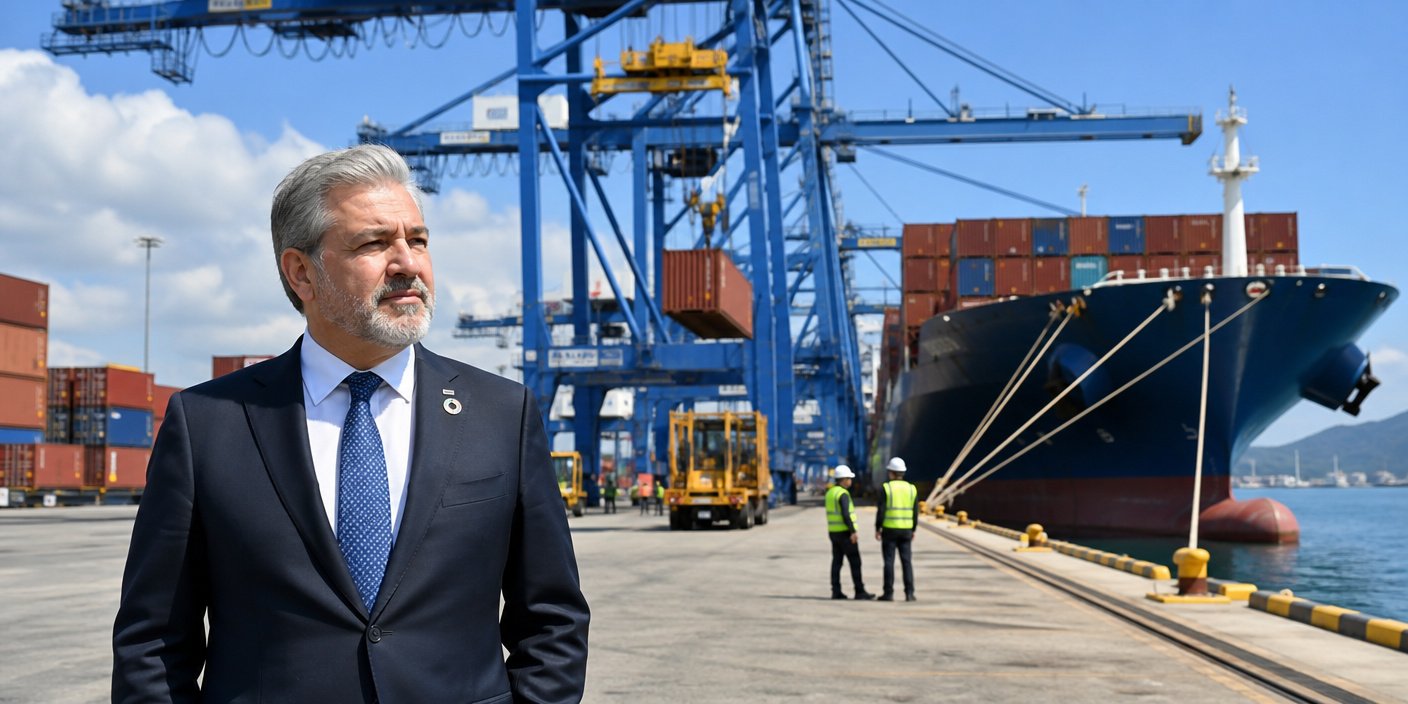
International Maritime Organization (IMO) Secretary-General Arsenio Dominguez has formally commended Jamaica’s transformative progress in maritime infrastructure and educational excellence during a high-profile diplomatic visit to the island. Highlighting the nation’s critical role in regional logistics, Dominguez underscored Jamaica’s successful navigation of the post-pandemic supply chain recovery and its aggressive, forward-thinking push toward terminal automation and green shipping initiatives.
Key Highlights
- Record Throughput: Jamaica’s major port terminals achieved record-breaking container volumes in the first two quarters of 2025, solidifying the nation’s status as a key transshipment hub.
- Vocational Leadership: The Caribbean Maritime University (CMU) was singled out by Dominguez as a global benchmark for maritime vocational training and workforce development.
- Decarbonization Targets: The visit emphasized the alignment of Jamaica’s port operations with the IMO’s stringent 2030 and 2050 decarbonization mandates.
- Technological Shift: Strategic investments in automated gantry cranes and digital supply chain tracking are positioning Kingston as a ‘Smart Port’ leader in the Caribbean.
Jamaica’s Strategic Maritime Evolution
The visit by Secretary-General Arsenio Dominguez serves as a critical endorsement of the Caribbean’s most aggressive maritime modernization strategy. As global shipping lines contend with fluctuating geopolitical realities and supply chain fragmentation, Jamaica has emerged as an essential node for North-South and East-West trade routes. The IMO’s recognition of these efforts highlights a maturation of the island’s maritime sector, moving away from simple logistics and into the realm of high-tech, data-driven port management.
The Human Capital Pillar: Caribbean Maritime University
Central to Dominguez’s visit was a deep dive into the operations of the Caribbean Maritime University (CMU). The institution has become a cornerstone of the regional maritime economy, providing the specialized human capital required to operate the sophisticated machinery now prevalent in modern shipping.
During his tour, Dominguez remarked on the seamless integration of curriculum and industry needs. The university’s recent expansion into green technology certification and autonomous vessel navigation training demonstrates a proactive alignment with the IMO’s global standards. This synergy between academic training and port operations is often cited by the IMO as the ‘Gold Standard’ for developing maritime nations seeking to elevate their labor force to compete with established global players like Singapore or Rotterdam.
Modernizing the Port Infrastructure: The 2025 Throughput Boom
The physical infrastructure of Jamaica’s ports has undergone significant capital injection over the last 24 months. 2025 has been a banner year, with preliminary data indicating record-breaking container volumes. This surge is not merely a result of global economic recovery but a direct consequence of improved efficiency levels at the Port of Kingston.
Terminal operators have deployed automated gantry cranes and AI-driven yard management software, reducing vessel turnaround times by an estimated 15% year-over-year. By minimizing dwell time—the period a container spends at a terminal—Jamaica has successfully incentivized major shipping alliances to utilize its facilities for larger, more complex transshipment operations. This efficiency is critical; as vessels grow larger, ports that cannot process cargo with high speed and precision risk obsolescence. Jamaica’s current trajectory suggests it is successfully avoiding this trap.
Navigating the Green Transition: Decarbonization Efforts
Perhaps the most pressing topic during the Secretary-General’s visit was the IMO’s overarching mandate for industry decarbonization. Shipping is currently responsible for approximately 3% of global greenhouse gas emissions, and the IMO is under intense pressure to enforce strict compliance with its Net-Zero framework.
Jamaica’s approach—often referred to as ‘Port-Centric Decarbonization’—involves electrifying port equipment and optimizing vessel berthing to reduce idling emissions. Dominguez praised the nation’s commitment to adopting shore-side electricity infrastructure, which allows vessels to switch off diesel engines while docked. This transition is not only environmentally necessary but economically strategic, as global maritime regulations increasingly penalize ports that fail to offer sustainable docking services.
Future Outlook: The Smart Port Strategy
Looking ahead, the collaboration between the IMO and Jamaican authorities aims to foster a ‘Smart Port’ ecosystem. This involves the full digitization of port administrative services, creating a paperless environment that speeds up customs clearance and enhances supply chain transparency. As automation continues to reshape the maritime workforce, the IMO has pledged to support Jamaica in developing regulatory frameworks that balance efficiency with social stability, ensuring that technology serves the labor force rather than displacing it.
FAQ: People Also Ask
Q: What is the significance of the IMO Secretary-General’s visit to Jamaica?
A: The visit signifies international validation of Jamaica’s maritime strategy. When the IMO head praises a nation, it signals to global investors and shipping lines that the country is a reliable, high-standard partner, which can lead to increased foreign direct investment and trade partnerships.
Q: How is Jamaica handling the decarbonization of its ports?
A: Jamaica is investing in shore-side power infrastructure (cold ironing) and prioritizing the electrification of port equipment to reduce emissions, ensuring alignment with IMO environmental mandates.
Q: What is the role of the Caribbean Maritime University in this growth?
A: The CMU provides the specialized technical training required to operate, maintain, and manage the high-tech systems currently being deployed at Jamaican ports, essentially creating a pipeline of talent that attracts global logistics firms.
Q: How does automation affect port efficiency?
A: Automation, specifically through automated cranes and AI yard management, reduces manual errors, decreases vessel turnaround time, and improves safety, all of which directly contribute to higher container throughput and greater profitability for the port.