
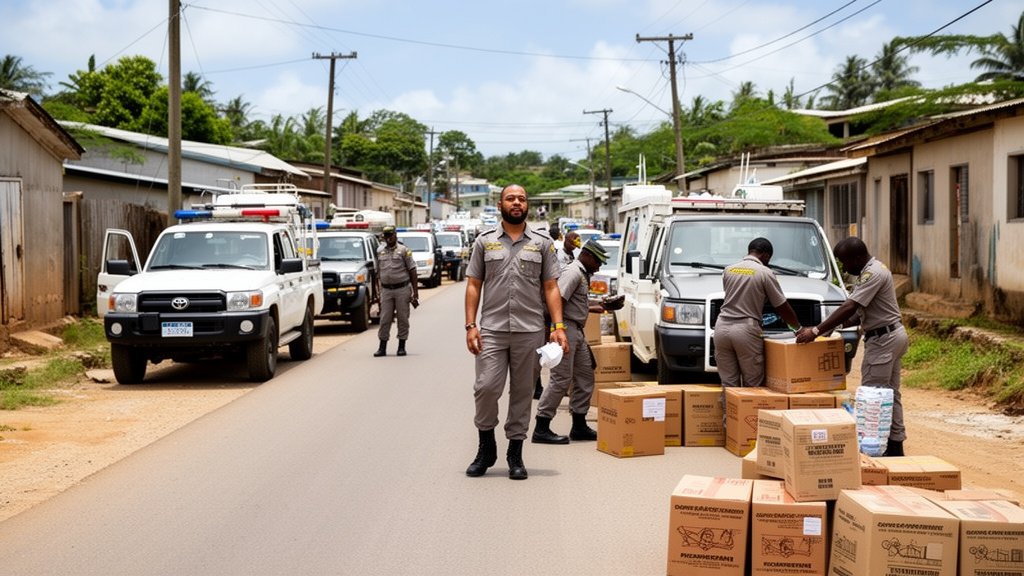
In a decisive response to a recent incident necessitating urgent social intervention, multiple government agencies have been mobilized to provide immediate relief and support to displaced residents of Coopers Pen, Trelawny. The coordinated effort aims to address the immediate needs of the affected families, ranging from emergency housing to nutritional support and psychosocial counseling. As the community reels from the unexpected event, state authorities are deploying resources designed to stabilize the situation and prevent further hardship for the vulnerable population.
Key Highlights
- Inter-Agency Mobilization: The operation involves a multi-sectoral approach, including the Ministry of Labour and Social Security (MLSS) and the Trelawny Municipal Corporation, to streamline the delivery of aid.
- Essential Support Delivery: Emergency kits containing food, hygiene supplies, and bedding have been prioritized to ensure the fundamental well-being of the displaced households.
- Social Stabilization: Specialized teams are on the ground to conduct psychosocial assessments, ensuring that mental health support and counseling services reach the most impacted individuals.
- Long-Term Assessment: Preliminary evaluations are underway to determine the structural and social needs required for the community’s eventual recovery and reintegration.
Navigating the Crisis: A Multi-Agency Response
The situation in Coopers Pen has triggered a significant deployment of state resources, highlighting the government’s operational capacity to handle localized emergencies. The primary objective of this intervention is twofold: immediate stabilization and the restoration of normalcy for displaced families. When such incidents occur, the speed of government response is the most critical factor in mitigating the ripple effects that often lead to prolonged homelessness or economic instability.
The Mechanics of Government Aid
At the center of the relief effort is the collaboration between the Ministry of Labour and Social Security and local government partners. By leveraging the existing social safety net, officials are attempting to bridge the gap between initial displacement and permanent housing solutions. The Ministry’s role, in particular, focuses on the direct provisioning of social protection grants. These funds are designed to cover immediate expenses, preventing the displaced families from falling further into financial precarity.
The Trelawny Municipal Corporation has been instrumental in providing logistical support. By coordinating with local emergency management offices, the Corporation ensures that relief supplies—often sourced from the Office of Disaster Preparedness and Emergency Management (ODPEM) stockpiles—are distributed efficiently. This logistical coordination is vital; without a centralized command structure, relief efforts frequently become fragmented, leading to gaps in coverage and delays that negatively impact the most vulnerable residents.
Analyzing the Social and Economic Toll
The displacement of residents in Coopers Pen is not merely a logistical challenge but a profound social and economic disruption. When families are suddenly removed from their homes, they often lose access to local support networks, schools, and proximity to their places of employment. This secondary displacement—the loss of community infrastructure—often proves as damaging as the initial event itself.
Economic impact assessments are currently being prioritized to determine the extent of the financial damage. For many in rural or semi-rural settings like Coopers Pen, the home is often the most significant asset. Losing this asset necessitates a comprehensive response that goes beyond temporary shelter. Economists analyzing the situation point out that sustained government intervention is required to avoid a lasting decline in the local standard of living. There is a pressing need for the Social Development Commission (SDC) to engage in community revitalization strategies that ensure the affected families are not marginalized as the initial crisis subsides.
Strengthening Community Resilience
This incident serves as a stark reminder of the importance of disaster preparedness at the community level. While the government has responded with necessary speed, the conversation is already shifting toward long-term resilience. How can communities like Coopers Pen be better prepared for sudden displacement? This involves both physical infrastructure—such as improved land-use planning and building safety compliance—and social infrastructure, such as community-led emergency response committees.
Moving forward, the focus must remain on a transparent and equitable distribution of aid. The success of this mobilization will be measured not just by the immediate relief provided, but by the effectiveness of the follow-up programs. Authorities are currently engaged in mapping out the specific needs of each family, with a goal of establishing a pathway to permanent housing. This phase of the operation is complex, requiring sensitive communication and rigorous data management to ensure that no individual falls through the cracks of the bureaucratic process. The government’s continued presence in Coopers Pen will be essential to foster trust and ensure that the transition from emergency relief to sustainable living is achieved with minimal additional trauma for the affected residents.
FAQ: People Also Ask
1. Which government agencies are currently leading the relief effort in Coopers Pen?
The response is a collaborative effort led primarily by the Ministry of Labour and Social Security (MLSS) and the Trelawny Municipal Corporation, with additional support from ODPEM and various social services to ensure comprehensive aid delivery.
2. What specific types of assistance are displaced residents receiving?
Residents are receiving a multi-tiered package of assistance, including emergency food vouchers, hygiene kits, temporary housing accommodation, and professional psychosocial counseling to assist with trauma recovery.
3. How is the government determining who receives aid?
Agencies are conducting rapid needs assessments on the ground. These assessments are cross-referenced with local community records to identify the most vulnerable individuals and households who have been directly affected by the displacement incident.
4. Is there a long-term plan for the families affected by this displacement?
Yes, the government has indicated that the relief effort will transition from emergency support to recovery planning. This includes evaluating permanent housing options and providing long-term social protection grants to assist families in rebuilding their lives.
5. How can the public assist or track the progress of this relief effort?
Citizens can stay updated through official press releases from the Ministry of Labour and Social Security and the Trelawny Municipal Corporation. Any official donation drives or community support initiatives will be communicated through these official channels to ensure accountability.