
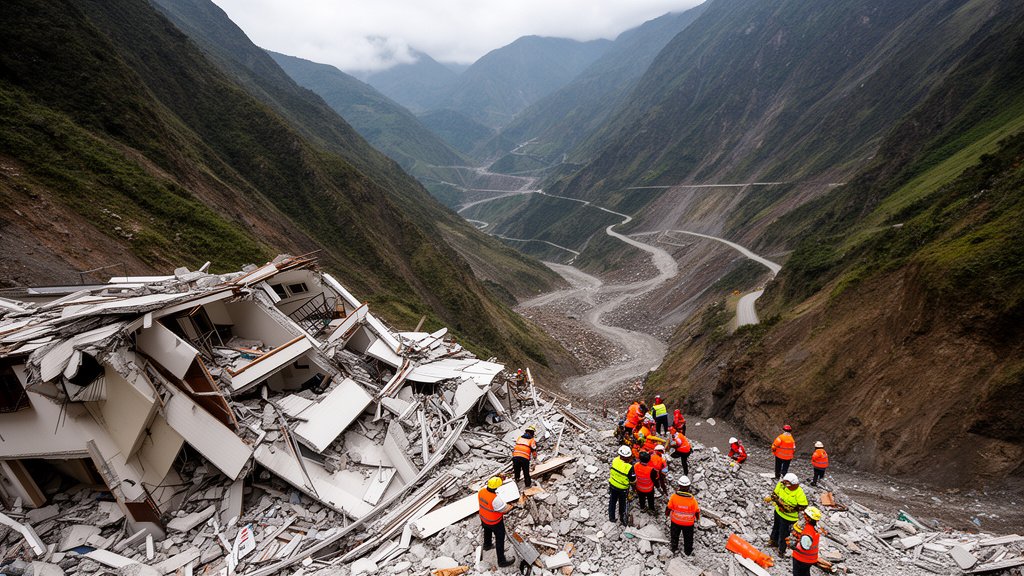
The 7.4-magnitude earthquake that struck Colombia has left a trail of devastation, claiming the lives of at least 132 individuals and triggering an urgent, large-scale mobilization of emergency response teams. As authorities continue to assess the damage, officials warn that the death toll may rise as search and rescue crews penetrate deeper into the most heavily impacted regions, where communication lines remain severed and access is hampered by destroyed infrastructure.
Key Highlights
- Confirmed Casualties: At least 132 fatalities have been officially verified by the Colombian National Unit for Disaster Risk Management (UNGRD).
- Seismic Intensity: The earthquake, measured at a magnitude of 7.4, was felt across multiple provinces, causing widespread structural failure.
- Emergency Operations: Rescue crews, including the Colombian Civil Defense and international aid partners, are prioritizing the clearing of rubble to locate trapped survivors.
- Ongoing Threat: Aftershocks continue to threaten the stability of damaged buildings, complicating search efforts and keeping rescue personnel at high risk.
The Aftermath of the Andean Seismic Crisis
The Andean landscape, often characterized by its steep, rugged terrain, has become the epicenter of a humanitarian crisis. The 7.4-magnitude tremor did not merely impact the immediate vicinity of the epicenter but sent shockwaves across densely populated regions, exposing vulnerabilities in local building standards and infrastructure resilience. The event has reignited the national conversation regarding seismic preparedness in a country that sits atop one of the world’s most active tectonic zones.
Unfolding Tragedy and Rescue Challenges
In the immediate hours following the quake, the primary focus for the UNGRD has been the deployment of search-and-rescue teams to the worst-hit municipalities. Many of these areas are isolated, accessible only by winding mountain roads that have been compromised by landslides triggered by the seismic activity. This logistical bottleneck has hindered the speed at which heavy machinery can be brought in to clear the debris.
Rescue teams, working alongside the Colombian Civil Defense, are currently engaging in the ‘golden window’ of survival. Every hour that passes reduces the likelihood of finding survivors trapped beneath collapsed concrete, yet the teams remain undeterred, utilizing specialized acoustic equipment and search dogs to locate victims. The physical toll on the rescuers is immense, working in dusty, precarious conditions where every movement of the earth could cause a secondary collapse.
Structural Vulnerability and Economic Fallout
Beyond the human cost, the economic impact is expected to be profound. The earthquake has decimated critical infrastructure, including hospitals, schools, and primary transport arteries. The collapse of these facilities not only disrupts essential services but also forces the government to divert vast resources toward emergency recovery at a time when the economy faces global inflationary pressures. Experts suggest that the reconstruction of the affected areas will take years, requiring billions in investment to modernize building codes and reinforce essential structures to withstand future seismic events.
Furthermore, the interruption of local commerce and agricultural production—the lifeblood of these rural regions—threatens long-term food security and economic stability. Families who have lost their homes are currently being housed in temporary shelters, raising concerns about the potential for secondary public health crises in overcrowded conditions.
Geological Context: A Region in Flux
Colombia’s susceptibility to seismic activity is a direct result of its geography. The country lies at the confluence of several tectonic plates, including the Nazca and Caribbean plates, which interact with the South American plate. This constant geological pressure makes earthquakes a recurring reality for the population. However, the intensity of this particular 7.4-magnitude quake has served as a grim reminder of the unpredictability of these geological forces.
Scientists from the Colombian Geological Service are currently working to map the rupture and provide real-time data on aftershock patterns. This scientific monitoring is critical; it informs emergency response decisions and helps to define exclusion zones where structural integrity is no longer guaranteed. The data gathered during this event will likely lead to updated seismic hazard maps, which are crucial for urban planning and future development.
Humanitarian Response and International Cooperation
The international community has already begun to mobilize, with pledges of aid arriving from neighboring nations and humanitarian organizations such as the International Red Cross. This influx of resources is vital, as the domestic capacity for disaster management is being stretched to its absolute limit. Coordination is the primary challenge; the UNGRD is tasked with ensuring that supplies—ranging from medical kits and portable water filtration systems to heavy earth-moving equipment—reach the communities that need them most, rather than languishing in logistical hubs.
As the sun sets over the affected regions, the presence of humanitarian aid serves as a beacon of hope for survivors. Yet, the road to recovery remains steep. The focus is shifting from immediate search and rescue to the stabilization of displaced populations and the assessment of long-term environmental and social impacts. The resilience of the Colombian people is currently being tested on a national scale, and the world is watching to see how the nation navigates this profound challenge.
FAQ: People Also Ask
1. What is the current status of search and rescue operations?
Search and rescue operations are ongoing and active. The Colombian National Unit for Disaster Risk Management (UNGRD) is leading efforts in the most damaged sectors, with a primary focus on clearing debris to reach trapped survivors, though dangerous aftershocks continue to impede progress.
2. How did the 7.4 magnitude earthquake affect the region?
the earthquake caused widespread structural failure across multiple provinces, destroying homes, hospitals, and critical transport routes. The damage has been exacerbated by the mountainous geography, which has suffered from landslides, further isolating many communities.
3. Is there a possibility that the death toll will increase?
Yes, officials have cautioned that the death toll is likely to rise. As rescue teams clear the rubble in more isolated areas and conduct a more thorough assessment of the structural collapse, the number of confirmed fatalities is expected to be adjusted upward.
4. What are the main geological causes of this earthquake?
Colombia sits at the convergence of the Nazca, Caribbean, and South American tectonic plates. The movement and interaction of these plates create significant stress, resulting in frequent and often high-magnitude seismic events across the region.