
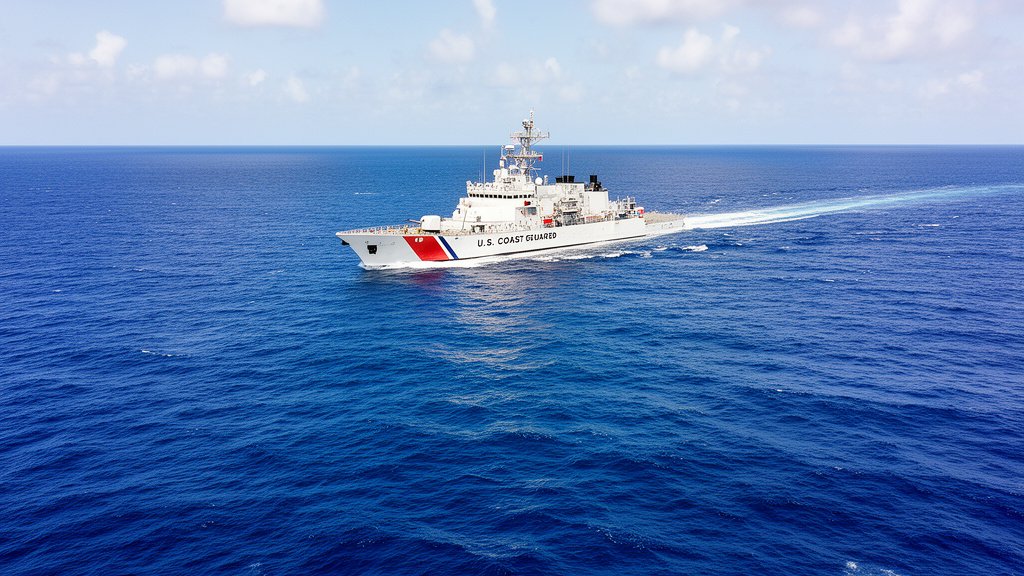
A recent U.S. military-led operation in the Caribbean has ended in tragedy, with authorities confirming the deaths of four individuals aboard an alleged drug-smuggling vessel. The engagement, which unfolded as part of ongoing efforts to disrupt narcotics trafficking corridors, brings the total death toll associated with these specific U.S. maritime interdiction strikes in the Eastern Pacific and Caribbean regions to at least 227. This latest incident underscores the high-stakes, often volatile nature of maritime law enforcement in one of the world’s most active transit zones for illicit cargo.
Key Highlights
- Incident Confirmation: Four individuals were killed during an engagement between U.S. forces and a suspected narcotics trafficking boat in the Caribbean.
- Cumulative Impact: The incident contributes to a documented total of 227 deaths resulting from similar interdiction operations across the Eastern Pacific and Caribbean theater.
- Operational Context: The strike is part of a broader, long-standing U.S. military strategy to disrupt transnational criminal organizations (TCOs) and maritime drug smuggling routes.
- Regional Security: The Caribbean remains a critical operational theater for U.S. Southern Command (SOUTHCOM) and its interagency partners.
The Escalating Cost of Caribbean Maritime Interdiction
The recent loss of life off the coast of the Caribbean serves as a stark reminder of the kinetic reality inherent in maritime interdiction. While the objective of U.S. maritime operations is primarily disruption and deterrence, these encounters frequently escalate into high-speed, dangerous confrontations. The Caribbean basin, characterized by vast, complex, and porous maritime boundaries, provides smugglers with an environment where they can rapidly maneuver and attempt to evade detection.
Analysis of the Recent Engagement
In the wake of this most recent operation, analysts are examining the tactical chain of events that led to the use of force. While precise details regarding the engagement protocols of this specific incident are subject to ongoing review, maritime interdictions often involve a multi-layered approach. U.S. Coast Guard (USCG) assets, often operating in concert with U.S. Southern Command (SOUTHCOM) assets, utilize aerial surveillance, maritime patrol aircraft, and cutter vessels to maintain a persistent presence. The transition from monitoring to interception is governed by strict rules of engagement, yet the volatile nature of these encounters means that situations can spiral in seconds when traffickers refuse to yield or attempt to scuttle vessels.
The Operational Ecosystem: SOUTHCOM and the Coast Guard
The interagency cooperation model used in these regions is heavily reliant on the seamless integration of assets. Organizations such as the Drug Enforcement Administration (DEA) provide the intelligence leads, while SOUTHCOM provides the strategic command and control, and the Coast Guard provides the tactical execution. This framework is essential for maintaining control over the “transit zone”—a massive area stretching from the coasts of South and Central America to the Caribbean and the Eastern Pacific. The 227 deaths recorded cumulatively in these regions highlight a persistent friction point: the struggle between state security apparatuses and increasingly aggressive, well-funded criminal enterprises.
Tactical Evolution and the ‘Cat and Mouse’ Dynamic
The technological escalation in this sector cannot be ignored. Smuggling entities have moved beyond simple open-hull vessels to increasingly sophisticated maritime technology, including low-profile vessels (LPVs) and semi-submersibles designed to evade radar and visual detection. These vessels often operate at night with their lights extinguished, requiring the U.S. military and Coast Guard to rely on advanced thermal imaging and night-vision capabilities. This technical arms race increases the likelihood of accidental or forced confrontation. When traffickers utilize high-speed, stealth-capable vessels, the margin for error during an interdiction attempt is razor-thin. This is where the risk of fatalities increases significantly, as the speed and unpredictability of the targets can turn a routine stop into a life-or-death decision for naval and law enforcement personnel.
Legal and Ethical Dimensions of Force
From a legal standpoint, these operations operate under the authority of international law and bilateral agreements, often involving the Maritime Drug Law Enforcement Act. However, the recurring nature of these fatalities, now totaling at least 227, has sparked quiet debate among geopolitical observers. Critics argue that the heavy militarization of the maritime anti-drug effort inevitably leads to kinetic engagement. Proponents, however, argue that these measures are the only viable defense against a multi-billion dollar illicit industry that destabilizes sovereign nations and facilitates violence on the mainland. The balance between maintaining national security and minimizing the loss of life remains a delicate, unresolved tension in the broader strategy of counter-narcotics.
FAQ: People Also Ask
1. Why does the U.S. military lead these interdictions in the Caribbean?
The U.S. military, particularly through SOUTHCOM, provides assets like long-range patrol aircraft and warships that have capabilities beyond the scope of local law enforcement agencies. They work in conjunction with the U.S. Coast Guard, which holds the primary law enforcement authority to board and search vessels on the high seas.
2. What is the significance of the 227 death toll?
The cumulative death toll of 227 represents the documented number of fatalities directly resulting from kinetic interdiction engagements in the Eastern Pacific and Caribbean. It is a benchmark used by intelligence and security analysts to track the human cost and the escalation of violence within the regional counter-narcotics effort.
3. Are these operations effective in stopping drug flow?
Effectiveness is measured by the volume of narcotics seized and the disruption of logistical networks. While operations consistently seize significant quantities of cocaine and other illicit substances, these seizures are often considered a fraction of the total volume transiting the region. The primary goal is to increase the operational risk and cost for criminal organizations to the point where the routes become unsustainable.
4. What happens after an interdiction operation?
Following a successful interdiction, suspects are typically processed, and the vessel’s cargo is secured as evidence. Depending on the location and the agreements in place, the suspects may be transferred to U.S. authorities for prosecution under U.S. federal law or returned to their country of origin for local legal proceedings.