
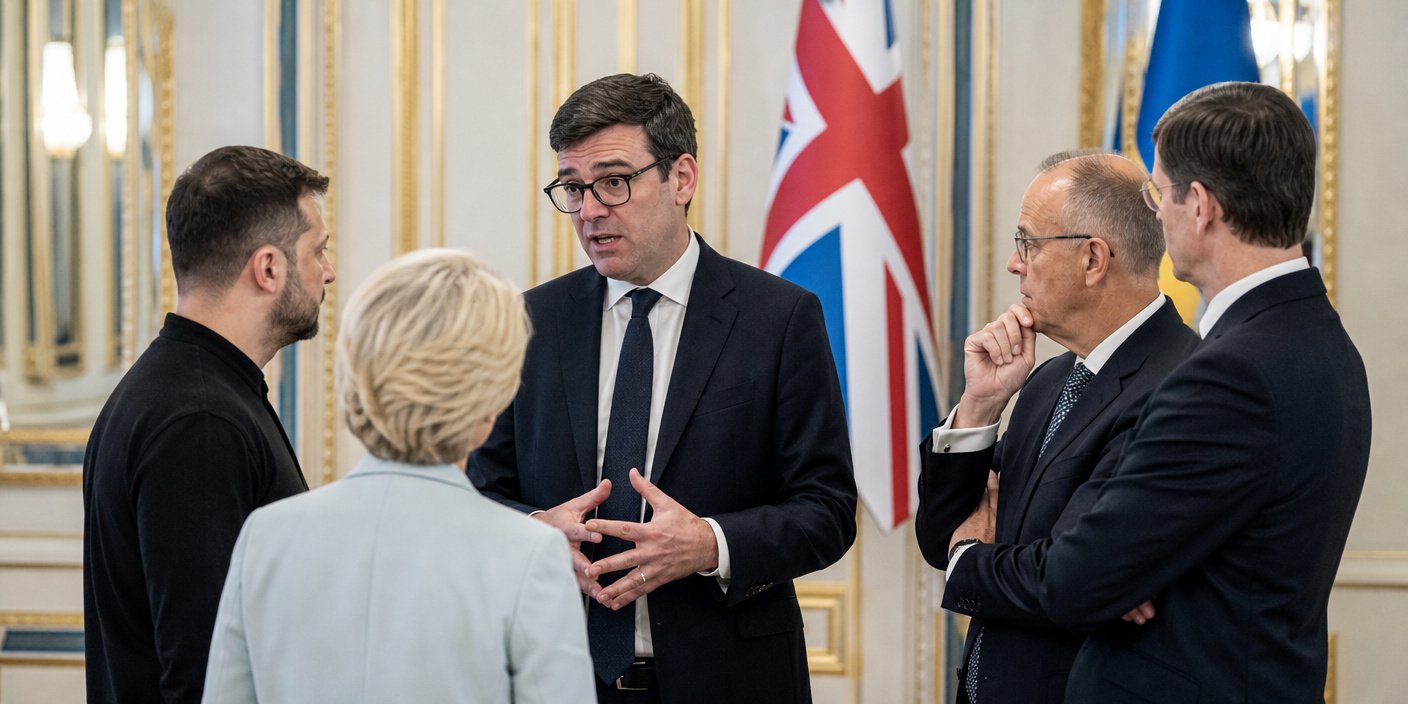
In a momentous display of unwavering solidarity and strategic rearmament, UK Prime Minister Andy Burnham arrived in Kyiv this morning to commemorate Ukraine’s 35th Independence Day. The visit, which brings together a coalition of high-ranking European dignitaries, marks more than just a ceremonial observance; it serves as the backdrop for a decisive escalation in defense cooperation. The centerpiece of the visit is a finalized agreement to facilitate the critical technology transfers required for the domestic production of the SCALP-EG (Système de Croisière Autonome à Longue Portée) long-range missile system within Ukrainian sovereign territory.
The Significance of the 35th Anniversary
The 35th Independence Day of Ukraine carries profound weight, representing over three decades of democratic resilience. As the streets of Kyiv are adorned with blue and yellow, the presence of European leaders serves as a powerful geopolitical statement. Prime Minister Burnham, appearing alongside heads of state from several key European partners, emphasized that this milestone is not merely a celebration of the past, but a commitment to the future security of the European continent. The timing of the announcement—coinciding with the national holiday—is calculated to send a clear message regarding the endurance of European defense architecture and the indivisibility of regional security.
Scaling Defense: The SCALP Technology Transfer
The technical crux of this diplomatic mission is the transition from supplying finished munitions to enabling local manufacturing capacity. The SCALP missile—known for its precision, stealth capabilities, and extended range—has been a decisive asset in the conflict. By authorizing the transfer of intellectual property and technical manufacturing protocols, the UK government is effectively helping Ukraine bypass logistical bottlenecks and reduce dependency on external supply chains.
Defense analysts note that this transfer is a complex undertaking, requiring not just blueprints, but the specialized industrial infrastructure to maintain the stringent quality control standards inherent to the SCALP system. Burnham’s administration has pledged to dispatch technical advisory teams to oversee the integration of these manufacturing hubs, ensuring that the transition does not compromise the operational effectiveness of the missiles. This move represents a shift in the West’s strategic calculus, moving toward a model of localized self-sufficiency that enhances the long-term deterrent posture of the Ukrainian Armed Forces.
Strengthening the European Security Framework
This initiative is not occurring in a vacuum. It is part of a broader, multi-lateral effort to harmonize defense production standards across Europe. By integrating Ukrainian industry into the European defense supply chain, the coalition aims to create a more resilient network that can withstand sustained pressure. The discussions held in Kyiv today also encompassed broader intelligence sharing and cyber-defense cooperation. European leaders are acutely aware that the security of Ukraine is inextricably linked to the stability of the EU’s eastern flank. The collaborative framework established during these meetings signals a move toward a more integrated, responsive, and technologically advanced defense posture for the entire continent.
Economic and Industrial Implications
The economic ramifications of this technology transfer are significant. By establishing production facilities within Ukraine, the initiative creates high-skilled manufacturing jobs and fosters a localized defense-industrial base that will serve the country well beyond the current conflict. It also signals to international investors that Ukraine is becoming a viable partner in advanced military technology development. The Prime Minister’s office confirmed that the initial phase of this cooperation will involve heavy investment in retrofitting existing Ukrainian industrial sites, with a focus on dual-use technology that can eventually support the wider aerospace and precision-engineering sectors. This is a long-term strategic investment in Ukraine’s industrial sovereignty.
Looking Toward a Secure Future
The arrival of European leaders in Kyiv sends a singular, unambiguous message of permanence. The conflict has evolved, and the international response has matured into a system of long-term partnership rather than temporary aid. By transitioning from the donation of assets to the transfer of technical expertise, Burnham and his European counterparts are effectively securing the tactical advantage for years to come. As the 35th Independence Day celebrations conclude, the focus shifts immediately to the implementation of these agreements, marking a new chapter in the defense of European sovereignty.
FAQ: People Also Ask
What exactly is the SCALP missile system and why is it important?
The SCALP-EG (known as Storm Shadow in the UK) is a long-range, air-launched cruise missile designed to strike high-value targets with high precision. Its importance lies in its ability to penetrate sophisticated air defense systems and operate in contested environments, making it a critical asset for modern precision warfare.
How will the technology transfer for SCALP missiles function in practice?
The transfer involves sharing technical blueprints, manufacturing methodologies, and quality control systems with Ukrainian engineers. It also includes setting up localized production and assembly lines within Ukraine, supported by UK technical advisors to ensure the domestically produced missiles meet the exact performance specifications of the original French-British designed weapons.
What does the 35th Independence Day signify in this context?
The 35th Independence Day marks a significant milestone in Ukraine’s statehood. Celebrating this anniversary with the announcement of a major defense pact underscores that the international community views Ukraine as a permanent, sovereign partner whose security is integral to the security of Europe as a whole.
Which European countries are involved in this broader coalition?
While Prime Minister Andy Burnham led the announcement regarding the UK’s involvement, the coalition includes various European partners who are aligning their defense policies. These nations are coordinating on logistical support, technological integration, and economic aid to bolster Ukraine’s long-term defense capabilities.
Is this the first time such a high-level technology transfer has occurred?
While international military aid has been consistent, the scale and depth of this specific transfer—focused on the local production of advanced, long-range cruise missile technology—represent a significant, and perhaps historic, escalation in the nature of defense cooperation between Western allies and Ukraine.