
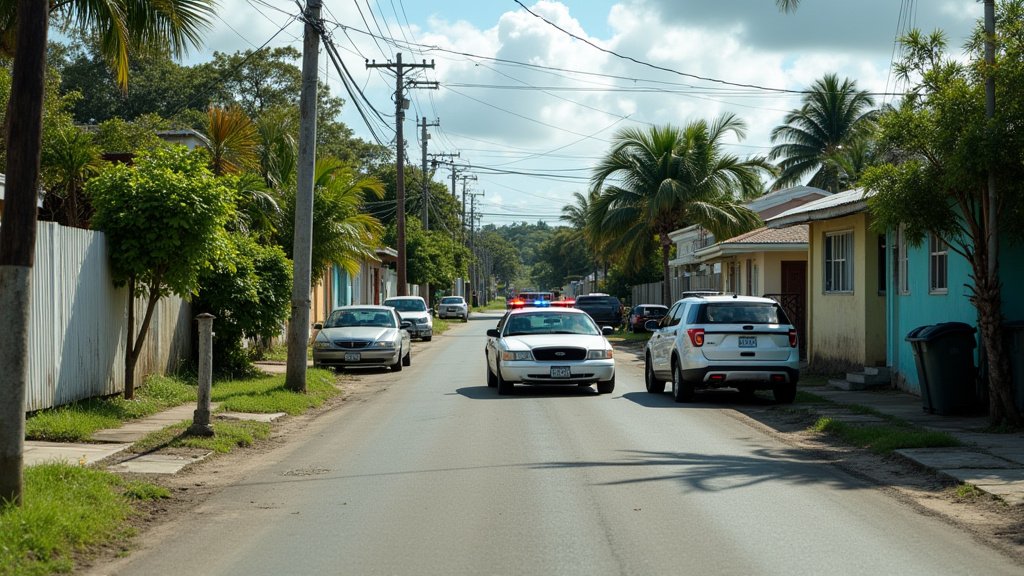
The peaceful atmosphere of Barrett Town, St. James, was shattered this week by a harrowing act of violence that has left residents reeling and demanding immediate accountability. In an incident that has sent shockwaves through the parish, a woman was subjected to a brutal assault and rape, culminating in her home being set ablaze. The gravity of the situation was succinctly captured by local residents in their distressed refrain: “Why man stay so!”—a powerful, idiomatic expression of profound shock and disbelief at the depths of human cruelty.
Key Highlights
- A woman in Barrett Town, St. James, suffered a brutal assault and rape during a home invasion.
- Perpetrators set the woman’s home on fire in an attempt to destroy evidence or cause further harm.
- Neighbors intervened swiftly, saving the victim from the burning structure and likely preventing a fatal outcome.
- The victim is currently recovering after sustaining significant burn injuries during the attack.
- The Jamaica Constabulary Force (JCF) has launched an intensive investigation to apprehend those responsible.
A Community Under Siege: Seeking Answers in the Aftermath
The incident in Barrett Town is not merely a localized crime; it serves as a stark reminder of the escalating volatility of domestic and gender-based violence in St. James. For many in the community, the sight of a neighbor’s home engulfed in flames—coupled with the knowledge of the heinous acts committed inside—has forced a collective reckoning. The phrase “Why man stay so!” echoing through the streets is more than just a complaint; it is a manifestation of the community’s shared trauma and a desperate call for social cohesion against such predatory behavior.
The Anatomy of the Attack
Initial reports indicate that the perpetrators targeted the victim specifically, turning a place of sanctuary into a site of terror. The decision to torch the residence suggests a calculated attempt to erase physical evidence, adding an element of arson to an already complex criminal investigation. The intervention of neighbors was the turning point in this tragedy. Their quick thinking and disregard for personal safety in rushing to assist the victim under duress is the only reason the incident did not conclude as a fatality. The victim’s recovery is now the primary concern, with medical teams in St. James managing the treatment of her burns, while mental health professionals are being engaged to address the severe psychological toll of such a traumatic event.
The Role of Community Vigilance
This incident highlights a critical secondary angle: the role of community intervention in crime prevention. In areas like Barrett Town, formal policing—while essential—is often bolstered by the eyes and ears of residents. The immediate mobilization of neighbors effectively acted as a first responder unit, demonstrating the vital necessity of community cohesion. However, relying on civil intervention also exposes a vulnerability: the potential for bystanders to be harmed when confronting violent offenders. Law enforcement agencies are now tasked with balancing community empowerment with the need to ensure that citizens are not putting their own lives at risk when reacting to such volatile situations.
Legislative and Systemic Failures
Another dimension of this crisis involves the broader legal framework in Jamaica. The Sexual Offences Act and associated legislation are constantly under scrutiny regarding their efficacy in deterrence. This attack raises difficult questions about how repeat offenders or individuals prone to such extreme violence move through society undetected until they strike. Advocates and local leaders are calling for a more rigorous application of the law, suggesting that the current judicial pacing may not be providing a sufficient deterrent for violent predators. The Victim Services Division (VSD) is expected to be deeply involved, as the victim will require long-term advocacy to navigate both the physical recovery and the taxing legal processes that will undoubtedly follow.
Addressing the Trauma Epidemic
Finally, we must look at the psychological impact on the victim and the community at large. Trauma of this magnitude leaves an indelible mark on a neighborhood. When a home is destroyed in such a manner, it symbolizes the destruction of safety and privacy. Future prevention efforts must move beyond physical security—such as better lighting or increased police patrols—and address the root causes of domestic violence and misogynistic aggression that allow such acts to persist. Without a comprehensive approach that integrates mental health support with robust police intelligence, communities like Barrett Town will remain vulnerable to cycles of violence that threaten to dismantle the social fabric.
FAQ: People Also Ask
What immediate support is available for the victim?
The victim is currently receiving medical care for burn injuries. Support from the Jamaica Constabulary Force (JCF) and the Victim Services Division (VSD) has been mobilized to provide counseling and guide the victim through the legal reporting process.
How can community members better protect themselves against such attacks?
Local authorities advise strengthening community watch groups, ensuring homes are well-secured, and immediately reporting suspicious activity or persons seen loitering in residential areas. However, safety depends heavily on collective vigilance and quick communication with the nearest police station.
Is the investigation ongoing?
Yes. The JCF has confirmed an active, high-priority investigation. They are currently gathering forensic evidence from the site and interviewing witnesses to track down the suspects involved in the assault and arson.