
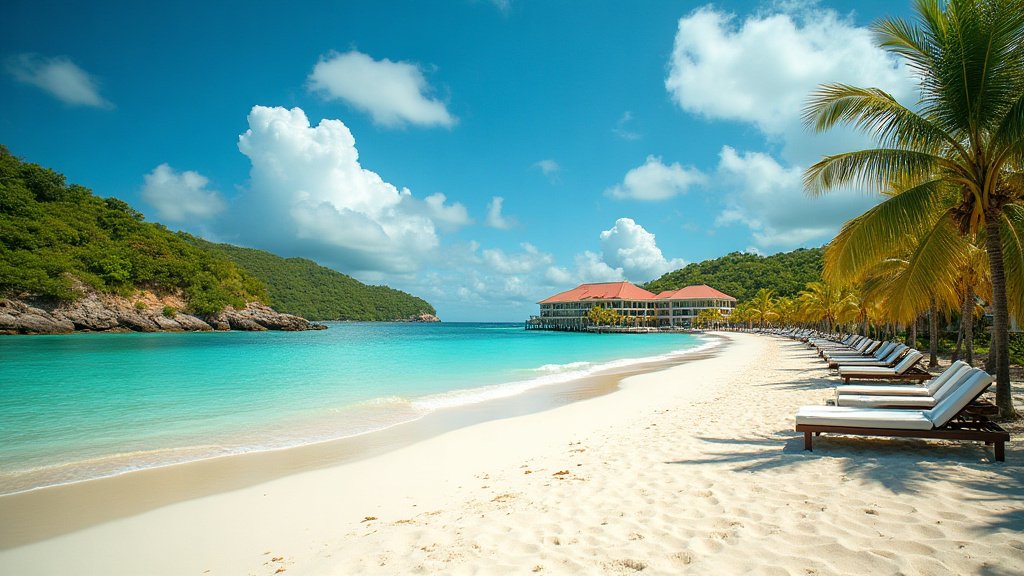
One year after the devastating arrival of Hurricane Melissa, Jamaica’s tourism industry is displaying remarkable resilience, with visitor numbers approaching the 3 million mark by the end of October 2026. This resurgence in arrivals, paired with US$2.9 billion in generated earnings, underscores the island’s successful pivot from crisis management to sustained economic recovery, backed by a 92% restoration of hotel capacity across the nation’s prime coastal hubs.
Key Highlights
- Visitor Milestone: Jamaica is rapidly approaching 3 million visitors for the 2026 calendar year, signaling a robust rebound post-hurricane.
- Economic Output: The tourism sector has generated US$2.9 billion in earnings through October 2026, a critical injection for the national economy.
- Infrastructure Restoration: Hotel capacity restoration has reached an impressive 92%, indicating that the vast majority of accommodation inventory is operational and ready to serve international guests.
- Comparative Context: While 2026 shows strong performance, it remains distinct from the record-breaking numbers achieved in 2024, highlighting the persistent impact of the late-2025 climatic event.
Navigating the Path to Recovery: Jamaica’s 2026 Surge
The narrative of Jamaica’s tourism sector in 2026 is one of rapid adaptation and strategic investment. Following the disruption caused by Hurricane Melissa, which severely tested the island’s coastal infrastructure in late 2025, the local authorities and private sector partners—most notably the Jamaica Tourist Board (JTB)—embarked on an aggressive campaign to restore operational readiness.
Economic Resilience and Revenue Streams
The accumulation of US$2.9 billion in earnings by October 2026 is not merely a statistical success; it is an economic lifeline for thousands of Jamaicans employed in the service, hospitality, and logistics industries. This figure reflects a high-yield visitor base, suggesting that despite the challenges of the past year, the perceived value and quality of the Jamaican tourism product have remained stable. Diversification has been a core pillar of this success, with hotel operators and local vendors shifting from volume-driven strategies to experiences that offer premium engagement. Analysts note that this financial infusion has been instrumental in offsetting the heavy capital expenditures required for reconstruction post-Melissa.
The Infrastructure Benchmark: Achieving 92% Capacity
Perhaps the most telling metric of recovery is the 92% hotel capacity restoration. This figure signifies that the majority of major resorts, boutique hotels, and independent guesthouses are fully functioning. However, the remaining 8% represents a complex blend of properties still undergoing structural reinforcement or, in some cases, deciding to modernize facilities to meet new climate-resilience standards. The government’s decision to prioritize public-private partnerships during the reconstruction phase proved vital. By streamlining permits and offering incentives for rapid rebuilding, the JTB and associated agencies successfully fast-tracked the return of international connectivity to major hubs like Montego Bay and Ocho Rios.
Comparative Analysis: 2026 vs. The 2024 Record
While reaching 3 million visitors is a feat worth celebrating, it is important to contextualize this milestone against the 2024 record. 2024 represented a peak year for Caribbean tourism, where Jamaica set historic highs in both arrivals and per-capita spending. The 2026 performance, while impressive given the circumstances, highlights the lingering effects of Hurricane Melissa. The industry is currently in a state of ‘rebuilding momentum’ rather than ‘unfettered growth.’ The disparity between 2024’s record and 2026’s current figures serves as a reminder of the vulnerability of island economies to climate-related events, necessitating the strategic focus on long-term climate-proof tourism development moving forward.
Future Outlook and Strategic Adaptation
Looking toward the end of 2026 and into 2027, the focus of the Jamaican government and the Caribbean Hotel and Tourism Association (CHTA) is on ‘future-proofing.’ This involves not just restoring old infrastructure, but upgrading energy systems to be self-sufficient during storm events and enhancing digital marketing campaigns to reassure hesitant travelers. The goal is to move beyond the 2024 records by creating a more resilient, sustainable tourism product that can withstand environmental shocks while maintaining the distinct cultural allure that defines the Jamaican experience. As the island edges closer to the 3 million visitor threshold, the message from the tourism ministry is clear: Jamaica is not only back open for business, but it is also better prepared for the future than ever before.
FAQ: People Also Ask
1. How does the 2026 visitor count compare to the 2024 record?
While 2026 is seeing a strong recovery, the numbers remain lower than the historic peaks reached in 2024. The 2026 statistics are heavily influenced by the recovery period following the late-2025 impact of Hurricane Melissa.
2. What does 92% hotel capacity restoration mean for tourists?
It means that 92% of the available hotel room inventory in Jamaica is fully operational and open for bookings. Travelers should find most major resorts and attractions back to normal, though some minor properties may still be undergoing updates.
3. Which organizations were key to this recovery?
The Jamaica Tourist Board (JTB) and the Caribbean Hotel and Tourism Association (CHTA) played central roles in coordinating recovery efforts, managing logistics, and promoting the destination to international markets.
4. Why is the US$2.9 billion figure significant?
This figure represents the direct revenue generated by the tourism sector through October 2026. It indicates that despite the challenges posed by the hurricane, the tourism product remains highly viable and continues to be the primary engine of Jamaica’s national economy.