
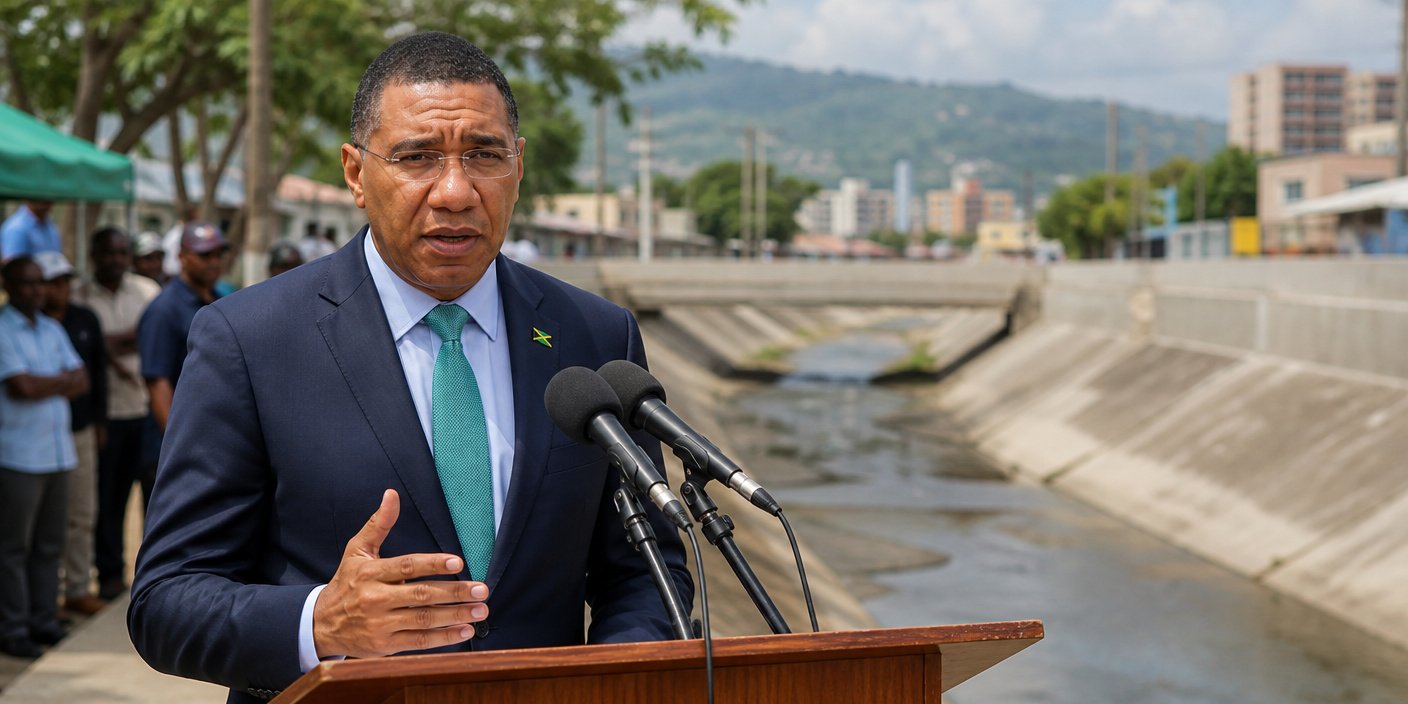
Prime Minister Andrew Holness has announced a pioneering pilot project aimed at the systematic relocation of residents currently living in high-risk informal settlements along Kingston’s gullies. This initiative represents a strategic pivot in the Jamaican government’s approach to urban planning, disaster mitigation, and climate resilience, as the nation moves to address the precarious living conditions that have defined significant swaths of the capital for decades. The project focuses on transitioning vulnerable households from flood-prone, precarious gully banks to safer, formal housing developments, integrating them into structured urban environments.
Key Highlights
- Strategic Pilot Launch: PM Andrew Holness has confirmed the initiation of a pilot project specifically targeting informal settlements located on the banks of Kingston’s primary drainage gullies.
- Disaster Mitigation Focus: The core objective is to move families out of high-risk zones that are structurally vulnerable to flash flooding, landslides, and storm surges.
- Urban Integration: The plan involves not just relocation, but the formalization of housing, ensuring relocated residents gain access to essential infrastructure and social services.
- Economic and Safety Alignment: The government aims to reconcile the urgent need for housing with the imperative of protecting citizens from the increasing intensity of severe weather events in the Caribbean.
The Urgent Mandate for Urban Re-Engineering
The announcement by Prime Minister Andrew Holness marks a definitive acknowledgment of the systemic risks posed by the urbanization of gully banks across the Kingston Metropolitan Area. For generations, the informal expansion of housing along these drainage arteries has presented a persistent safety challenge. Gullies in Kingston serve as critical drainage infrastructure designed to manage the high volume of runoff from the surrounding hills during tropical storms and hurricanes. However, the encroachment of informal structures has obstructed these watercourses, creating bottlenecks that exacerbate flooding and place residents in the direct path of environmental hazards.
Historical Context of Informal Settlements
Kingston’s urban landscape is shaped by its unique topography. The rapid, often unplanned, growth of the city during the late 20th century saw many residents settling on available government land along gully easements. While this provided a solution for housing in a dense, resource-constrained environment, it created a long-term liability. These communities are disproportionately affected by the adverse effects of climate change. Each rainy season brings the threat of structural collapse and catastrophic water damage, making these areas the frontline of Jamaica’s disaster management crisis.
The Mechanics of the Pilot Project
The pilot project is designed to be a replicable model. By focusing on a specific, manageable cluster of settlements first, the Ministry of Economic Growth and Job Creation—in collaboration with the National Housing Trust (NHT) and local municipal authorities—intends to stress-test the relocation process. This involves a multifaceted approach: identifying suitable land for development, providing sustainable housing options, and managing the social transition of these communities. The government is emphasizing that this is not merely an eviction, but a social and safety upgrade. The goal is to provide residents with tenure security, which in turn fosters economic stability and personal investment in their new surroundings.
Engineering Resilience Against Climate Extremes
As the Caribbean faces increasingly volatile weather patterns, the engineering of city infrastructure has become a priority for the Holness administration. Reclaiming the gully banks allows for the proper maintenance, widening, and reinforcement of these vital waterways. Once reclaimed, the land can be re-engineered to handle larger capacities of stormwater, effectively reducing the flood risk for the broader metropolitan area. This dual benefit—human safety for the relocated and structural flood resilience for the city—is central to the administration’s long-term urban development strategy.
Socio-Economic Impact and Future Projections
The broader success of this initiative hinges on its social integration component. Relocating a community is not just a logistical hurdle but a social one; residents often maintain deep community ties and rely on local economic networks. The government’s proposal suggests a move toward integrated housing developments that maintain a sense of community while providing the legal and physical safety of a formal settlement.
Looking ahead, if the pilot proves successful, it could serve as a blueprint for the entire region. Many Caribbean nations face similar challenges with urban encroachment on drainage systems. By formalizing these settlements and reclaiming public easements, Jamaica is positioning itself as a leader in proactive disaster management. The economic ripple effects of such a project are also significant, as formalizing housing usually leads to improved tax revenue, better infrastructure provision, and higher property values for the surrounding areas. However, critics and policy experts remain focused on the scale of the challenge. With thousands of citizens living in various states of precarity, the pilot is merely the first step in a multi-year, multi-billion-dollar effort to restructure the capital’s relationship with its geography.
FAQ: People Also Ask
Q: What is the primary reason for the relocation project?
A: The project is primarily a disaster risk reduction measure. The goal is to remove citizens from areas prone to flash flooding, soil erosion, and structural collapse during severe weather events, thereby saving lives and preventing widespread property loss.
Q: Who are the key stakeholders in this initiative?
A: The initiative is spearheaded by the Office of the Prime Minister, involving the Ministry of Economic Growth and Job Creation, the National Housing Trust (NHT), the National Works Agency (NWA), and relevant local municipal authorities.
Q: Does this project address the wider housing shortage in Jamaica?
A: While this specific pilot is focused on risk mitigation, it operates within the broader context of the government’s National Housing Policy, aiming to move citizens from informal, high-risk status into the formal housing sector, which helps address the national housing backlog over time.
Q: How will residents be supported during the transition?
A: While specific details of the relocation packages are often handled on a case-by-case basis in government pilots, the framework typically includes providing land tenure, facilitating the move, and ensuring access to municipal infrastructure in the new settlements.