
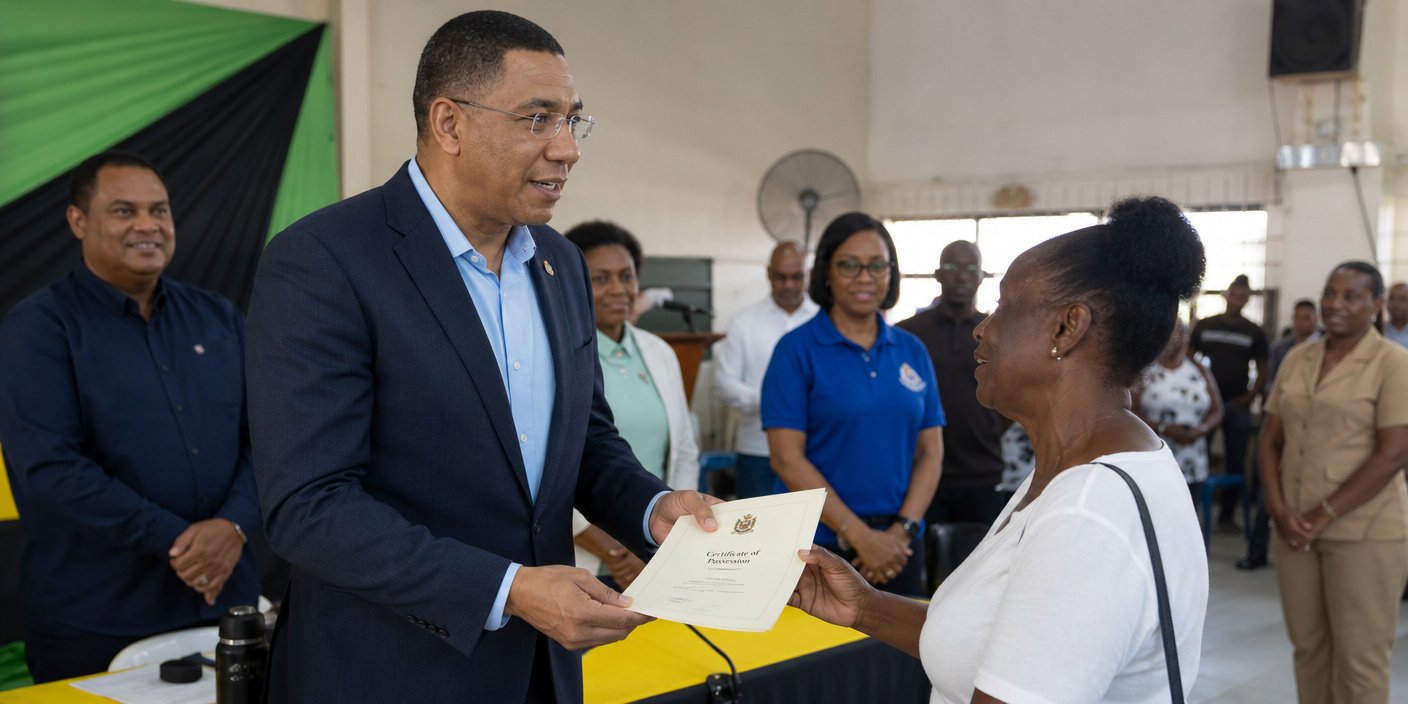
In a significant move toward the formalization of housing and long-term socio-economic stability, 221 residents of the Tivoli Gardens community in Kingston Western have officially received their Certificates of Possession. The handover ceremony, which took place at the Tivoli Gardens Community Centre, was attended by Prime Minister Andrew Holness, highlighting the government’s commitment to addressing land tenure issues that have historically complicated life in some of Jamaica’s most dense urban centers. This event represents more than just a bureaucratic milestone; it signifies the beginning of a transformative process for hundreds of families, offering them a clear, legal pathway toward full homeownership.
The Significance of the Certificate of Possession
The Certificate of Possession acts as a vital intermediate instrument in the legal regularization of land tenure. In many Jamaican communities—particularly those that developed informally over decades—residents may have occupied land for generations without the benefit of a Certificate of Title. This lack of legal documentation presents numerous challenges, ranging from an inability to access bank loans for home improvements to difficulties in bequeathing property to heirs. By issuing these certificates, the government, through agencies such as the Housing Agency of Jamaica (HAJ), is effectively verifying that these residents are the legitimate occupants and the rightful candidates for full ownership status. It is the crucial prerequisite that bridges the gap between occupation and ownership, providing the legal foundation necessary to transition to the Registration of Titles Act.
Advancing the Agenda of Urban Regularization
For Prime Minister Andrew Holness, this initiative is a cornerstone of his administration’s broader “Housing for All” strategy. Urban renewal, particularly in constituencies like Kingston Western, requires a multi-faceted approach that balances infrastructure development with the empowerment of individual citizens. The handing over of these 221 certificates is not an isolated incident but part of a calculated, structured effort to integrate informal settlements into the formal economy. When citizens hold legal tenure, they are more likely to invest in their properties, improve infrastructure, and contribute to the overall stability of the neighborhood. The event at the Tivoli Gardens Community Centre served as a venue for both celebration and administrative progress, demonstrating a collaborative effort between the state and the citizens to formalize the local housing landscape.
Socio-Economic Empowerment and Generational Wealth
The economic implications of this transition are substantial. Historically, the absence of land titles has acted as an invisible barrier to wealth accumulation. Without a registered title, a property cannot easily serve as collateral for a mortgage or a business loan. By clearing the path toward full titling, the government is essentially unlocking capital that was previously trapped in the informal sector. For the 221 recipients, this means that their homes—often their most significant asset—can finally begin to function as financial tools. This shift is expected to stimulate micro-economic activity within Tivoli Gardens, as homeowners now have the security to invest in structural upgrades, expansions, or even small-scale entrepreneurship from their own premises. It shifts the narrative of the community from one of transient occupation to one of permanent, legally recognized investment.
Historical Context: The Evolution of Tivoli Gardens
Understanding the weight of this development requires an appreciation of the historical context of Tivoli Gardens. As one of the most prominent communities in the Kingston Western constituency, Tivoli Gardens has undergone profound shifts over the past several decades. The current administration’s push to formalize housing is a corrective measure, addressing the legacy of urban planning challenges that plagued the region for years. The transition from informal settlement to a formalized residential area is a complex, sensitive process that demands a delicate balance of legal rigor and social empathy. The presence of the Prime Minister at the handover ceremony underlines the national importance placed on this specific milestone—it is a signal that the community is not being marginalized, but rather, is being actively integrated into the national development framework.
The Path Forward: From Possession to Title
While the receipt of the Certificate of Possession is a cause for celebration, the process does not conclude here. It is important to clarify that a Certificate of Possession is the precursor to the issuance of a Certificate of Title. Following the issuance of possession certificates, the legal process involves land surveying, boundary verification, and eventual submission to the Registrar of Titles. This final stage will see the residents gain full, unencumbered rights to their land. Government officials at the event emphasized that the state remains committed to guiding the remaining residents through the administrative hoops, aiming to reduce the backlog and expedite the issuance of titles. This streamlined approach reflects a modernization of the Housing Agency of Jamaica’s operations, ensuring that the legal system is accessible to the average citizen.
Community Impact and Future Outlook
The handover has been met with positive sentiment among the residents, many of whom have lived in the community for decades without the legal comfort of a deed. The psychological impact of receiving official documentation cannot be overstated; for many, it provides a sense of permanent belonging and security. As the project continues to scale, it is expected that the model used in Tivoli Gardens will serve as a template for other similar communities across the Kingston Metropolitan Area. By converting the “informal” into the “formal,” the government is laying the groundwork for a more stable, economically active, and legally secure society. As the 221 recipients look toward the next phase of their journey, they do so with the support of a systematic, government-backed plan that emphasizes the right to property as a fundamental aspect of citizenship.