
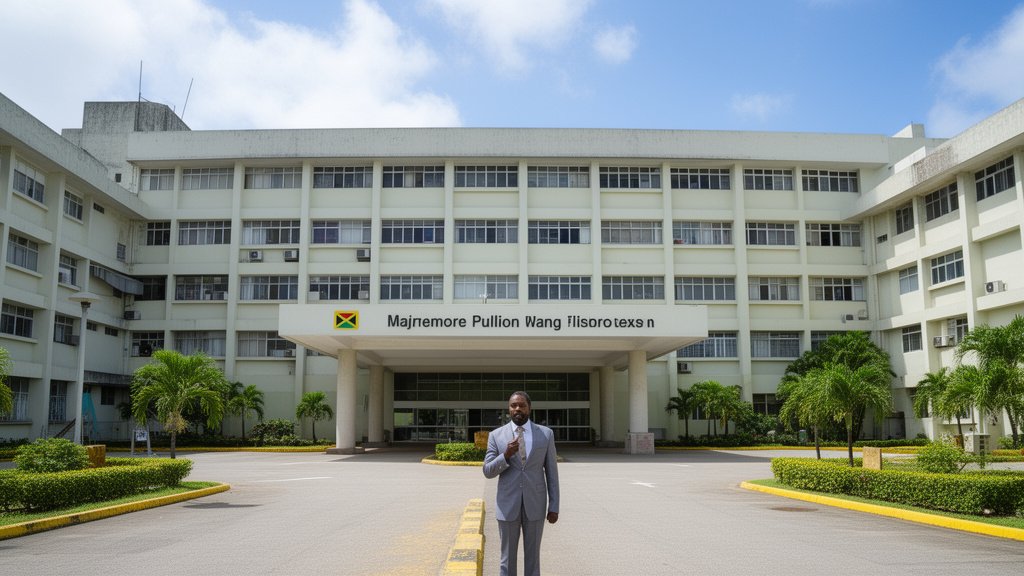
The Jamaica Medical Doctors’ Association (JMDA) has officially declared a critical deadline of October 2 for the Industrial Disputes Tribunal (IDT) to issue a long-awaited ruling regarding a contentious overtime pay dispute. The ultimatum follows six months of administrative stagnation, which the association argues has pushed the patience of public sector medical professionals to its breaking point. Should the tribunal fail to deliver a binding decision by this date, the JMDA has signaled it will consider further industrial action, a move that could potentially paralyze key segments of the island’s public healthcare infrastructure.
Key Highlights
- The Deadline: The JMDA has set October 2 as the final date for the Industrial Disputes Tribunal to provide a ruling on outstanding overtime compensation.
- The Grievance: The dispute centers on long-running issues regarding overtime pay, which doctors argue have been unresolved for over six months.
- Risk of Escalation: Failure to meet this deadline may trigger industrial action, potentially disrupting healthcare services across Jamaica.
- Systemic Frustration: The association cites a ‘six-month delay’ by the IDT as evidence of administrative inefficiency that undermines the welfare of medical practitioners.
Arbitration at an Impasse: The JMDA’s October Ultimatum
The tension between the Jamaica Medical Doctors’ Association (JMDA) and the administrative bodies tasked with governing labor disputes has reached a boiling point. At the heart of this conflict is the foundational issue of fair compensation for overtime hours—a necessity in a healthcare system characterized by chronic staffing shortages and overwhelming patient volumes. For medical doctors serving in public facilities, the promise of equitable pay for additional hours is not merely a financial request; it is a fundamental aspect of their contractual rights.
The Origins of the Dispute
The grievances fueling this standoff are deeply rooted in the structural challenges of Jamaica’s public health sector. For years, the JMDA has advocated for a more transparent and responsive compensation framework. Medical professionals frequently operate under grueling schedules, managing emergency wards and out-patient clinics that are perpetually over capacity. When overtime pay is delayed, undercalculated, or disputed, it exacerbates the stress of an already high-pressure environment.
This specific dispute, currently stalled at the Industrial Disputes Tribunal, represents a significant bottleneck. The association maintains that the government’s failure to settle these obligations creates an environment where doctors feel undervalued and ignored. The ‘six-month delay’ mentioned by union leadership is not just a statistical figure; it represents half a year of unresolved financial uncertainty for the doctors keeping the public health system afloat.
Why the IDT Process is Failing
The Industrial Disputes Tribunal is designed to be the ultimate arbiter in labor-management conflicts. However, its efficacy is currently being called into question by the JMDA. In industrial relations, the speed of adjudication is often as important as the fairness of the ruling itself. By allowing the matter to drag on for six months, the tribunal has effectively permitted the dispute to fester, allowing resentment to grow within the medical workforce.
Critics of the current delay argue that the IDT must be proactive in managing the timelines of sensitive public sector disputes. When the workforce in question comprises essential service providers like medical doctors, the cost of inaction is too high to be ignored. The JMDA’s decision to issue an ultimatum is a clear indicator that the traditional mechanisms of mediation have failed, and the union is now prepared to leverage more confrontational strategies to secure their objectives.
Assessing the Risk of Industrial Action
‘Industrial action’ is a broad term that, in the context of the medical field, often implies reduced services, work-to-rule mandates, or in extreme cases, strikes. Any such action in Jamaica’s public hospitals would carry immediate and severe consequences. Hospitals like the Kingston Public Hospital (KPH) and the University Hospital of the West Indies (UHWI) rely heavily on the continuous availability of junior and senior doctors. Even a minor reduction in productivity due to labor disputes can lead to significant backlogs in surgeries, delayed diagnostic tests, and increased waiting times in emergency rooms.
The JMDA leadership is well aware of the optics involved. They are framing this ultimatum as a necessary step to protect their members, while simultaneously acknowledging the potential impact on the public. By giving a clear, public deadline of October 2, they are attempting to shift the burden of responsibility back to the IDT. If services are disrupted, the association intends to demonstrate that the blame lies with administrative indecision, not with the doctors themselves.
Broader Economic and Health Implications
The implications of this dispute extend beyond the immediate conflict between the JMDA and the IDT. It highlights a recurring theme in Jamaican public sector labor relations: the struggle for wage parity and timely compensation amidst fiscal constraints. The Ministry of Health and Wellness (MOHW) and the Ministry of Finance must navigate the tightrope of maintaining a sustainable budget while preventing the collapse of morale among essential workers.
If the government allows this issue to escalate into a full-blown strike, the economic and social fallout could be substantial. Beyond the cost of medical service interruption, there is the long-term risk of brain drain. Many Jamaican doctors, faced with systemic administrative hurdles and delayed compensation, are increasingly looking toward international markets for employment where labor rights and pay structures are more strictly enforced and promptly honored.
The Path Forward: What to Expect
As October 2 approaches, all eyes are on the IDT to see if a ruling will be forthcoming. The government is under significant pressure to intervene, not necessarily by directing the tribunal, but by facilitating a resolution that acknowledges the legitimate concerns of the medical fraternity. For the JMDA, the ultimatum is a strategic maneuver to force a decision. Whether the tribunal will meet this deadline, or whether Jamaica will face a period of significant industrial unrest in its hospitals, remains to be seen. The coming days will be a defining moment for public sector industrial relations in the country, serving as a bellwether for how future labor disputes in essential services will be managed.