
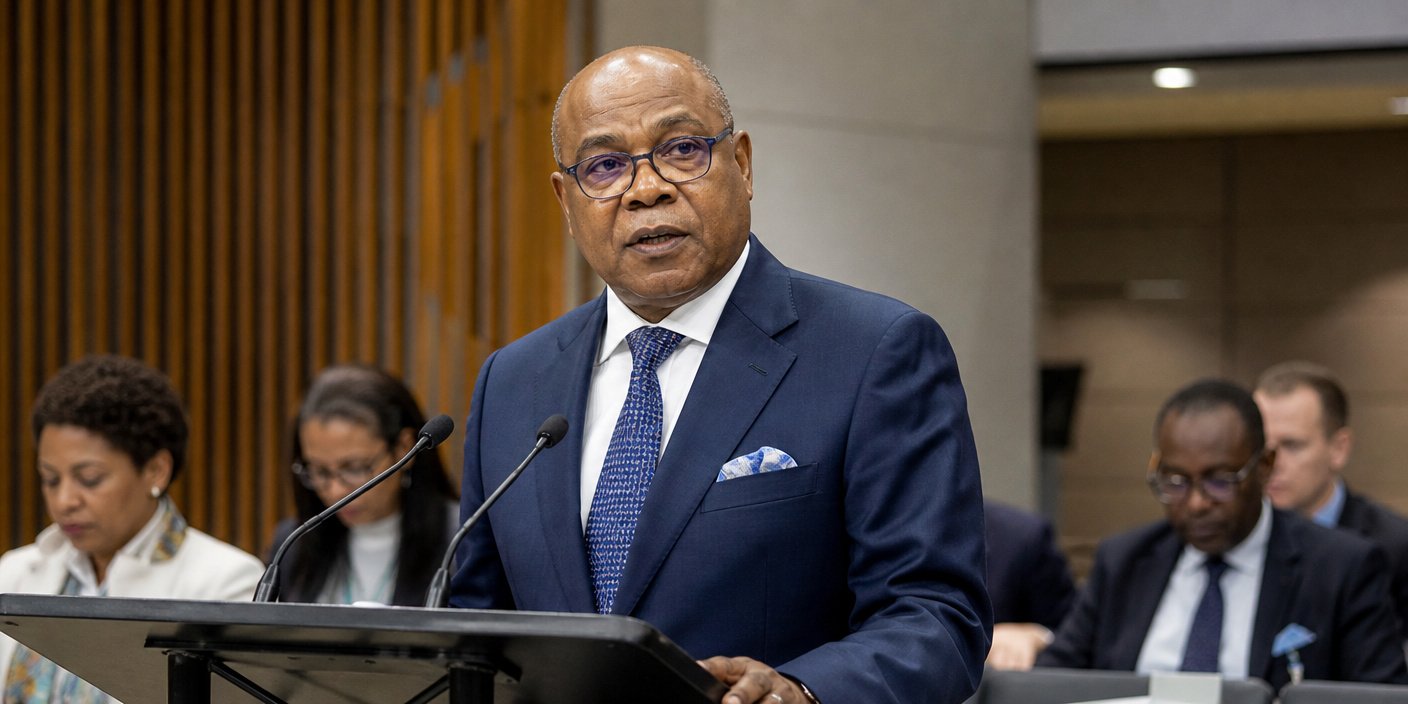
In a display of rapid-fire international diplomacy, Jamaica’s Minister of Tourism, Edmund Bartlett, has launched a critical four-day mission spanning September 23–26, 2026. This high-level international tour is designed to position Jamaica at the epicenter of global tourism discourse, with Bartlett scheduled to engage with world leaders and economic architects across three continents in just five days. The itinerary includes major stops at the United Nations General Assembly (UNGA) in New York, the World Economic Forum (WEF) in Geneva, and the prestigious PYNE Awards in Mozambique, underscoring a strategic push to strengthen the Global South’s tourism infrastructure.
Key Highlights
- Triple-Continent Engagement: Minister Bartlett will navigate high-stakes summits in New York, Geneva, and Maputo, covering thousands of miles to advocate for tourism as a primary economic driver.
- Resilience at the Core: The tour centers on the Global Tourism Resilience and Crisis Management Centre (GTRCMC) mission, promoting strategies to shield tourism-dependent economies from climate and geopolitical shocks.
- Strategic Partnerships: The trip prioritizes the Africa-Caribbean corridor, with the PYNE Awards visit serving as a keynote opportunity to deepen tourism and investment ties between the two regions.
The Diplomatic Architecture of Tourism Resilience
The scale of Minister Bartlett’s upcoming itinerary is not merely a logistical feat; it is a calculated diplomatic strike designed to ensure that Jamaica—and by extension, the Caribbean—remains a central figure in post-2025 global economic planning. By compressing three major international engagements into a singular 96-hour window, Bartlett is signaling that the era of passive tourism marketing is over, replaced by an era of proactive, high-level political and economic integration.
New York: The UNGA Agenda
The tour begins with the United Nations General Assembly in New York. For Bartlett, the UNGA is the primary stage to advocate for the ‘Resilience’ doctrine—a concept he has pioneered globally. His focus here is twofold: mobilizing climate adaptation funding and integrating tourism into the UN’s Sustainable Development Goals (SDGs) as a non-negotiable metric. In 2026, the global conversation has shifted from mere recovery to sustainable expansion, and Bartlett is set to argue that for nations like Jamaica, tourism is not a luxury export, but a fundamental pillar of national security and environmental stability.
Geneva: The WEF Economic Imperative
Transitioning from the diplomatic halls of the UN to the economic engines of Geneva, the Minister will engage with the World Economic Forum. This stop is arguably the most critical for the technical side of the industry. The WEF agenda in 2026 is heavily dominated by the digital transformation of hospitality and cross-border data cooperation. Bartlett’s presence here is focused on ‘Tourism 4.0’—the digitalization of travel experiences and the use of big data to predict visitor trends. By engaging with WEF leadership, the Ministry of Tourism is ensuring that Jamaica remains an early adopter of the AI-driven analytics that are currently reshaping the global luxury and leisure markets.
Mozambique: The Africa-Caribbean Bridge
The final leg, the PYNE Awards in Mozambique, represents the most significant geopolitical shift in the tour. The Africa-Caribbean trade and tourism corridor has been a long-term goal for the Bartlett administration. By traveling to Mozambique, the Minister is not just receiving an award; he is solidifying the physical and economic bridge between the Caribbean and the African continent. This segment of the trip is designed to court investment in hotel infrastructure and cultural exchange programs, effectively opening a new source market for Jamaica’s tourism product that bypasses the traditional reliance on North American and European visitor flows.
The Economic Multiplier Effect
Critics often question the ROI (Return on Investment) of ministerial travel, but the economic data suggests that for tourism-dependent economies like Jamaica, the multiplier effect of such diplomatic visibility is substantial. Every high-level meeting at forums like the WEF or UNGA acts as a tacit endorsement for institutional investors. When the Minister secures a seat at the table with the World Economic Forum, it lowers the perceived risk for foreign direct investment (FDI) in Jamaica’s hotel sector. This tour is essentially a multi-day marketing campaign that sells Jamaica not just as a destination, but as a stable, forward-thinking business environment. The result is typically an uptick in airline route negotiations, hotel chain interest, and MICE (Meetings, Incentives, Conferences, and Exhibitions) sector engagement in the months following the summit.
Future-Proofing the Tourism Product
Looking toward 2027 and beyond, the success of this tour will be measured by the concrete MOUs (Memorandums of Understanding) signed behind closed doors. The focus on ‘Resilience’ is not just PR; it is about creating a buffer against the next pandemic, hurricane, or global market crash. Minister Bartlett’s strategy is clearly to embed Jamaica into the global institutional fabric so deeply that it cannot be overlooked when global resources—financial, technological, or political—are being allocated. As the landscape of international travel continues to fluctuate, the ability to pivot between the UN, the WEF, and regional African partners proves that Jamaica is operating at the highest tier of tourism diplomacy.
FAQ: People Also Ask
Q: Why is Minister Bartlett visiting Mozambique for the PYNE Awards?
A: The visit is a strategic move to strengthen the Africa-Caribbean Tourism Corridor. The PYNE Awards focus on recognizing excellence in tourism within Africa, and by aligning with these stakeholders, Jamaica aims to unlock new investment, cultural exchange, and direct travel routes between the two regions.
Q: What is the primary focus of the UNGA session for tourism?
A: At the UN General Assembly, Minister Bartlett is focused on integrating tourism more deeply into the UN’s Sustainable Development Goals (SDGs), specifically advocating for climate resilience funding for small island developing states (SIDS).
Q: How does the WEF visit impact Jamaica’s tourism industry?
A: The World Economic Forum visit focuses on ‘Tourism 4.0’—the integration of digital technology, AI, and data analytics in tourism planning. It provides a platform to lobby for technological infrastructure investments that help Jamaica manage tourism demand more efficiently.
Q: How many days is the total tour duration?
A: The tour spans four days, from September 23 to September 26, 2026, covering engagements on three different continents.